



 NEWS
NEWS
NEWS
NEWS
NEWS

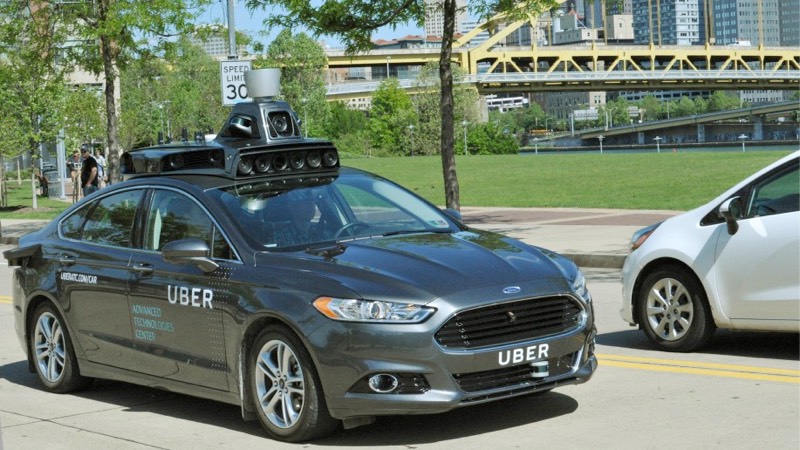
Ridesharing service Uber, Inc. gave the world its first look at its efforts to develop a self-driving car Thursday.
The company revealed details of the vehicle in a blog post, explaining that their self-driving vehicle is built on top of a Ford Fusion outfitted with radars, laser scanners, and high-resolution cameras to map details of the environment; unlike Google’s self-driving car efforts the sensors on the Uber vehicle look more like a speaker array than a 360 degree camera.
When the vehicle is in self-driving mode, a trained driver will be in the driver’s seat monitoring operations and will be able to take control of the vehicle should it at any time go awry.
“Real-world testing is critical to our efforts to develop self-driving technology,” the company said. “Self-driving cars have the potential to save millions of lives and improve quality of life for people around the world. 1.3 million people die every year in car accidents — 94% of those accidents involve human error.”
“In the future we believe this technology will mean less congestion, more affordable and accessible transportation, and far fewer lives lost in car accidents. These goals are at the heart of Uber’s mission to make transportation as reliable as running water — everywhere and for everyone.”
News that Uber is already testing its own self-driving car technology in the wild comes two weeks after competitor Lyft, Inc. and General Motors Co. said they would begin testing self-driving electric taxis on public roads starting in 2017, let alone long-standing rumors that Google, Inc. might also be planning a competing service using its own fleet of self-driving vehicles.
While we’re still some years away from seeing fleets on self-driving vehicles on the road offering transportation services, there’s no question that the race is now definitely on to develop the technology and bring it to market.
Despite naturally saving companies such as Lyft and Uber the need to pay for drivers, self-driving vehicles also come with other advantages, including road safety and environmental benefits, the latter including the provision of on-demand affordable transport alternatives to owning a car, and also that the cars themselves are driven in a superior manner to human drivers, which means that even with a non-electric vehicles, emissions and fuel usage is reduced.
Uber didn’t give a time-frame for how long it might be until we see its self-driving cars go into service, saying only that it was “still in the early days of our self-driving efforts.”
… We’d like to tell you about our mission and how you can help us fulfill it. SiliconANGLE Media Inc.’s business model is based on the intrinsic value of the content, not advertising. Unlike many online publications, we don’t have a paywall or run banner advertising, because we want to keep our journalism open, without influence or the need to chase traffic.The journalism, reporting and commentary on SiliconANGLE — along with live, unscripted video from our Silicon Valley studio and globe-trotting video teams at theCUBE — take a lot of hard work, time and money. Keeping the quality high requires the support of sponsors who are aligned with our vision of ad-free journalism content.
If you like the reporting, video interviews and other ad-free content here, please take a moment to check out a sample of the video content supported by our sponsors, tweet your support, and keep coming back to SiliconANGLE.






