



 NEWS
NEWS
NEWS
NEWS
NEWS

Flying cars have long been a dream of many, an idea best personified in the 1960’s cartoon The Jetsons, but despite the best intentions over the years, no successful flying car has every really come to market.
But what if that was to change?
Google Co-Founder Larry Page is betting it will and has invested over $100 million in two flying car companies, a new report Thursday claims.
According to Bloomberg Page has invested $100 million in secretive fly car startup Zee.Aero, Inc., which is located besides Google’s headquarters in Mountain View.
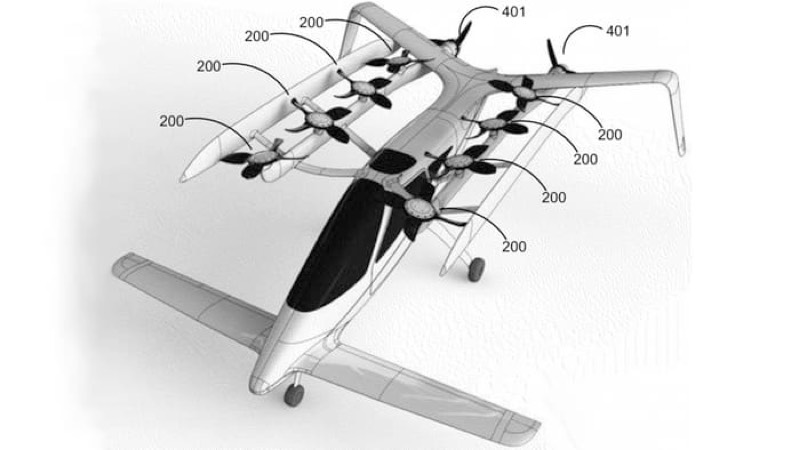
Zee.Aero last made headlines in 2013 when patent filings were discovered that detailed a flying car concept that could take off and land vertically using a plethora of small electric motors turning four-bladed propellers, sort of a cigar shaped drone.
The vehicle, or plane, whichever is the appropriate term for a flying car, includes wings mounted fore and aft, with the payload area mounted in between, with one version of the vehicle being narrow enough to fit into a standard mall parking space.
Because one flying car startup isn’t enough, Page is also said to have invested in Kitty Hawk, Inc., a company that includes a number of former Zee.Aero employees being run by the “godfather” of Google’s self-driving car program and the founder of Google X, Sebastian Thrun.
Like Zee.Aero, Kitty Hawk (the name is that of the place the first powered flight took place) is also located in Mountain View, all within proverbial spitting distance from Google’s headquarters.
Both companies are said to operate separately from each other but unlike Zee.Aero very little is known about Kitty Hawk other than they are said to be working on a flying car “that resembles a giant version of a quadcopter drone.”
In theory building a flying car shouldn’t be that difficult, at least compared to self-driving vehicles, but despite man having mastered powered flight over a century ago, it still today remains somewhat of a pipedream.
You don’t have to go far to see those that have failed before it: from the Ford Flivver in 1940, through to the many failed attempts by Moller Industries and Terrafugia to get viable flying cars off the ground starting from the mid-1960’s onwards.
A flying car in 2016 would also come with a pile of extra safety requirements, such as autonomous flying and regulatory requirements which attempts in the past did not have to deal with.
All that said no one disputes that Larry Page isn’t an extraordinarily smart guy, so if he thinks a flying car can be done, there’s every chance it will happen.
… We’d like to tell you about our mission and how you can help us fulfill it. SiliconANGLE Media Inc.’s business model is based on the intrinsic value of the content, not advertising. Unlike many online publications, we don’t have a paywall or run banner advertising, because we want to keep our journalism open, without influence or the need to chase traffic.The journalism, reporting and commentary on SiliconANGLE — along with live, unscripted video from our Silicon Valley studio and globe-trotting video teams at theCUBE — take a lot of hard work, time and money. Keeping the quality high requires the support of sponsors who are aligned with our vision of ad-free journalism content.
If you like the reporting, video interviews and other ad-free content here, please take a moment to check out a sample of the video content supported by our sponsors, tweet your support, and keep coming back to SiliconANGLE.






