






Open source can be a great avenue through which to enter the IT stage. If the first protocol of developing a fantastic tool is “Get it to market,” open source easily provides the fastest route. The user feedback is like a massive pool of developers and engineers pointing out bugs and polishing features for you at no cost. So, you see, the “free” factor is a two-way street. Alas, companies that start in open source sometimes face challenges to monetizing when the time comes.
Docker, a software containerization platform, has been a massive open-source success story, with recent reports claiming that some companies run 70 percent of their applications on Docker. Ben Golub, CEO of Docker, Inc., says that while he is thrilled to see what developers are doing with the tool regardless, it’s time for the company to get serious abut profitability.
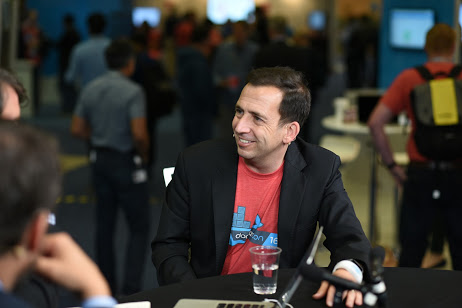
Golub told John Furrier (@furrier) and Brian Gracely (@bgracely), cohosts of theCUBE, from the SiliconANGLE Media team, during DockerCon 2016 that democratizing containers was what catapulted Docker to success. Now the company is looking to democratize orchestration and adoption of Docker in the enterprise.
He said the end result of democratization has been the liberation of developers to focus on innovation instead of technical or “plumbing” issues.
“The way you build an application with Docker is you sort of assemble it like you’re building something out of Legos,” he said. “Not only do we have people talking about doing things like protein folding to solve Parkinson’s using Docker, but it’s 13-year-olds and 10-year-olds who are doing it. It’s absolutely amazing,” he said.
“We still spend more money every month than we bring in, but the curves are going in the right direction,” Golub said, adding that revenue is growing much faster than expenses.
A major new source of revenue is the Docker Datacenter (DDC), which customers use to manage the supply chain of application development and deployment. As the use of Docker spreads through an organization, he said, “At some point, there’s a need to be able to manage it, and that’s when we come in, and generally speaking, we get called.”
Golub said Docker also has a revenue deal with HPE: Every server HPE ships, he explained, will have Docker’s commercial engine and support available at the click of a button.
Watch the full interview below, and be sure to check out more of SiliconANGLE and theCUBE’s coverage of the DockerCon 2016. Plus, join in on the conversation by CrowdChatting live with theCUBE hosts.
Support our mission to keep content open and free by engaging with theCUBE community. Join theCUBE’s Alumni Trust Network, where technology leaders connect, share intelligence and create opportunities.
Founded by tech visionaries John Furrier and Dave Vellante, SiliconANGLE Media has built a dynamic ecosystem of industry-leading digital media brands that reach 15+ million elite tech professionals. Our new proprietary theCUBE AI Video Cloud is breaking ground in audience interaction, leveraging theCUBEai.com neural network to help technology companies make data-driven decisions and stay at the forefront of industry conversations.





