



 NEWS
NEWS
NEWS
NEWS
NEWS

In the merciless world of consumer apps, pretty good uptake by users is never good enough.
That’s why the Palo Alto, CA startup Pingpad Inc. today is pivoting its app, a lightweight social network for small groups to get things done, to the enterprise. Not only that, it’s pivoting onto the wings of Slack with an app that works inside the cloud-based communications and collaboration phenom, giving workgroups a way to work together on documents without leaving Slack.
Pingpad discontinued its consumer app on July 1 because it wasn’t taking off as quickly as founder and Chief Executive Officer Ross Mayfield (pictured above) had hoped. The Slack app is aimed at providing a fast and easy way for company teams and departments to share content, ranging from meeting notes to documentation and other knowledge bases, and then collaborate and act on it.
You might wonder why anyone needs a collaboration app inside another collaboration app. But as Mayfield describes it, Slack itself doesn’t really have its own document collaboration feature, forcing people to share documents separately using Google Docs, Microsoft Office Mobile or Quip. “None of the knowledge being shared on Slack is being captured,” he said.
Once you install the app and sign in, it creates a “pad” for each Slack channel. Essentially Pingpad is bringing wikis, or group-editable web pages, to Slack. The advantage is being able to collaborate on the documents inside Slack rather than having to juggle multiple programs. The app will run both as a bot inside Slack, allowing for notifications of changes to documents, and as a Web app that works on both desktop machines and mobile devices.
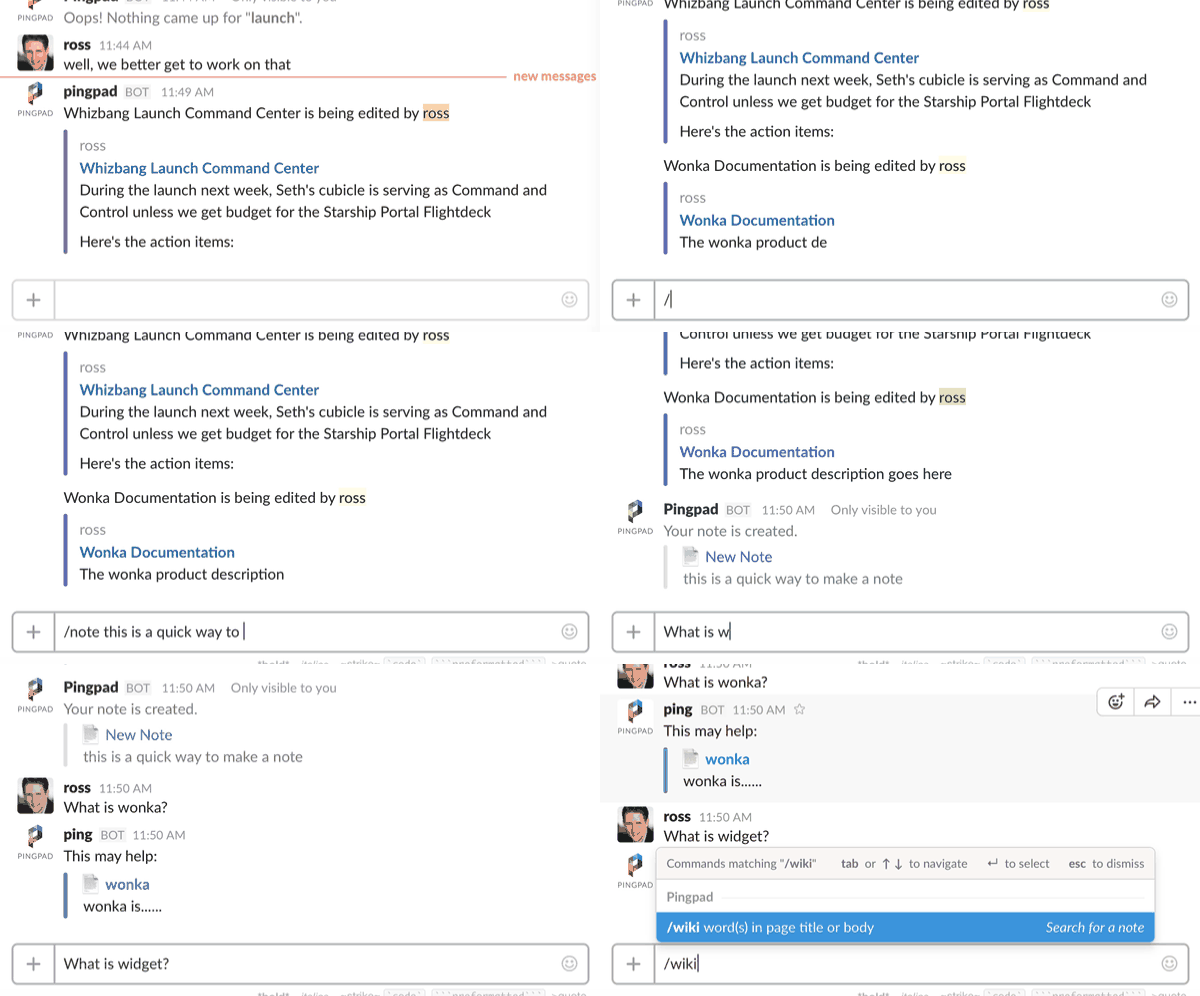
Mayfield has a long history in wikis, having co-founded Socialtext in 2002 to commercialize the concept. But why bet on Slack, which could eventually add that capability to its own platform? Mayfield conceded there’s some risk in betting his company on another company’s platform, just as many companies bet on Twitter and Facebook only to find themselves marginalized or cut off as those platforms’ priorities changed.
But among several reasons he feels confident about the move is that Slack has easy application programming interfaces for integrating apps. Also, he said Slack’s roadmap looks more focused on adding features such as threaded conversations and voice and video than on moving into document collaboration like Pingpad’s.
Most of all, Slack is growing like a weed. “Slack has more momentum than any enterprise app in history,” Mayfield said. That provides a readymade potential user base for Pingpad.
Slack apps are something of a hot commodity. As part of an $80 million app venture fund it formed last year, Slack has spent about $2 million to help fund 14 companies, which have also raised an additional $30 million from other investors. Among the 600 apps on Slack are Abacus for automating expense reports and Nuzzel for personalized news.
Although Mayfield says most of those apps are bots that add very simple functions, he may have nearly as much of a challenge on the enterprise side as with consumers. The document collaboration startup Quip, which Salesforce.com bought last week for $750 million, is the closest competitor to Pingpad, and it has an app on Slack as well.
At least one early Pingpad user likes what he sees so far. “It’s a great extension of Slack,” said Dorrian Porter, CEO of stealth startup Vestaboard of Menlo Park, CA. In particular, he likes the ability to edit documents in real time on Slack, and even see edits on the Pingpad site show up immediately on Slack as well.
Unlike many consumers, companies may be more willing to pay a small amount for a service that’s providing value to its staff. The app will be free for up to 100 pads or notes, and then Pingpad will charge about $4 per user per month for unlimited notes plus enterprise support. That’s about half the price of the lowest-tier Slack subscription, which users also will need to have.
Pingpad, which has a five-person team, has raised about $1 million in a seed financing round from angel investors including 500 Startups, CrunchFund, Greylock Partners and Floodgate Fund. Mayfield said he will be raising more funding soon.
Here’s a short video explaining more details on how Pingpad for Slack works:
Image from Ross Mayfield
… We’d like to tell you about our mission and how you can help us fulfill it. SiliconANGLE Media Inc.’s business model is based on the intrinsic value of the content, not advertising. Unlike many online publications, we don’t have a paywall or run banner advertising, because we want to keep our journalism open, without influence or the need to chase traffic.The journalism, reporting and commentary on SiliconANGLE — along with live, unscripted video from our Silicon Valley studio and globe-trotting video teams at theCUBE — take a lot of hard work, time and money. Keeping the quality high requires the support of sponsors who are aligned with our vision of ad-free journalism content.
If you like the reporting, video interviews and other ad-free content here, please take a moment to check out a sample of the video content supported by our sponsors, tweet your support, and keep coming back to SiliconANGLE.






