



 NEWS
NEWS
NEWS
NEWS
NEWS

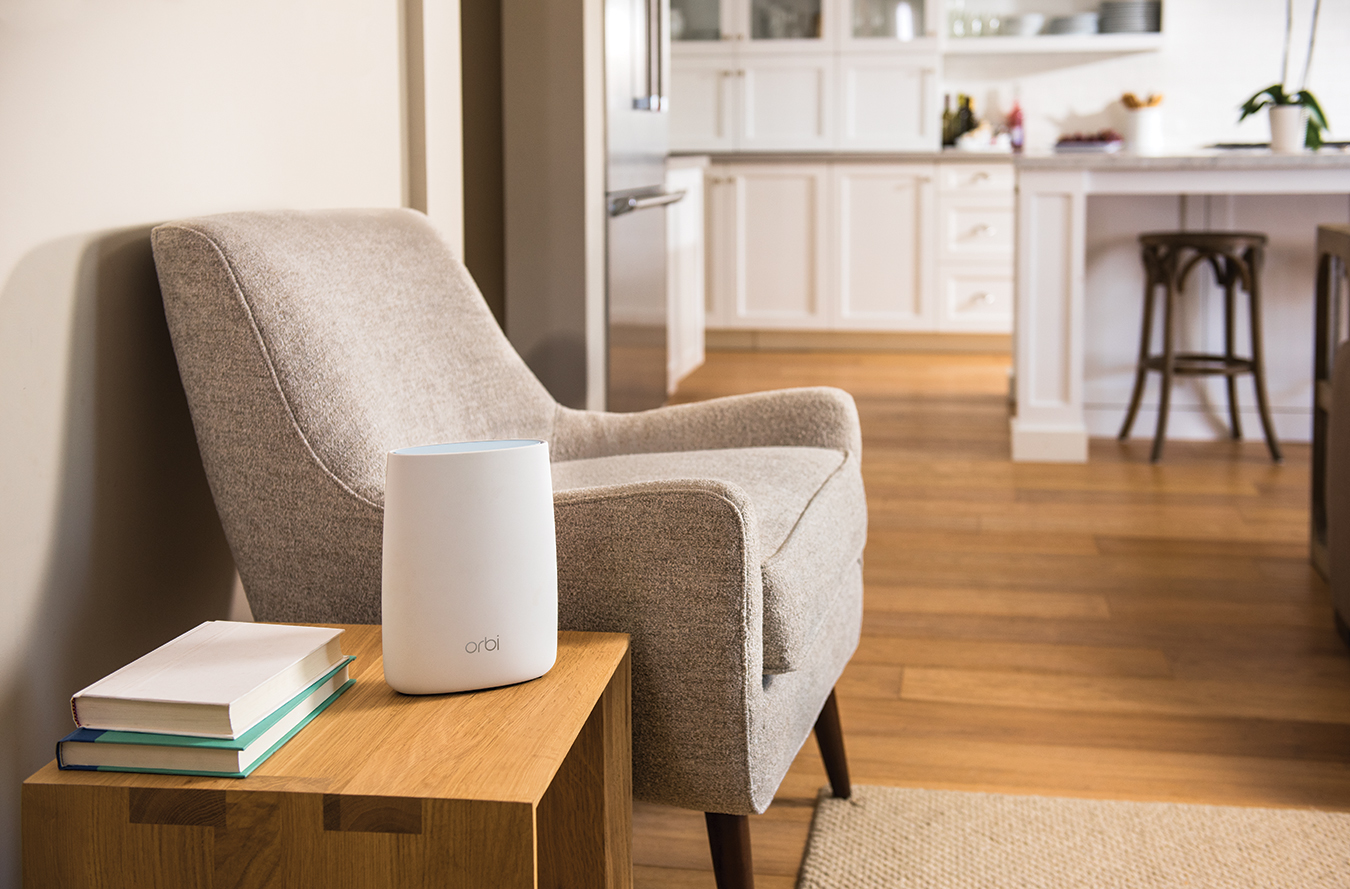
Netgear Inc. has announced a new type of home WiFi system called Orbi that the company says will eliminate WiFi dead zones within the home.
Rather than relying on a single router to provide internet access to the entire house, Orbi uses units to create what Netgear calls a “tri-band mesh” that covers the home with consistent connectivity.
“In designing Orbi, Netgear has applied lessons learned from two decades of home WiFi innovation to address the current network challenges of architectural design, dense building materials and large square footage,” David Henry, senior vice president of home networking devices for Netgear, said in a statement. “Additionally, today’s home networks are now expected to support more devices all of which are competing for your bandwidth. So, the emphasis should not only be on WiFi coverage itself, but also the performance at the furthest edge of that connection. For example, imagine the ability to stream your latest video binge in HD from poolside or streaming music over WiFi to the basement.”
With the Internet of Things steadily creeping into more and more aspects of our lives, reliable home networks are becoming increasingly important, and for the smart device addicts out there, a bad home connection could cause trouble turning on the lights, setting the AC temperature, or even locking the door. Netgear says that it designed Orbi with exactly this problem in mind.
“The connected home has become more data hungry than ever, and video consumption is the primary driver,” Brett Sappington, senior director of research at Parks Associates, explained in Netgear’s announcement.
“Consumers are streaming video to every available screen from an increasing number of OTT video service options. In the U.S. market, the average broadband household has over seven connected CE devices that can stream video. In addition, emerging smart home devices require always-on connectivity to function properly. Consumers have come to expect ubiquitous, high-speed connections throughout the home and rely on Wi-Fi for the in-home connectivity and bandwidth that they need.”
Extending a WiFi network with multiple devices is hardly a new idea, and there are already a number of WiFi extenders on the market that boost the signal of your network by offering multiple access points around the home. Netgear itself even makes several of these devices. According to the company, however, while Orbi fulfills a similar function to WiFi extenders, it works a little differently.
“Orbi provides a single WiFi network for your entire house,” Netgear said in an FAQ for Orbi. “You can connect to one WiFi network, and Orbi takes care of the rest to ensure that you have the fastest possible connection to the Internet.”
“Range extenders work by repeating the WiFi signal of your router to other parts of your house. As a result, you have two different WiFi networks to connect to: one for your router and another for your range extender.”
Essentially, Orbi works as both a router and an extender, and thanks to built-in software that hides the seams of the network, Orbi is much easier to setup and use than a combination of traditional routers and WiFi extenders. According to Netgear, a single Orbi device covers 2,000 square feet, and each additional device extends the network’s range by the same amount.
… We’d like to tell you about our mission and how you can help us fulfill it. SiliconANGLE Media Inc.’s business model is based on the intrinsic value of the content, not advertising. Unlike many online publications, we don’t have a paywall or run banner advertising, because we want to keep our journalism open, without influence or the need to chase traffic.The journalism, reporting and commentary on SiliconANGLE — along with live, unscripted video from our Silicon Valley studio and globe-trotting video teams at theCUBE — take a lot of hard work, time and money. Keeping the quality high requires the support of sponsors who are aligned with our vision of ad-free journalism content.
If you like the reporting, video interviews and other ad-free content here, please take a moment to check out a sample of the video content supported by our sponsors, tweet your support, and keep coming back to SiliconANGLE.






