







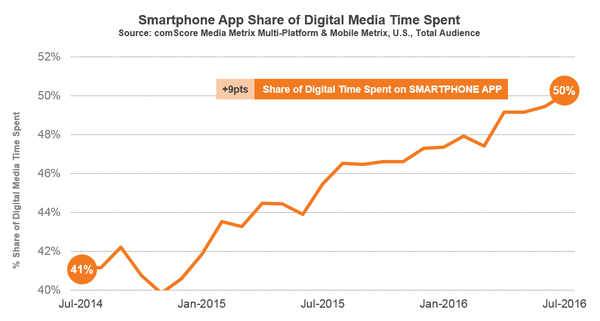
The amount of time that U.S. consumers spend using smartphone apps has been steadily increasing over the years, accounting for 34 percent in 2013 and rising to 41 percent in 2014. The latest report from comScore Inc. sees the time spent on smartphone apps rising to 50 percent as of July 2016.
The statistics is not surprising considering the convenience factor of a smartphone, a device that consumers constantly have with them. With an increase in the size of smartphone displays, and 4G LTE networks offering up faster speeds, it is no longer necessary to trade your smartphone for a tablet or desktop when you want to stream music, check your email, get directions, etc.
A report released by comScore in August shows the top apps that dominate mobile users time are mainly from big players like Facebook and Google, with Facebook, Facebook Messenger, YouTube, Google Maps, and Google Search taking up the five top spots. While the list is mainly made up of established apps, it does contain a new-to-the-market app that has been causing a stir the last couple of months: Pokémon GO.
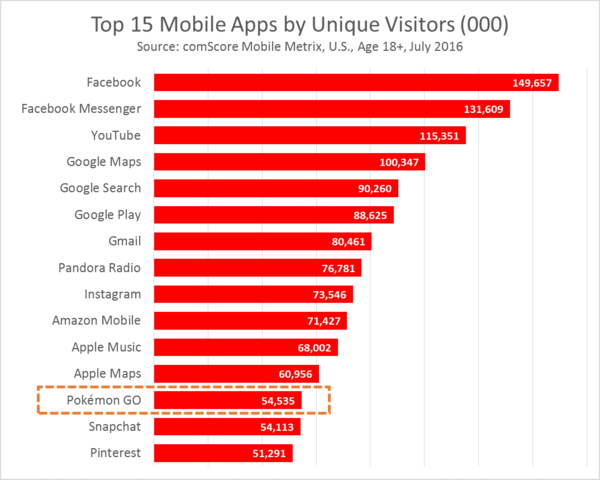
In its first month since launch, Pokémon GO has captivated the world and takes the 13th spot of the largest mobile apps, with nearly 55 million unique U.S. users across smartphones and tablets. The augmented reality game beats both Snapchat and Pinterest in unique users and ranks fourth in total time spent on the app, beaten only by Facebook, Pandora, and YouTube.
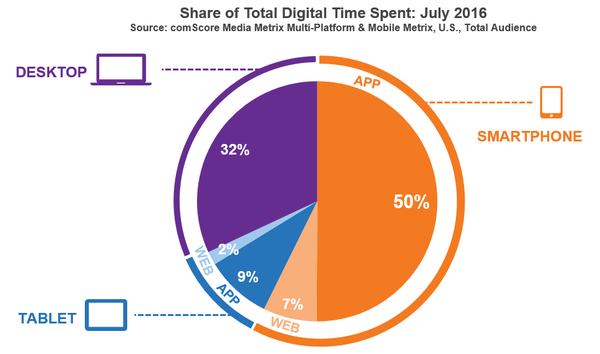
ComScore expects smartphone apps to continue their growth, surpassing the 50 percent mark, in the near term. However, in the company’s statement, despite the growth of smartphone apps “desktop and tablets will maintain critical roles in consumers’ online consumption for the foreseeable future.”
Support our mission to keep content open and free by engaging with theCUBE community. Join theCUBE’s Alumni Trust Network, where technology leaders connect, share intelligence and create opportunities.
Founded by tech visionaries John Furrier and Dave Vellante, SiliconANGLE Media has built a dynamic ecosystem of industry-leading digital media brands that reach 15+ million elite tech professionals. Our new proprietary theCUBE AI Video Cloud is breaking ground in audience interaction, leveraging theCUBEai.com neural network to help technology companies make data-driven decisions and stay at the forefront of industry conversations.





