






Autonomous vehicles present such a revolutionary change to the way we commute, it’s sometimes hard to envision the day they will rule our roads and highways. But the manufacturers and engineers hard at work perfecting them tell us that in a few years, this may be the reality. How do they work? Are they safe? Are they dependable?
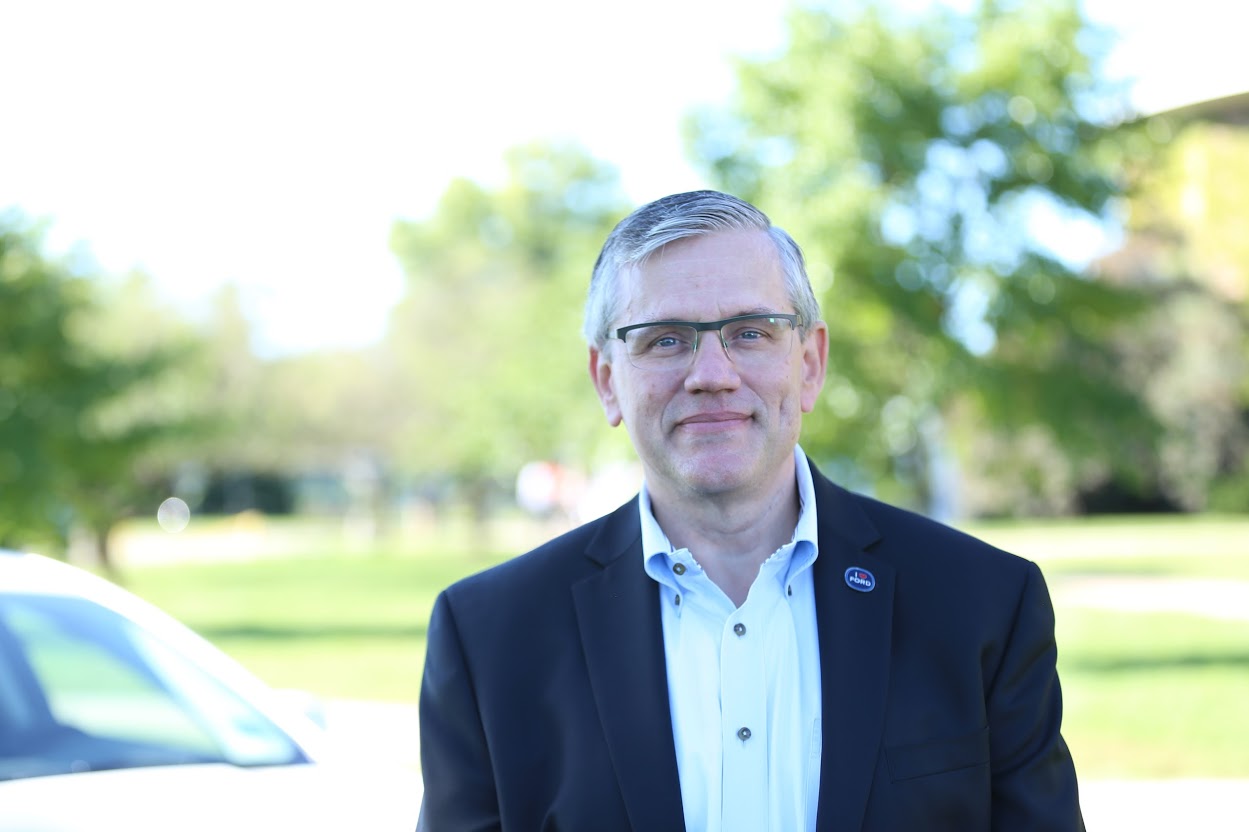
To help answer these questions, Jeff Frick (@JeffFrick), cohost of theCUBE, from the SiliconANGLE Media team, talked autonomous vehicles, during the Further With Ford 2016 event, with a man who should know — James Buczkowski, technical fellow and director of Electrical and Electronics Systems, Research and Advanced at Ford Motor Co.
Buczkowski revealed why Ford has chosen to focus on the fully autonomous Level 4 standard, rather than partially autonomous Level 3.
“Level 3 is still pretty complicated, and we’re still trying to understand it, because it has to do with reengaging the driver when you need them. An you can’t predict when you’re going to need them — it could be very spontaneous,” he said.
Frick mentioned an account of someone in an autonomous driving test crashing the car while playing a video game. Buczkowski said the driver has to mind the safety level of autonomous driving in different areas — and says that Level 4 takes the guess work out of this.
“We are really focusing on Level 4, which says, ‘In a geofence, in a specific area, under certain kinds of conditions, the driver isn’t needed at all,'” he said.
Buczkowski said that Ford’s autonomous cars will make network connectivity non-critical, so that “in a condition where either connectivity is not ubiquitous or somehow drops out for a second or there’s some latency, the vehicle can act on its own.”
He went on to state that machine learning, ultrasonics, sensors and lidar (Light Imaging, Detection, And Ranging) mapping technology will aid autonomous driving.
“Now lidar is really important to help locate the vehicle in its environment,” he said, adding that the high-resolution maps help lidar match the car to the exact location.
Watch the complete video interview below, and be sure to check out more of SiliconANGLE and theCUBE’s coverage of Further With Ford 2016.
Support our mission to keep content open and free by engaging with theCUBE community. Join theCUBE’s Alumni Trust Network, where technology leaders connect, share intelligence and create opportunities.
Founded by tech visionaries John Furrier and Dave Vellante, SiliconANGLE Media has built a dynamic ecosystem of industry-leading digital media brands that reach 15+ million elite tech professionals. Our new proprietary theCUBE AI Video Cloud is breaking ground in audience interaction, leveraging theCUBEai.com neural network to help technology companies make data-driven decisions and stay at the forefront of industry conversations.





