



 NEWS
NEWS
NEWS
NEWS
NEWS

Cisco Systems, Inc. and with partner Springpath, Inc. have entered the hyper-convergence world in a big way. HyperFlex, released in March 2016, is a line of hyper-converged products that are aimed at the data center, historically a strong area for Cisco. Hyper-convergence is seen as a way to replace expensive, appliance-style storage arrays with more generic servers — containing disk and flash storage — that are capable of running distributed storage and distributed computing at the same time, on the same iron.
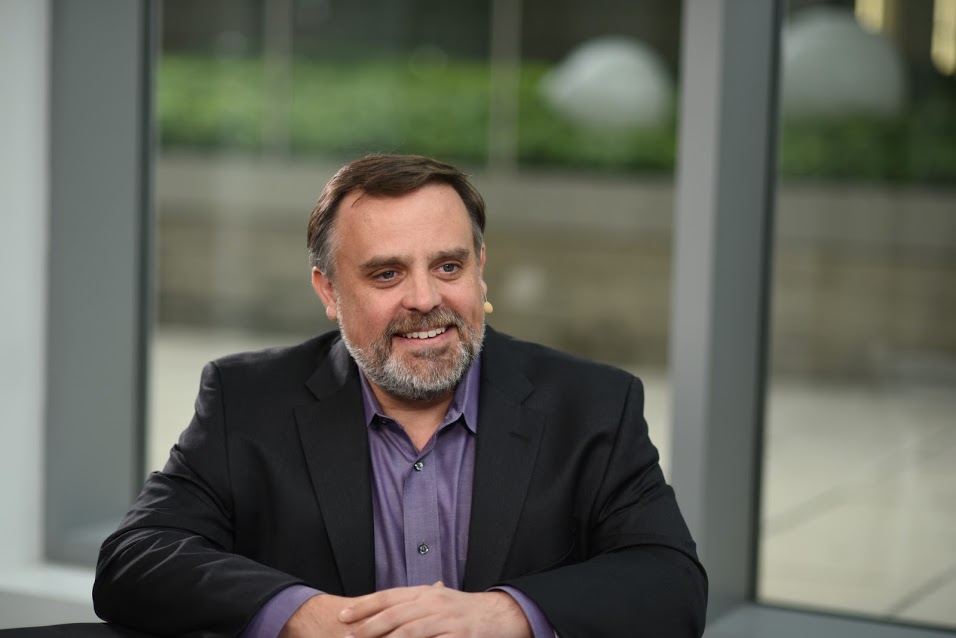
Todd Brannon, director of Product Marketing, UCS, at Cisco Systems, joined Dave Vellante (@dvellante) and Peter Burris (@plburris), cohosts of theCUBE, from the SiliconANGLE Media team, during BigDataNYC 2016, to discuss the implications of hyper-convergence for Cisco, and for data in general.
Vellante asked about the perception that by moving into the hyper-convergence space, Cisco has entered the server business, and how many folks were skeptical about such a move by a well-known network company.
“We didn’t enter the server business, per se. … What we wanted to do was re-architect the way it was all connected together. We were focused on creating a singular platform, with network fabric at the center. … It’s really paid off,” said Brannon.
Burris asked about where Cisco customers prefer to put their data, on-prem or in the cloud. He stated that he thought Cisco would always be a major player, because network access will always be needed across hyper-convergence.
“We see a lot of hybrid cloud today, but we don’t see a lot of hybrid applications,” said Brannon. “Moving that data in and out of the cloud, there’s a latency element, but there’s also a cost element. … In many ways, the cloud service providers are a loss leader on the compute side; they make all their money on storage,” he continued.
The conversation moved to hyper-convergence use cases, and Vellante asked Brannon if he had one to share.
“We just did the Rio Olympics. … The scale of that…was just enormous. There was something like 15,000 athletes from 200 countries; on the ground, they had 85,000 security personnel, 70,000 volunteers, 25,000 members of the media, and that was before the spectators even got there,” he explained. “And then you’re got all the venues — all the cameras, the timers, the sensors — and we had one network there that connected all of that together.”
He said part of the challenge was intercepting the 23 million hacking attempts that were made, but Cisco was able to keep the network safe for everyone.
Watch the complete video interview below, and be sure to check out more of SiliconANGLE and theCUBE’s coverage of BigDataNYC 2016.
… We’d like to tell you about our mission and how you can help us fulfill it. SiliconANGLE Media Inc.’s business model is based on the intrinsic value of the content, not advertising. Unlike many online publications, we don’t have a paywall or run banner advertising, because we want to keep our journalism open, without influence or the need to chase traffic.The journalism, reporting and commentary on SiliconANGLE — along with live, unscripted video from our Silicon Valley studio and globe-trotting video teams at theCUBE — take a lot of hard work, time and money. Keeping the quality high requires the support of sponsors who are aligned with our vision of ad-free journalism content.
If you like the reporting, video interviews and other ad-free content here, please take a moment to check out a sample of the video content supported by our sponsors, tweet your support, and keep coming back to SiliconANGLE.






