



 NEWS
NEWS
NEWS
NEWS
NEWS

In an announcement that could be the death knell for stenographers everywhere, Microsoft Corp says that it has made a major breakthrough in the field of speech recognition.
According to the company, it has developed an artificial intelligence that is capable of understanding conversational speech at a rate comparable to real humans.
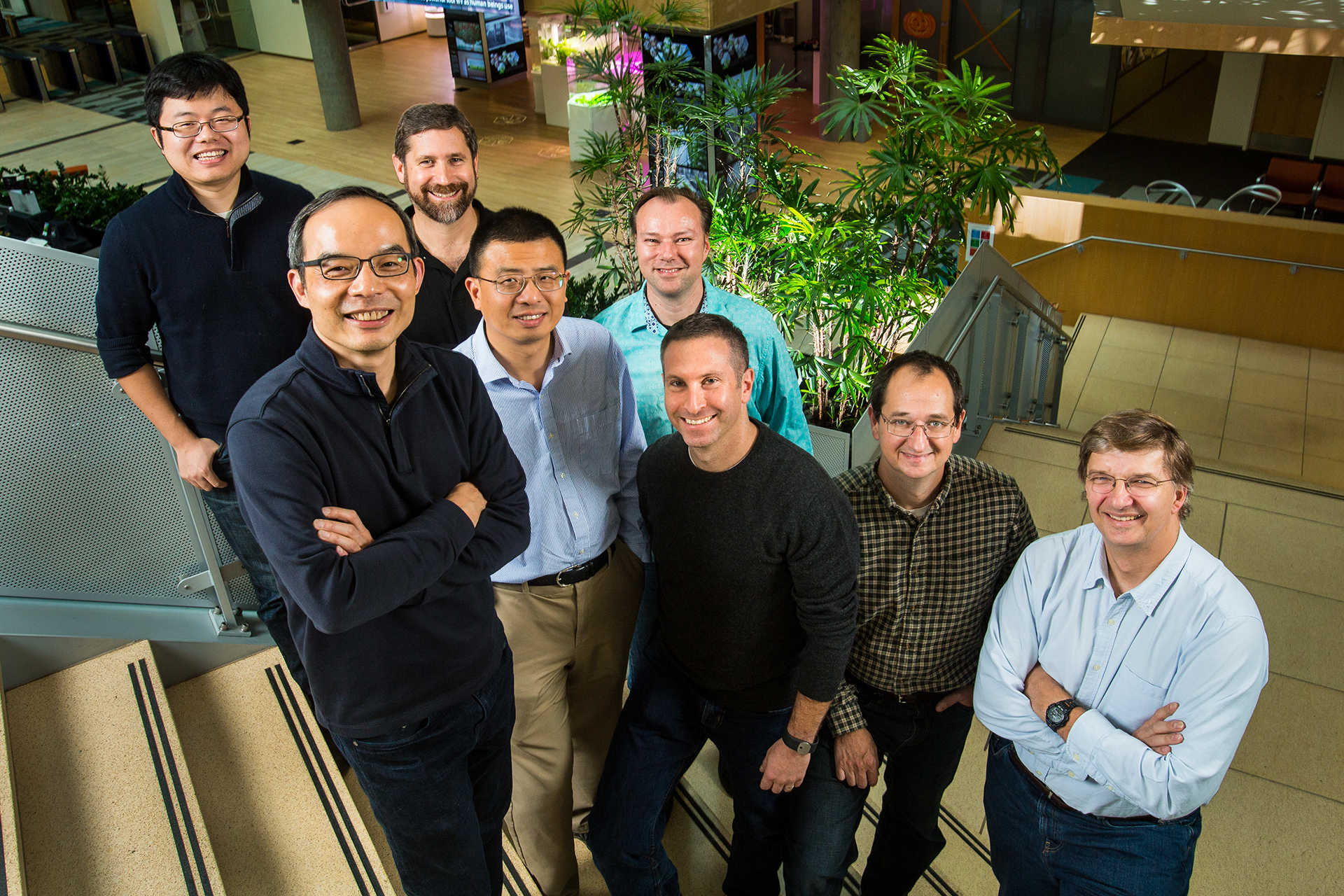
In a research paper published through Cornell University on Monday, Microsoft’s Artificial Intelligence and Research team (pictured above) outlined the test they used to determine the effectiveness of their new system. The researchers said they tested their AI with the NIST 2000, an evaluation created by the National Institute of Standards and Technology that is specifically designed to determine the accuracy of speech recognition software.
The test compares the software’s accuracy to tests given to actual humans, who were asked to transcribe conversations between speakers who had never met before. The human transcribers had an average error rate of 5.9 percent, and Microsoft says that its new program has finally managed to match this number
“We’ve reached human parity,” said Xuedong Huang, Microsoft’s chief speech scientist. “This is an historic achievement.”
“Even five years ago, I wouldn’t have thought we could have achieved this,” added Executive Vice President Harry Shum, who heads the Artificial Intelligence and Research team. “I just wouldn’t have thought it would be possible.”
In its blog post announcing the breakthrough, Microsoft noted that this technology could find its way to some of its consumer products, including its Xbox game consoles and its Cortana virtual assistant. Hopefully this means the days of talking to your computer like on “Star Trek” are finally here.
While Microsoft’s achievement is certainly impressive, it is far from the only major tech company working on speech AI. Chinese web giant Baidu Inc. is another major player in the space, and earlier this month it released a new keyboard app that focuses almost entirely on speech-to-text rather than typing.
“High-accuracy speech recognition makes it possible to achieve speeds up to three times faster than before,” Baidu Chief Scientist Andrew Ng said at the time. “As speech recognition continues to make dramatic improvements, it’s natural that speech will become a more and more popular way to communicate with devices.”
Baidu released its own research paper earlier this year in which it compared the speed and accuracy of its speech recognition AI to humans typing on the iOS keyboard, and it found that not only is the speech-to-text faster, it is also more accurate in both English and Mandarin.
Now if only we could get the computers to talk back, we might finally be able to eliminate the need to interact with other people entirely. Good thing Google’s DeepMind team is working on that for us.
… We’d like to tell you about our mission and how you can help us fulfill it. SiliconANGLE Media Inc.’s business model is based on the intrinsic value of the content, not advertising. Unlike many online publications, we don’t have a paywall or run banner advertising, because we want to keep our journalism open, without influence or the need to chase traffic.The journalism, reporting and commentary on SiliconANGLE — along with live, unscripted video from our Silicon Valley studio and globe-trotting video teams at theCUBE — take a lot of hard work, time and money. Keeping the quality high requires the support of sponsors who are aligned with our vision of ad-free journalism content.
If you like the reporting, video interviews and other ad-free content here, please take a moment to check out a sample of the video content supported by our sponsors, tweet your support, and keep coming back to SiliconANGLE.






