



 WOMEN IN TECH
WOMEN IN TECH
WOMEN IN TECH
WOMEN IN TECH

In a few short years, the main source of information has moved from newspapers “made of trees” to online media — Twitter, Facebook, blogs, you name it. What’s the current view of journalism, and where do we think it’s going?
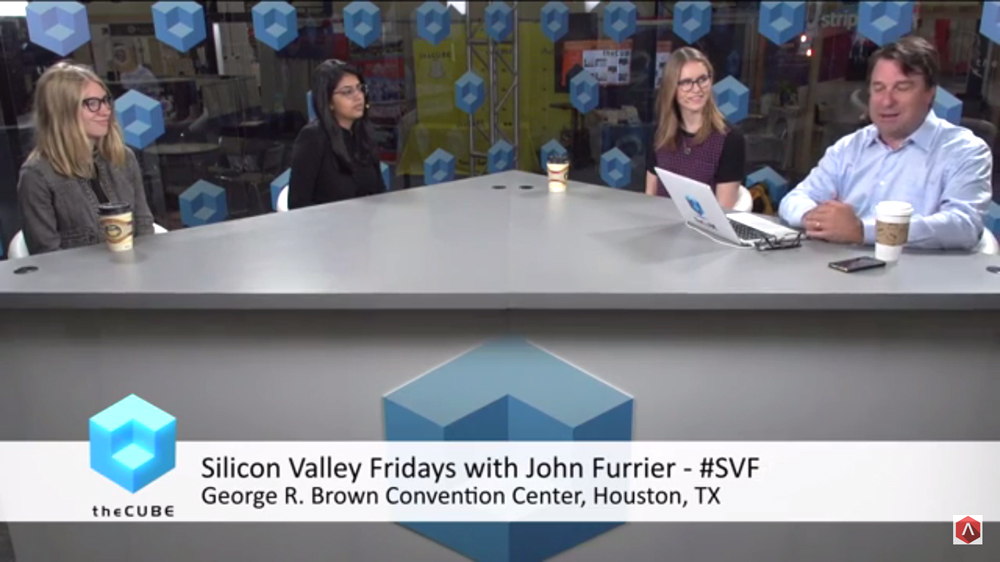
The TechTruth Women in Tech Fellows, from the GroundTruth Project — Karis Hustad, Pooja Sivaraman, and Tori Bedford — joined John Furrier (@furrier), co-host of theCUBE, from the SiliconANGLE Media team, during a broadcast of Silicon Valley Fridays, live from the Grace Hopper Celebration of Women in Computing in Houston, TX. The TechTruth fellows discussed journalism’s role in today’s society, including its impact on the U.S. presidential race, as well as the future of journalism in a world that never sleeps.
Furrier started the conversation by telling the fellows, “You’re the young guns of the next generation, taking the ideals of the GroundTruth Project and [applying them to] the tech area.” He spoke about the role of diversity in journalism, including GamerGate, and the generational shift in journalism — how, in some respects, there are no rules, they’re being made up as we go along. For example, in the old days of politics, a politician may have had sexual affairs, but the unwritten rule was: “Don’t talk about it.” However, today, such news is sensationalized and very much talked about.
“Yes, Trump is bringing it all out. He’ll say things that are very sensationalist, very racially charged and truly offensive, and it will bring out other people who agree with him that hadn’t had a platform to speak before,” said Bedford. “And if Hillary Clinton is elected, there’s going to be a ton of backlash against her just based on her gender. But that isn’t something that doesn’t already exist; it’s just going to be unearthed through her being president.”
Furrier agreed and said that unless there’s a Brexit-type event in the U.S. in the next couple of weeks, it seems that Clinton will win the election.
“Brexit was a wake-up call for a lot of Americans, because there was a higher [U.K.] vote among older people, and more conservative people that swung the vote,” explained Hustad. “So I think a lot of younger [American] people who are more apathetic about voting saw that and are like, ‘Wow, if I don’t put my voice out there, this is what can happen.’ So I think Brexit came at a convenient time; time will tell.”
Regarding misogyny in the election, Pooja said, “I’ve been comparing this election to GamerGate a lot. The issues are being brought to the forefront. And I think GamerGate did a similar thing in the technology space, where women were being harassed for years in the gaming world. But GamerGate was so absolutely horrible; women were driven out of their houses, they were getting violent death threats. I think it took something that bad for people to realize … we can’t have an industry that is so popular exist in this way. In a similar sense, we can’t have politics that exists in this space.”
The discussion moved to how the fellows see journalism as working for the next generation; is journalism dead? If the media industry is not making money, then where does it go?
“There’s always a need for people to want to know the truth. I don’t know if newspapers made of trees will be around forever; I think the medium will change,” said Bedford.
Explained Hustad, “[Instead of] you find a story, you report on it, you put it out for the Sunday edition … you have to meet people where they are now; they’re online, on social media; the livestream generation.”
Furrier mentioned NPR’s fact-checking live blog and how it’s a true innovation in real-time journalism. While the fellows agreed that faster news is a great innovation, some details get lost in the rush when people just check the headlines on social media.
“We could use a lot more analysis,” said Bedford.
Watch the complete video interview below, and be sure to check out more from SiliconANGLE and theCUBE.
… We’d like to tell you about our mission and how you can help us fulfill it. SiliconANGLE Media Inc.’s business model is based on the intrinsic value of the content, not advertising. Unlike many online publications, we don’t have a paywall or run banner advertising, because we want to keep our journalism open, without influence or the need to chase traffic.The journalism, reporting and commentary on SiliconANGLE — along with live, unscripted video from our Silicon Valley studio and globe-trotting video teams at theCUBE — take a lot of hard work, time and money. Keeping the quality high requires the support of sponsors who are aligned with our vision of ad-free journalism content.
If you like the reporting, video interviews and other ad-free content here, please take a moment to check out a sample of the video content supported by our sponsors, tweet your support, and keep coming back to SiliconANGLE.






