



 NEWS
NEWS
NEWS
NEWS
NEWS

Google’s DeepMind is teaming up with Blizzard Entertainment Inc. to open up the world of the game StarCraft II to artificial intelligence researchers.
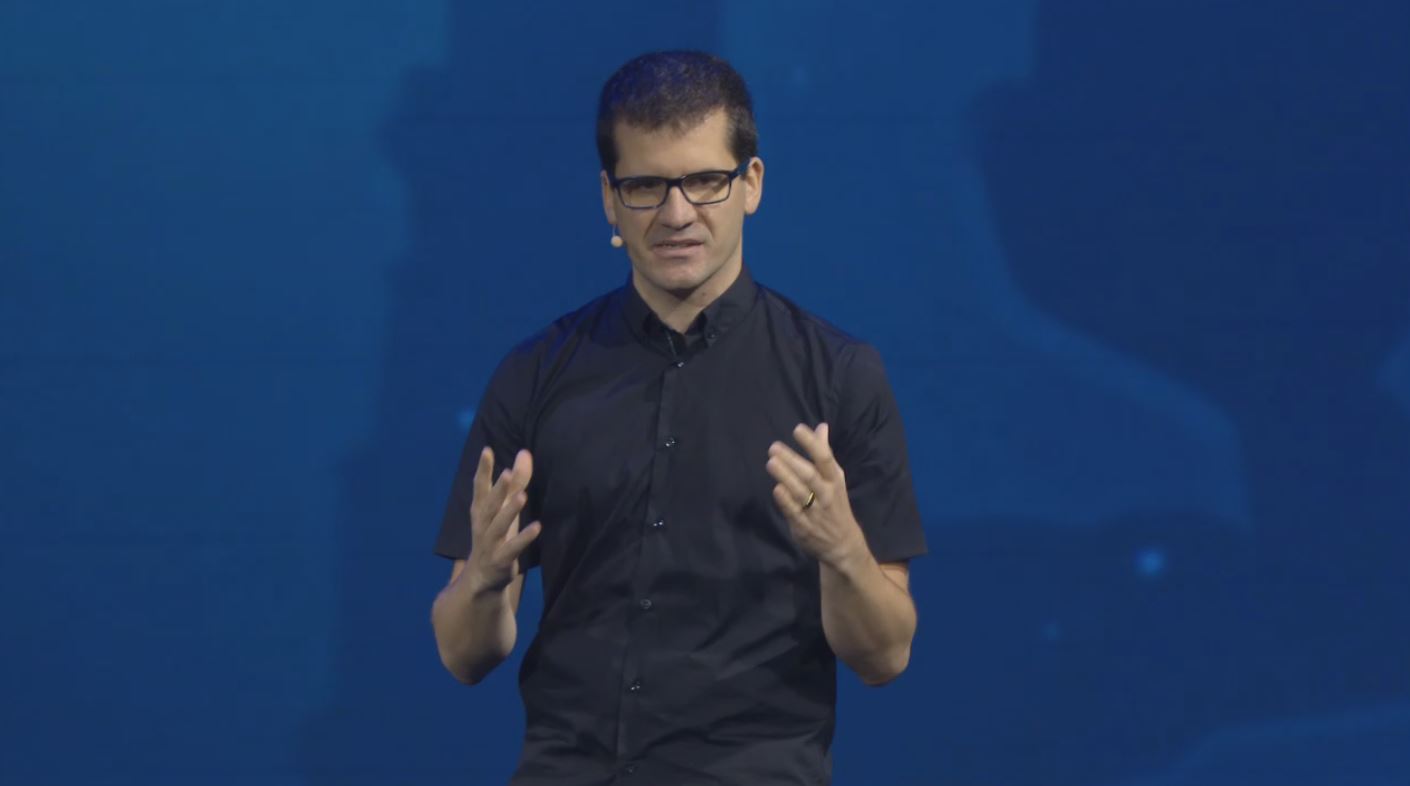
DeepMind Staff Research Scientist Oriol Vinyals (above) announced the new partnership today during Blizzcon, Blizzard’s annual convention held in Anaheim, Calif. According to Vinyals, who is himself a longtime StarCraft player, Blizzard will be releasing a StarCraft II application programming interface early next year that will allow researchers to build and train AI agents to play the game.
“For StarCraft players like myself, advances in AI could deal some drastic benefits,” Vialys said. “For example, we might see more interesting AI opponents for a variety of skill levels or AI coaches that can help players improve. And there’s still a long way to go, but maybe we’ll even see an agent take on the Blizzcon champion in a show match.”
More than just games, he added, “these advancements we make in StarCraft might help us when we apply them to the real-world challenges we face in science, energy and other human endeavors.”
Blizzard President and Chief Executive Mike Morhaime told fans at Blizzcon that the groundwork for DeepMind’s StarCraft project is already underway, and he said that players can help the research team simply by playing StarCraft II online, suggesting that DeepMind is already gathering game data to feed into its machine learning algorithms.
During the announcement, Vinyals highlighted DeepMind’s success with AlphaGo, an AI developed through machine learning that defeated one of the world’s top Go players in an astounding 4 to 1 victory. Vinyals called Go “the absolute pinnacle of perfect information games,” which are games where each player knows everything about the current state of the game at all times. Perfect information games have been a popular testing ground for AI researchers for decades, from checkers and tic-tac-toe programs in the 1950s to IBM’s chess-playing computer, Deep Blue, which famously defeated Garry Kasparov in 1997.
The popularity of perfect information games in the AI research community stems from the fact that they contain no elements of luck or bluffing, unlike hidden information games such as poker, in which players know only some of the information about the current state of the game. Games like Go and Chess are also symmetrical for the most part, as each player has the same pieces and the same range of moves. Finally, one of the most important features of these games for AI is the fact that they are turn-based, so the AI has time to analyze the situation and choose an optimal move without worrying about interference from the other player.
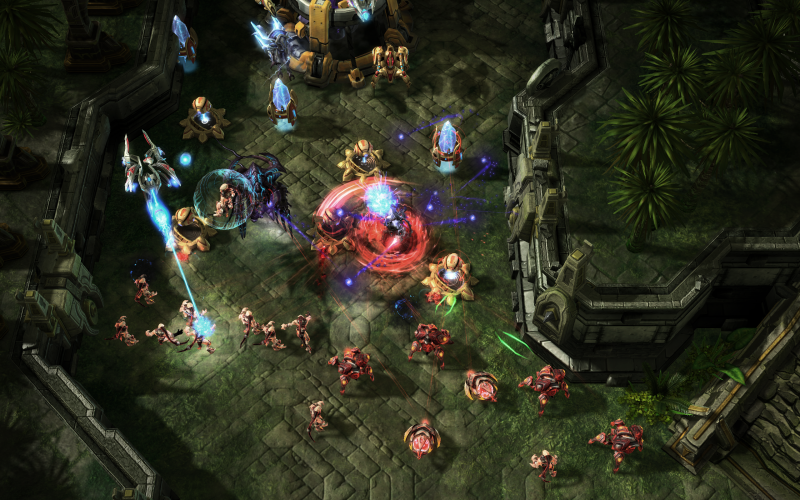
As Vinyals noted in his announcement, StarCraft II is none of these things. The game has plenty of hidden information, so each player must predict what his or her opponent is trying to do and make decisions based on assumptions that might not be accurate. The game is also asymmetric, with multiple races to choose from, each of which play very differently. Most importantly, StarCraft II is a real-time strategy game, with players making all of their decisions and moves simultaneously without pause.
Vinyals explained that StarCraft II “represents the messiness of the real world,” and it will allow researchers to test AI techniques in ways that would not be possible with more structured, predictable games like Go. More information about DeepMind’s StarCraft II project is on its blog.
… We’d like to tell you about our mission and how you can help us fulfill it. SiliconANGLE Media Inc.’s business model is based on the intrinsic value of the content, not advertising. Unlike many online publications, we don’t have a paywall or run banner advertising, because we want to keep our journalism open, without influence or the need to chase traffic.The journalism, reporting and commentary on SiliconANGLE — along with live, unscripted video from our Silicon Valley studio and globe-trotting video teams at theCUBE — take a lot of hard work, time and money. Keeping the quality high requires the support of sponsors who are aligned with our vision of ad-free journalism content.
If you like the reporting, video interviews and other ad-free content here, please take a moment to check out a sample of the video content supported by our sponsors, tweet your support, and keep coming back to SiliconANGLE.






