



 CLOUD
CLOUD
CLOUD
CLOUD
CLOUD

Google Inc. early next year will start offering graphics processing unit chips as a computing service alongside the standard processors in its cloud computing platform, in an effort to make it easier for enterprises to use machine learning.
While central processing unit chips such as Intel Corp.’s are commonly used for versatile, general-purpose computing problems, GPUs contain hundreds of times as many computational cores and therefore can do faster parallel processing tasks and specialized large-scale simulation such as studying molecular binding or optimizing the shape of a turbine blade.
In particular, they’ve become one of the processors of choice for machine learning, the branch of artificial intelligence that has produced much better language translation, image recognition and other services in recent years. In a press event Tuesday, Google announced a number of new services and features aimed at making machine learning easier for more developers to use.
Many major cloud computing services already offer GPU services, including Amazon Web Services, Microsoft Azure and IBM’s Bluemix.
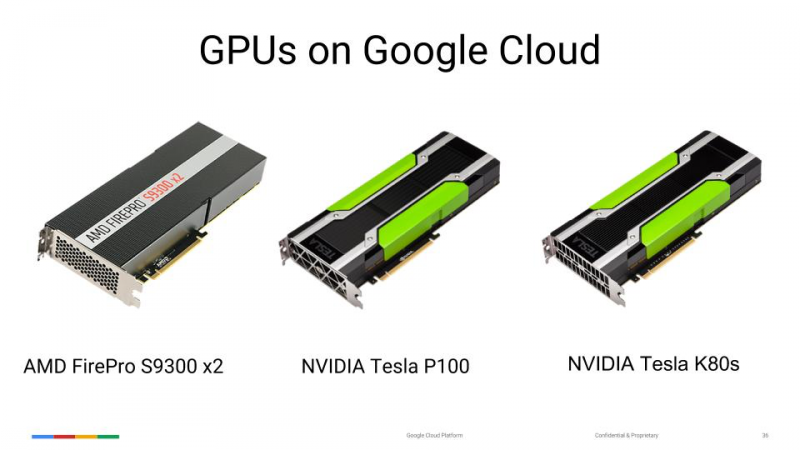
Image courtesy of Google
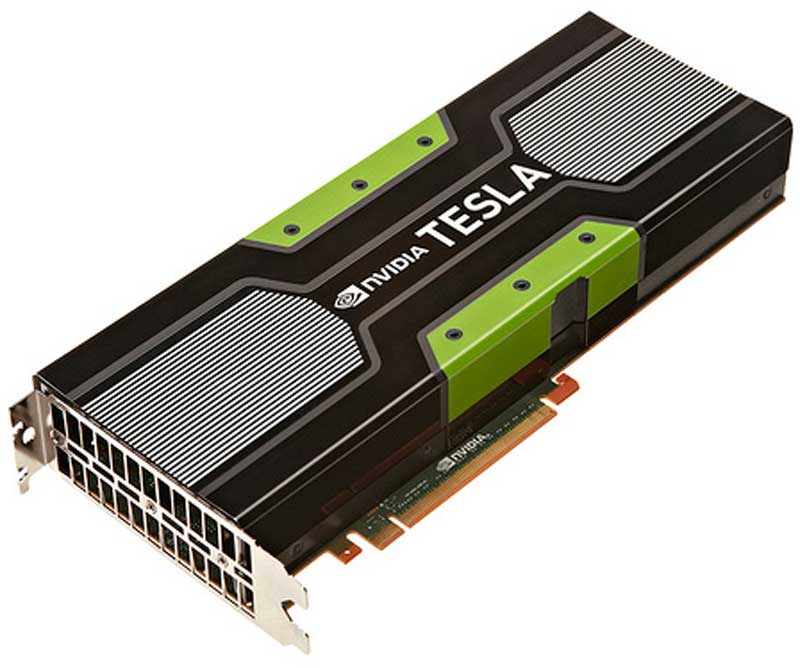
The GPU processors that the Google Cloud Platform service will offer include AMD FirePro S9300 x2 for GPU-based remote workstations and NVIDIA Tesla P100 and K80 GPUs designed for deep learning, AI and powerful computational analysis applications.
Google expects to offer the GPU service in a flexible format, permitting customers to choose between pass-through mode and bare metal performance with up to eight GPU instances attached to per virtual machine.
San Francisco-based MapD Technologies, Inc. uses cloud computing to do large-scale simulations based on large amounts of data with the use of GPUs for applications such as visualizing taxi rides in New York City, graphing political donations and mapping tweets across the world.
The company put the Google Cloud Platform GPU service to the test with its database visualization stack during early access. “These new instances of GPUs in the Google Cloud offer extraordinary performance advantages over comparable CPU-based systems and underscore the inflection point we are seeing in computing today,” said Todd Mostak, MapD’s founder and chief executive.
MapD implemented its own visualization engine and database and in March launched a version optimized to use GPUs instead of Intel-based CPUs.
Google plans to roll out the GPU offerings on the Google Cloud Platform in the first quarter of 2017 and has additional details and information on the service on its GPU Google Could website.
… We’d like to tell you about our mission and how you can help us fulfill it. SiliconANGLE Media Inc.’s business model is based on the intrinsic value of the content, not advertising. Unlike many online publications, we don’t have a paywall or run banner advertising, because we want to keep our journalism open, without influence or the need to chase traffic.The journalism, reporting and commentary on SiliconANGLE — along with live, unscripted video from our Silicon Valley studio and globe-trotting video teams at theCUBE — take a lot of hard work, time and money. Keeping the quality high requires the support of sponsors who are aligned with our vision of ad-free journalism content.
If you like the reporting, video interviews and other ad-free content here, please take a moment to check out a sample of the video content supported by our sponsors, tweet your support, and keep coming back to SiliconANGLE.






