



 BIG DATA
BIG DATA
BIG DATA
BIG DATA

After successfully applying Watson to diagnosing cancer and predicting blood sugar drops in diabetes patients, IBM Corp. is setting out to conquer yet another part of the healthcare field: medical imaging.
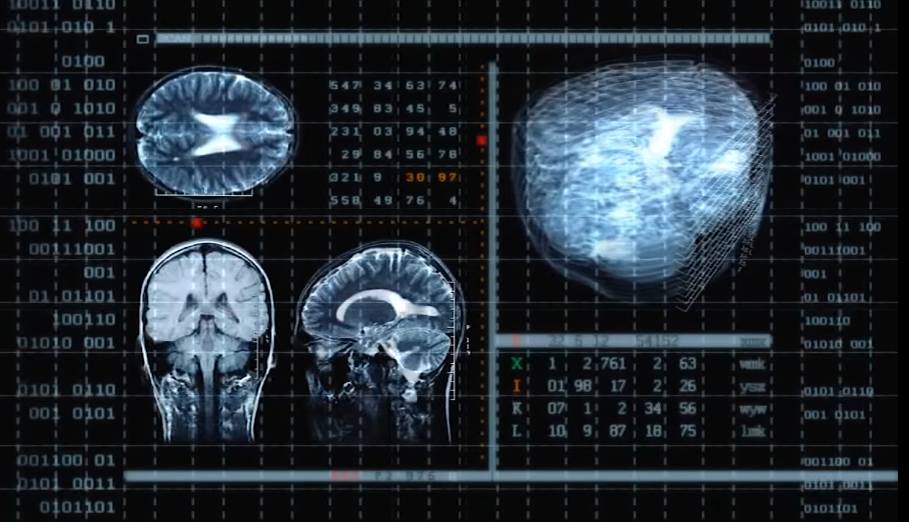
At an event organized by the Radiological Society of North America today, the company unveiled a set of new tools that harness its Jeopardy!-winning artificial intelligence to help doctors interpret patient scans. The software is based in large part on technology that IBM obtained through its $1 billion acquisition of Merge Healthcare Inc. last August.
The deal bought the company an extensive lineup of medical image management services, a big customer base to go with it and access to more than 30 billion patient scans. Big Blue has been feeding this data to Watson in a bid to enhance its visual analysis capabilities.
The first new tool that IBM debuted today employs the system’s know-how to match medical images with relevant clinical information. Its purpose, according to the company, is to give physicians a more complete understanding of patient health and thus enable them to provide better care. The software is joined by a pair of analytics services designed to help those physicians make better use of the information provided by Watson.
One is described as a “cognitive data summarization” tool capable of quickly surfacing the details most relevant for each case, while the other aims to reconcile inconsistencies between clinical evidence and electronic health records. The latter issue emerges all too frequently due to the hectic pace of hospital operations. A doctor might jot down a patient note in illegible handwriting because they’re rushing to see another person, while a nurse may forget to log an important medical detail. Then there are imaging errors.
The latter problem is the focus of the fourth new offering that IBM unveiled today. Watson Clinical Integration Module, as it’s called, is an extension for Merge’s radiology platform that promises to counteract common error causes in patent scans. The company is also rolling out a “Lesion Segmentation and Tracking Module” that aims to ease the management of patients whose conditions must be monitored over an extended period of time.
Big Blue can be expected to continue expecting the scope of Watson’s medical imaging capabilities over time as it works to build a bigger presence in the healthcare sector. John Kelly, the head of IBM Research, predicted in 2015 that this space will be one of the company’s “biggest growth areas over the next 10 years.”
Image via IBM
… We’d like to tell you about our mission and how you can help us fulfill it. SiliconANGLE Media Inc.’s business model is based on the intrinsic value of the content, not advertising. Unlike many online publications, we don’t have a paywall or run banner advertising, because we want to keep our journalism open, without influence or the need to chase traffic.The journalism, reporting and commentary on SiliconANGLE — along with live, unscripted video from our Silicon Valley studio and globe-trotting video teams at theCUBE — take a lot of hard work, time and money. Keeping the quality high requires the support of sponsors who are aligned with our vision of ad-free journalism content.
If you like the reporting, video interviews and other ad-free content here, please take a moment to check out a sample of the video content supported by our sponsors, tweet your support, and keep coming back to SiliconANGLE.






