



 CLOUD
CLOUD
CLOUD
CLOUD
CLOUD

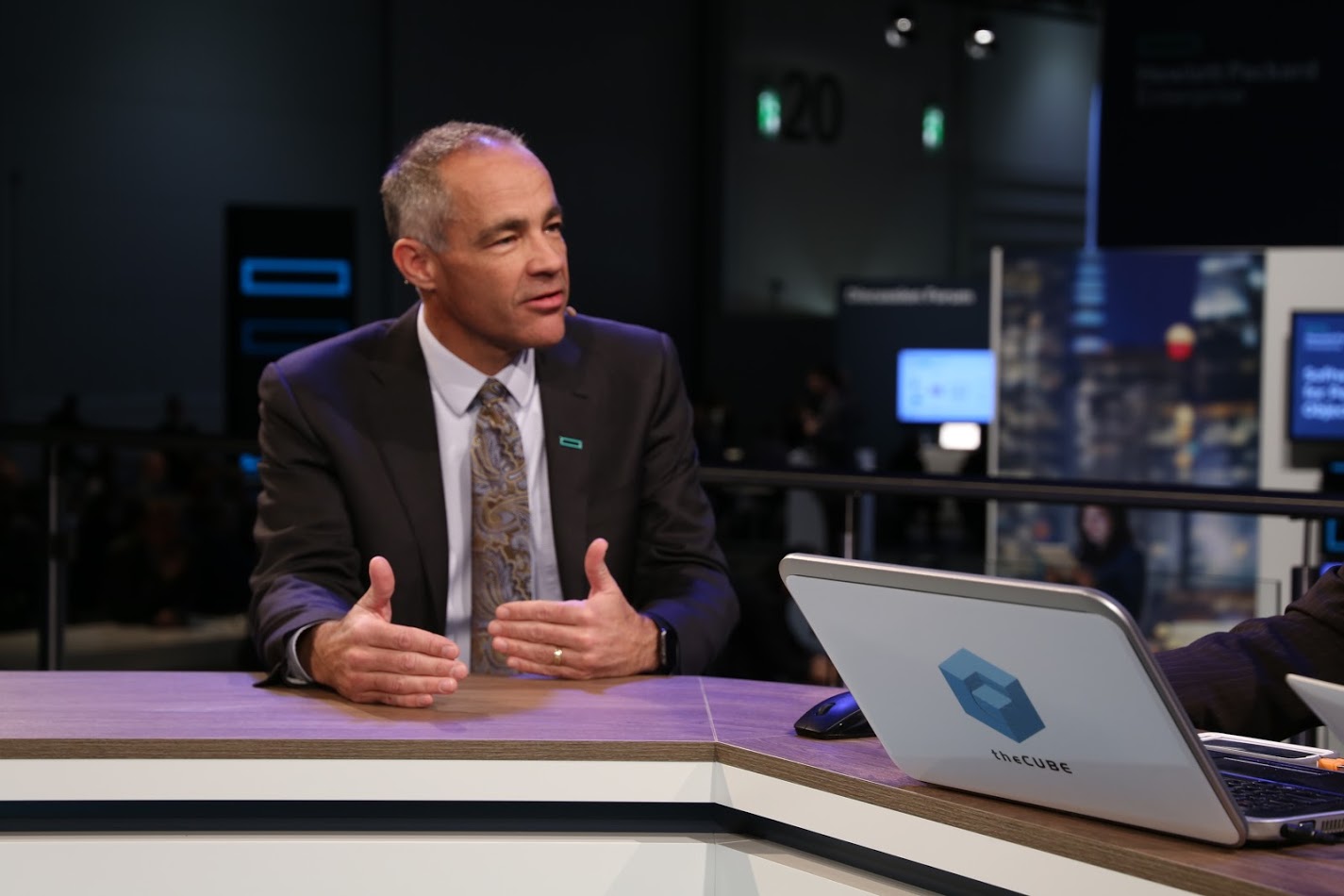
The latest “great debate” about cloud is which is better: public cloud, like those provided by Amazon, Microsoft, and Google, or a private, on-prem cloud. What seems to be working best for most companies right now is a hybrid cloud, able to run some workloads in the public cloud and keep some on-prem in the private cloud, according to Ric Lewis, senior VP and GM, Software Defined and Cloud Group, at a Hewlett Packard Enterprise Co. HPE is finding its value in providing hybrid cloud solutions to the market, working with an open approach that includes many partnerships to deliver services.
Lewis recently joined Dave Vellante (@dvellante) and Paul Gillin (@pgillin), co-hosts of theCUBE*, from the SiliconANGLE Media team, during HPE Discover EU, held in London. (*Disclosure below) They discussed HPE’s latest approach to hybrid cloud and the benefits from recent synergies created.
“Public cloud is certainly growing, at 20 percent; private cloud is growing almost as fast, at 17 percent,” said Lewis. He said these statistics, combined with customer conversations, indicate that the future is shaping up to be a hybrid world. HPE believes the company that is going to win the business is the one that can make hybrid IT as simple and a straight forward as possible for its customers.
Lewis explained that HPE’s approach is different from its competitors by taking an open approach, and embracing as many IaaS standards as they can. They’re concentrating on partnerships in a big ecosystem, so it’s less about, “buy everything from HPE, and your life will be good,” but rather, HPE is looking to make customers’ IT better, no matter how they want to piece it together, or with which products/companies, Lewis stated.
Lewis explained that people thought the way private cloud in data centers was going to work was that it would mimic public cloud: massive scale out with a heavily customized software layer on top. For some customers, that is what they’re doing; however, there are many customers who just want a simple roadmap to hybrid IT. They’re not looking to deal a lot of infrastructure. Since their business can log into the public cloud and access apps immediately, they’re asking HPE to provide preintegrated infrastructure so they that can do the same thing. They are also asking HPE to be an internal IT service provider for specific lines of business.
According to Lewis, HPE can do this. “That’s the magic of synergy,” he concluded.
Watch the complete video interview below, and be sure to check out more of SiliconANGLE and theCUBE’s coverage of HPE Discover EU. (*Disclosure: HPE and other companies sponsor some HPE Discover EU segments on SiliconANGLE Media’s theCUBE. Neither HPE nor other sponsors have editorial control over content on theCUBE or SiliconANGLE.)
… We’d like to tell you about our mission and how you can help us fulfill it. SiliconANGLE Media Inc.’s business model is based on the intrinsic value of the content, not advertising. Unlike many online publications, we don’t have a paywall or run banner advertising, because we want to keep our journalism open, without influence or the need to chase traffic.The journalism, reporting and commentary on SiliconANGLE — along with live, unscripted video from our Silicon Valley studio and globe-trotting video teams at theCUBE — take a lot of hard work, time and money. Keeping the quality high requires the support of sponsors who are aligned with our vision of ad-free journalism content.
If you like the reporting, video interviews and other ad-free content here, please take a moment to check out a sample of the video content supported by our sponsors, tweet your support, and keep coming back to SiliconANGLE.






