



 APPS
APPS
APPS
APPS
APPS

If Slack was not worried about Facebook Workplace before, it definitely should be now.
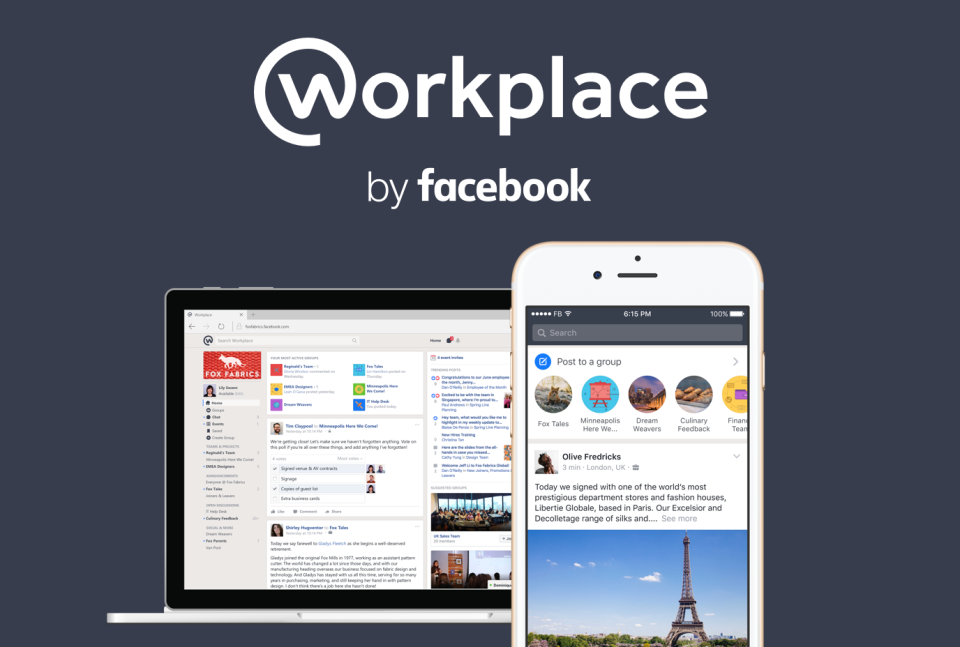
Facebook Inc. announced today that its enterprise-focused communication tool will now allow third-party apps to be integrated into it.
Workplace’s new “custom integrations” allows businesses to tie Facebook’s platform directly to in-house or third-party tools, enabling a numbers of new functions. A few examples offered by Facebook include the ability to archive content to a CSV table-structured format, create and customize groups, and manage user account permissions. At the moment, Workplace’s integrations seem to be aimed at developers and companies that need to use their own custom tools, which is a bit different from how Slack operates.
Slack Technologies Inc., which is one of Workplace’s biggest competitors in business-focused “email killers,” has its own application programming interfaces that support custom integrations, but Slack also offers an active app store with hundreds of third-party tools that can be added in a few clicks. These tools can perform a wide range of tasks, from embedding Twitter content to updating staffing calendars and more. Slack also announced today that it has formed a partnership with Google to add native Google Drive support, complete with a new chatbot called Drive Bot, which allows users to approve, reject and settle Google Docs comments right inside Slack.
Facebook has not confirmed if Workplace will be getting an app library similar to the one offered by Slack, but given the company’s platform-based strategy with Messenger, it would not be surprising if Facebook decided to build an app platform for Workplace.
Workplace has been publicly available for less than two months now, but according to Facebook, a wide range of major companies are already using the platform, including Starbucks Corp., Campbell Soup Co. and others. While Workplace shares many similarities with Slack, its interface has more in common with Facebook itself, and Workplace offers some of the same features such as News Feed, Groups, Events and the ability to follow individual users.
Aside from its app store, Slack does still have one big advantage over Workplace: price. Smaller businesses can use Slack and many of its integrations at no cost, albeit with limited features, but Facebook Workplace does not currently have a free option for any a business of any size. The current price for Workplace is based on a sliding scale from $3 per monthly active user for the first 1,000 users to $1 a month for 10,000 or more, but the service does offer a three-month free trial for companies interested in testing it out.
… We’d like to tell you about our mission and how you can help us fulfill it. SiliconANGLE Media Inc.’s business model is based on the intrinsic value of the content, not advertising. Unlike many online publications, we don’t have a paywall or run banner advertising, because we want to keep our journalism open, without influence or the need to chase traffic.The journalism, reporting and commentary on SiliconANGLE — along with live, unscripted video from our Silicon Valley studio and globe-trotting video teams at theCUBE — take a lot of hard work, time and money. Keeping the quality high requires the support of sponsors who are aligned with our vision of ad-free journalism content.
If you like the reporting, video interviews and other ad-free content here, please take a moment to check out a sample of the video content supported by our sponsors, tweet your support, and keep coming back to SiliconANGLE.






