



 EMERGING TECH
EMERGING TECH
EMERGING TECH
EMERGING TECH

A Berlin-based artist and privacy advocate, Adam Harvey, is fighting back against what he considers intrusive and oppressive facial recognition technology.
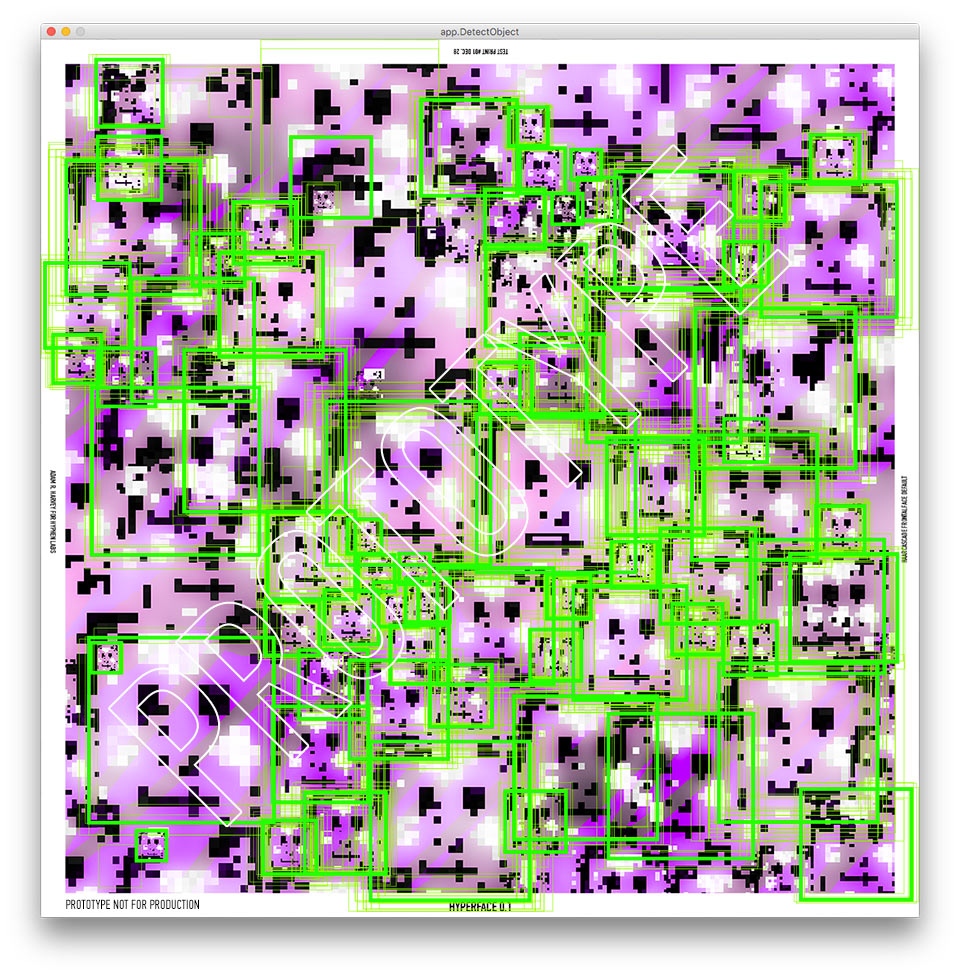
Harvey, who melds art with his contention that data collection on the individual is at extreme levels, has come up with a novel way of making sure that facial recognition software can’t ascertain who you are. He has done this by creating patterns for clothing that overwhelm an algorithm. The algorithm will read the pattern as a multitude of faces. If you’ve ever read Philip K. Dick’s novel, “A Scanner Darkly,” you might recall the “scramble-suit” people wore to protect their identities.
Harvey’s project, Hyperface, is what he calls “false-face computer vision camouflage.” Recently in Hamburg at the Chaos Communications Congress hacking conference, Harvey explained how his creative clothing can trick an algorithm.
“As I’ve looked at in an earlier project, you can change the way you appear, but, in camouflage you can think of the figure and the ground relationship,” said Harvey. “There’s also an opportunity to modify the ‘ground’, the things that appear next to you, around you, and that can also modify the computer vision confidence score.”
Facial recognition technology is currently being used for what we might regard as benign functions, such as Microsoft Corp. trying to guess your age, or Facebook Inc. tagging you in photos. It’s also being used by law enforcement.
That’s where activists have been concerned about potential violations of civil liberties. A report last year by the Georgetown Center on Privacy & Technology said that “with only a few exceptions, there are no laws governing police use of the technology, no standards ensuring its accuracy, and no systems checking for bias. It’s a wild west.”
Worrying for some privacy advocates is the fact that such technology is being used to make suggestions pertaining to a person’s character. Harvey gives the example of an algorithm developed at Shanghai Jiao Tong University that can supposedly detect criminality by facial expressions. Not only that, Harvey points out, facial recognition is being used for marketing purposes as it makes assumptions on personality type and demographic, without the consent of the individual.
Harvey believes in the near future developments will mean we are being sized up and assessed everywhere we go, online and offline. “The real criminals, in these cases, are people who are perpetrating this idea, not the people who are being looked at,” said Harvey.
HyperFace will launch as a textile print at the Sundance Film Festival on Jan. 16.
… We’d like to tell you about our mission and how you can help us fulfill it. SiliconANGLE Media Inc.’s business model is based on the intrinsic value of the content, not advertising. Unlike many online publications, we don’t have a paywall or run banner advertising, because we want to keep our journalism open, without influence or the need to chase traffic.The journalism, reporting and commentary on SiliconANGLE — along with live, unscripted video from our Silicon Valley studio and globe-trotting video teams at theCUBE — take a lot of hard work, time and money. Keeping the quality high requires the support of sponsors who are aligned with our vision of ad-free journalism content.
If you like the reporting, video interviews and other ad-free content here, please take a moment to check out a sample of the video content supported by our sponsors, tweet your support, and keep coming back to SiliconANGLE.






