



 EMERGING TECH
EMERGING TECH
EMERGING TECH
EMERGING TECH

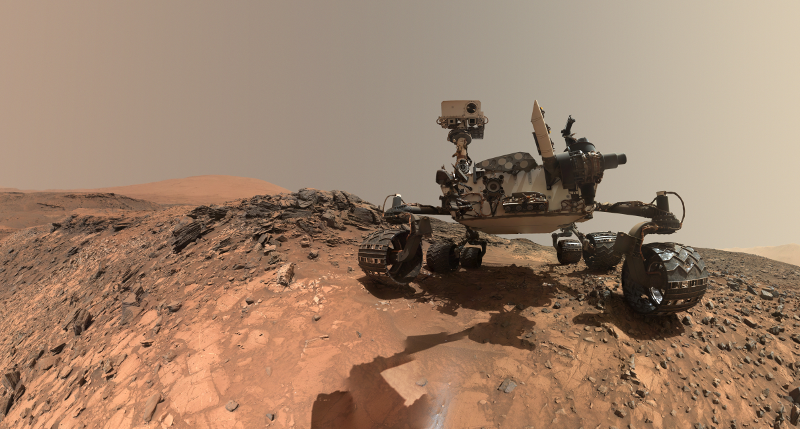
The research activities that NASA’s Curiosity rover conducts on Mars are directed from its Jet Propulsion Lab in California, but many navigational decisions are instead relegated to an artificial intelligence that the space agency brought online in 2013.
The space agency’s efforts to make its rovers more independent traces back many years and has involved not only internal personnel but also other participants, most notably a low-key startup called Neurala Inc. from Boston. After years of flying under the radar, the outfit will burst into the spotlight Wednesday by revealing that it has raised a $14 million funding round. The consortium of investors was led by Pelion Ventures and saw the participation of about a half-dozen other funds, including early Uber Technologies Inc. backer Sherpa Capital and Idinvest Partners, one of the largest venture capital firms in Europe.
The cash infusion will help fuel Neurala’s efforts to commercialize its artificial intelligence technology. Dubbed the “Neurala Brain,” the software is designed to be installed in driverless cars, drones and robots that require the ability to navigate their surroundings independently. The startup claims that its system can facilitate such autonomous behavior without requiring the expensive, power-hungry radar sensors that are normally required for the task.
Neurala’s artificial intelligence instead uses regular cameras, thanks to an architecture that Chief Executive Massimiliano Versace claims “works more like the human brain than any other deep learning neural network solution.” Versace and his two co-founders, who have four Ph.D.s among them, designed the system with the ability to memorize objects on first sight. It can then combine its accumulated knowledge to make navigational decisions in various environments, especially those where there’s limited processing power, battery life and bandwidth.
“Neurala designed the software to be a brain, not just an object recognition system like other companies,” Versace said in an interview with SiliconANGLE. “Brains provide coordinated support for multiple functions – from vision and sensory perception to abstract thinking, planning, and motor control. All of these things will be needed to operate successfully and independently in an environment.”
The Neurala Brain also can learn on the fly from new information, according to Versace. “Humans learn incrementally,” he said. “Competitive deep learning systems need to be re-trained from scratch when new information becomes available. This matters because a company can build a brain and an end user can add more information.”
A Neurala-powered driverless car could be taught to recognize and avoid other motorists on the road, just as Curiosity avoids safety hazards on Mars. And industrial drones can use the technology to diagnose malfunctioning equipment in inaccessible spots. Neurala says that its artificial intelligence can do all this without requiring an Internet connection to a remote server, which reduces operating costs even further.
The startup has already won over several big-name customers with the technology, including Teal Drones Inc., Motorola Solutions Inc. and French telecommunications giant Parrot SA.
With reporting from Mike Wheatley
… We’d like to tell you about our mission and how you can help us fulfill it. SiliconANGLE Media Inc.’s business model is based on the intrinsic value of the content, not advertising. Unlike many online publications, we don’t have a paywall or run banner advertising, because we want to keep our journalism open, without influence or the need to chase traffic.The journalism, reporting and commentary on SiliconANGLE — along with live, unscripted video from our Silicon Valley studio and globe-trotting video teams at theCUBE — take a lot of hard work, time and money. Keeping the quality high requires the support of sponsors who are aligned with our vision of ad-free journalism content.
If you like the reporting, video interviews and other ad-free content here, please take a moment to check out a sample of the video content supported by our sponsors, tweet your support, and keep coming back to SiliconANGLE.






