



 NEWS
NEWS
NEWS
NEWS
NEWS

This week’s revelation that President Donald Trump has proposed to make changes to the H-1B work visa has led to a maelstrom of worry in the world of Indian tech.
The proposed changes to the work visas, whose biggest beneficiaries are Indians, are aligned with Trump’s slogan to bring jobs back to America. The proposal reportedly aims for a new policy that “prioritizes the protection of American workers – our forgotten working people – and the jobs they hold.”
Although U.S. tech companies certainly could feel the effects of a more limited visa program, it may be that outsourcing companies, and the mostly Indian employees brought over to the U.S. to fill those jobs, could suffer the most. Some 86 percent of information technology-related H-1B visas are given to Indians.
One report said that outsourcing companies prefer to hire “young H-1B programmers because the visa offers control over this contracted short-term workforce” while also paying them less than “experienced natives.” Both Trump’s and another congressional proposal would favor higher-paid visa workers to discourage companies from using the program simply to get cheap engineers.
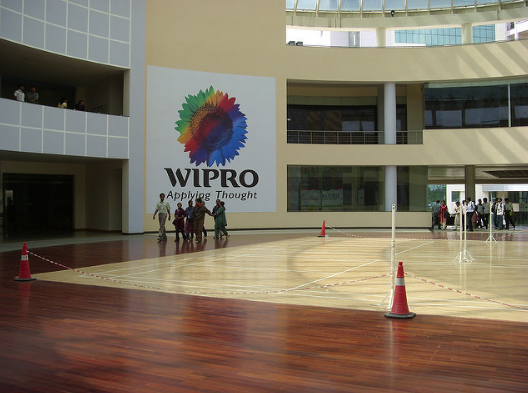
The largest Indian outsourcing firms, Infosys, Wipro and Tata, are already feeling the effects of the proposals even before any become law. On Tuesday, shares of Infosys stock fell 4.75 percent, Tata 5.46 percent and Wipro 4.11 percent.
“The Indian IT industry is clearly nervous while it waits for the axe to fall,” India’s Hindustan Times reported. The same article said Indian government officials have been in talks with American officials and lawmakers over the perceived threat.
The fear that Indian IT companies would be negatively affected by a Trump presidency has been brewing for a while. India’s chief economic advisor, Arvind Subramanian warned the crowd at the Advancing Asia conference last March that Trump had said during a campaign debate that he’d like to scrap the program, even though his own companies had used it. “That’s very worrying for export-led growth going forward,” Subramanian said.
… We’d like to tell you about our mission and how you can help us fulfill it. SiliconANGLE Media Inc.’s business model is based on the intrinsic value of the content, not advertising. Unlike many online publications, we don’t have a paywall or run banner advertising, because we want to keep our journalism open, without influence or the need to chase traffic.The journalism, reporting and commentary on SiliconANGLE — along with live, unscripted video from our Silicon Valley studio and globe-trotting video teams at theCUBE — take a lot of hard work, time and money. Keeping the quality high requires the support of sponsors who are aligned with our vision of ad-free journalism content.
If you like the reporting, video interviews and other ad-free content here, please take a moment to check out a sample of the video content supported by our sponsors, tweet your support, and keep coming back to SiliconANGLE.






