



 EMERGING TECH
EMERGING TECH
EMERGING TECH
EMERGING TECH

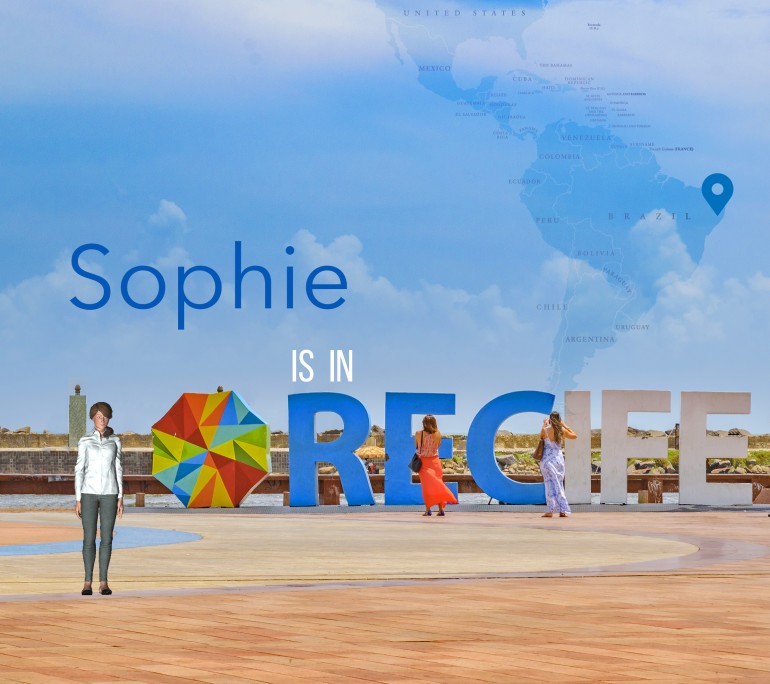
Information technology workers who want to get help at city hall in Recife, Brazil, soon may get it, fittingly enough, from a machine rather than a human.
Global IT outsourcing company Stefanini is providing a virtual assistant powered by artificial intelligence to information technology workers at city hall in Recife, Brazil. The virtual assistant, named Sophie, will be implemented by Emprel S.R.L., a computer company in Recife that provides equipment and infrastructure for the local government in the city hall building.
The Sophie platform consists of a constellation of tools that collect and analyze data and then interact directly with humans using natural language processing to understand questions and conversational speech.
Artificial assistants have slowly crept up on everyday consumers and business users in recent years. They come in the form of smartphone apps that “talk back,” such as Apple Inc.’s Siri and Google Inc.’s Allo smartphone assistants. Another prime example is Amazon.com Inc.’s Echo, which can understand and respond to questions spoken into the air in a users’ home.
Ideally, an artificial assistant such as Sophie can automate repetitive tasks done by customer service in a business setting—such as looking up customer records and cross-matching past issues based on similarity—which can speed up the resolution of troubles customers may have.
Currently, Emprel has an inventory of almost 5,000 machines in Recife’s city hall and fields over 2,200 monthly calls related to its services.
According to Alexandre Winetzki, president of Stefanini Woopi, a subsidiary of Stefanini, Sophie is expected to offload at least 20 percent of the total calls from Emprel involving customer service within two months.
For the moment, however, Sophie is only available to internal users, because the service must be “trained” on Emprel’s systems, catalog and how users from the company will interact with it.
“We are now in the process of ‘teaching’ Sophie our service scripts and some specifications of the services in our catalog,” said Alexandre Herculano, relationship and customer service director at Emprel.
Much like a new employee, a cognitive network does not start out “knowing” everything it will be working with. Underlying Sophie’s customer service exterior, which can digest human language and context to provide human-like answers, is a Big Data engine that first must index and learn the connections within Emprel’s data stores in order to provide actionable information.
After this process is complete, Sophie will become available to all users in the City Hall of Recife.
The Sophie platform itself, Winetzki added, is the culmination of seven years of work. Sophie was launched in 2014, the product of a team of Brazilian scientists, programmers and designers.
Sophie is also available in the United States, part of a product launch in 2016 from Stephanini.
… We’d like to tell you about our mission and how you can help us fulfill it. SiliconANGLE Media Inc.’s business model is based on the intrinsic value of the content, not advertising. Unlike many online publications, we don’t have a paywall or run banner advertising, because we want to keep our journalism open, without influence or the need to chase traffic.The journalism, reporting and commentary on SiliconANGLE — along with live, unscripted video from our Silicon Valley studio and globe-trotting video teams at theCUBE — take a lot of hard work, time and money. Keeping the quality high requires the support of sponsors who are aligned with our vision of ad-free journalism content.
If you like the reporting, video interviews and other ad-free content here, please take a moment to check out a sample of the video content supported by our sponsors, tweet your support, and keep coming back to SiliconANGLE.






