



 CLOUD
CLOUD
CLOUD
CLOUD
CLOUD

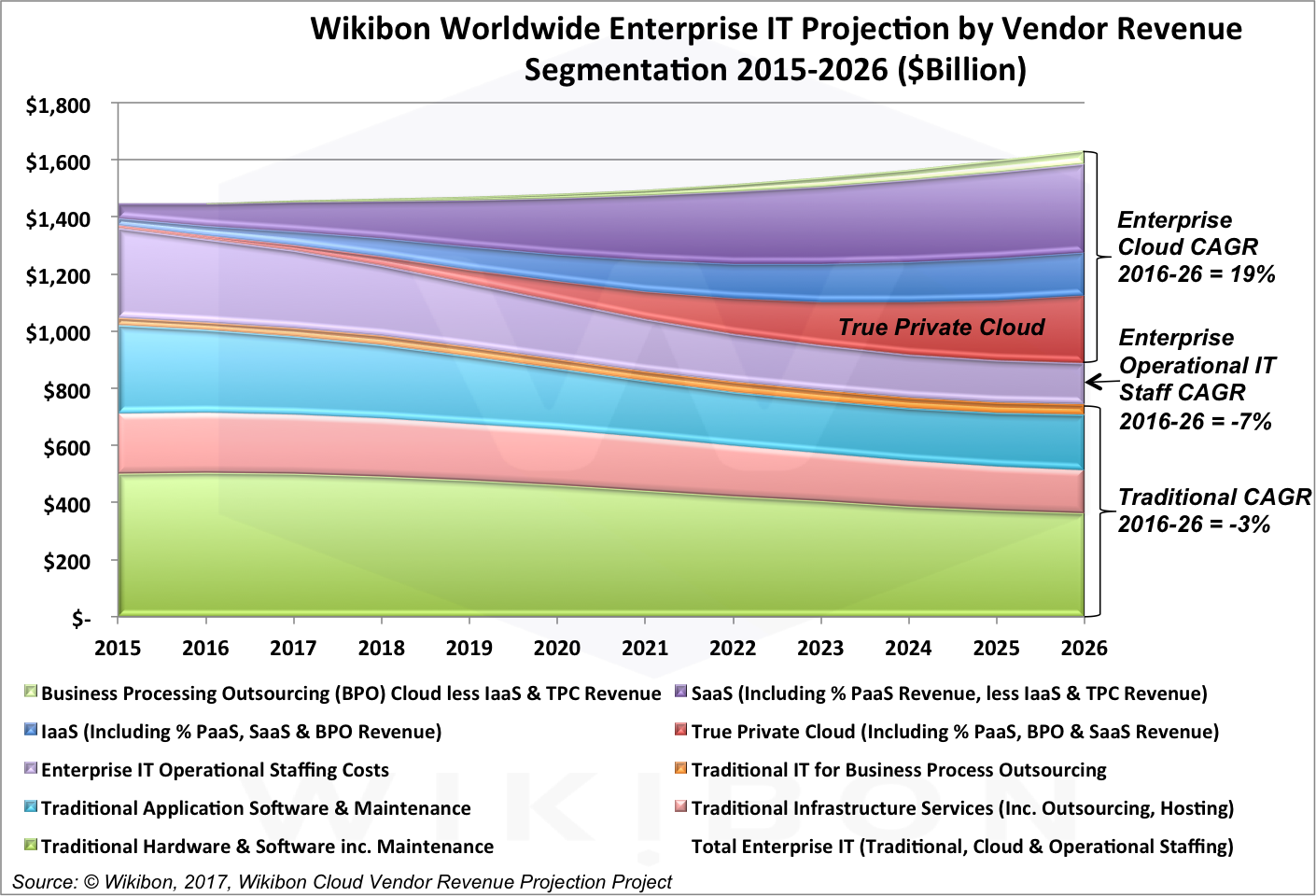
In Wikibon‘s semiannual review of the cloud industry, my colleagues David Floyer and Ralph Finos and I study events and trends in public cloud, true private cloud and X-as-a-service market segments. We’ll soon deliver our overall cloud report, but as we delved deeper into recent cloud events and trends, we kept returning to a single question: How big can Amazon Web Services get?
We just published our answer (available to logged-in clients). To summarize, we think Amazon.com Inc.’s cloud platform is going to get very big. How big? By 2022, about $43 billion. However, we also think that AWS in 2022 will account for about 8.2 percent of all cloud business in the same time frame, a bit less than it does today.
So it will be big, but not hugely dominant. When we engaged with the Wikibon community and ran our scenarios, we encountered an enterprise customer base ready to move more workloads to the cloud, but not ready to take a one-size-and-vendor-fits-all approach. Specifically, enterprises are considering the following:
Although these considerations will shape AWS’s growth and market position, AWS will remain a central figure in digital business strategies. Why? Because, quite frankly, AWS is out-executing everybody. AWS has successfully parlayed its first-mover advantages into a sustained market position by focusing on great customer experience, aggressive innovation and translation of scale-based cost savings into superior pricing.
Only Microsoft Corp., with its Azure cloud, has been able to stay in lockstep with AWS, and occasionally a step ahead. IBM Corp. and Oracle Corp.? Each has a lot of work left to do, but they both have customers willing to work with them. Google? Lots of work to do and few enterprise customers to begin with, but Google is taking the long-term view.
What should users do? Take a workload-first, relationship-second approach to establishing cloud partnerships. If you have a complex Oracle database management system-based app that you’d like to move, then push Oracle to deliver the like-to-like cloud experience you need. Also — and here’s something we hear from chief information officers all the time — before you agree to walk through any vendor’s cloud door, know where the “Exit” sign is.
Remember, despite the genius of cloud from a packaging and economic standpoint, the cloud is not magic. It still requires data centers, hardware and control software somewhere. At some point in the future, you should presume that a cloud supplier will make an implementation choice that doesn’t work for your business.
… We’d like to tell you about our mission and how you can help us fulfill it. SiliconANGLE Media Inc.’s business model is based on the intrinsic value of the content, not advertising. Unlike many online publications, we don’t have a paywall or run banner advertising, because we want to keep our journalism open, without influence or the need to chase traffic.The journalism, reporting and commentary on SiliconANGLE — along with live, unscripted video from our Silicon Valley studio and globe-trotting video teams at theCUBE — take a lot of hard work, time and money. Keeping the quality high requires the support of sponsors who are aligned with our vision of ad-free journalism content.
If you like the reporting, video interviews and other ad-free content here, please take a moment to check out a sample of the video content supported by our sponsors, tweet your support, and keep coming back to SiliconANGLE.






