



 EMERGING TECH
EMERGING TECH
EMERGING TECH
EMERGING TECH

Mobile chip maker Qualcomm Technologies Inc. today introduced a new virtual reality development kit for the company’s Snapdragon 385 mobile platform and a collaboration with hand-tracking technology company Leap Motion Inc.
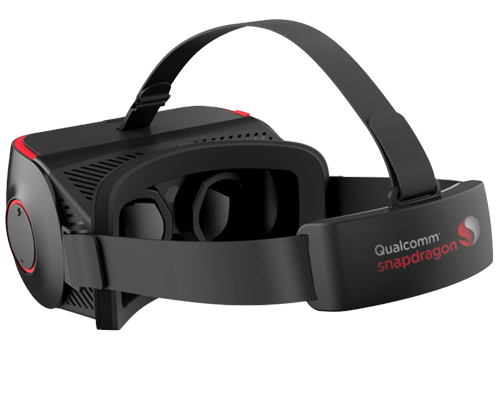
To prepare developers for the advanced VR capability built into mobile devices released in 2017, the kit will include a software development kit for developers and preview head-mounted display hardware that integrates the chip.
The display included in the development kit builds in a 4-megapixel active-matrix organic light-emitting diode display, at 2 megapixels per eye, and provides six degrees of freedom motion tracking. The headset also supports eye tracking and a full sensor suite including a gyroscope, an accelerometer and a magnetic sensor designed to work with the Snapdragon 385’s sensor core.
Using the camera tracking and the sensors in the headset, the development kit also previews predictive head position processing to aid in immersion. A new plugin will also support both Unity and Epic Game Engines using the eye tracking to provide “foveated rendering” to sense the user’s gaze and deliver increased detail in the region interest.
The Qualcomm VR developer kit is expected to become available during the second quarter of 2017 through the Qualcomm Developer Network. It will be available to developers and startups interested in VR technology before the first Snapdragon 385 VR devices are expected to ship during the second half of this year.
In conjunction with the announcement of the VR development kit, Qualcomm also said that it would be partnering with VR technology developer Leap Motion. Together the two companies seek to improve user experience in VR with a new standard for natural human computer interaction using Leap Motion’s superior hand-tracking technology.
Personal computer-based VR headsets require cumbersome cords and wires tying the user down and limiting range of motion. Mobile head mounted displays, such as those powered by Qualcomm, have no need for wires, allowing for what’s known as an “untethered” experience.
“Technology works best when technology disappears,” said David Holz, chief technology officer at Leap Motion. “Untethered, mobile VR headsets with intuitive, hand-based interaction and position tracking bring a level of quality, immersion, and accessibility to VR unlike anything that’s been seen before.”
Mobile VR presents a number of challenges when it comes to user interface. Current headsets use touchpads mounted to the headset requiring the user to reach up and stroke their temple. Other headsets have flirted with releasing small Bluetooth-enabled handheld controllers, but they’re easily misplaced.
Using hand tracking means nothing to misplace and users don’t break immersion by needing to reach up and touch their heads to navigate VR user interfaces.
… We’d like to tell you about our mission and how you can help us fulfill it. SiliconANGLE Media Inc.’s business model is based on the intrinsic value of the content, not advertising. Unlike many online publications, we don’t have a paywall or run banner advertising, because we want to keep our journalism open, without influence or the need to chase traffic.The journalism, reporting and commentary on SiliconANGLE — along with live, unscripted video from our Silicon Valley studio and globe-trotting video teams at theCUBE — take a lot of hard work, time and money. Keeping the quality high requires the support of sponsors who are aligned with our vision of ad-free journalism content.
If you like the reporting, video interviews and other ad-free content here, please take a moment to check out a sample of the video content supported by our sponsors, tweet your support, and keep coming back to SiliconANGLE.






