 INFRA
INFRA
INFRA
INFRA







INFRA

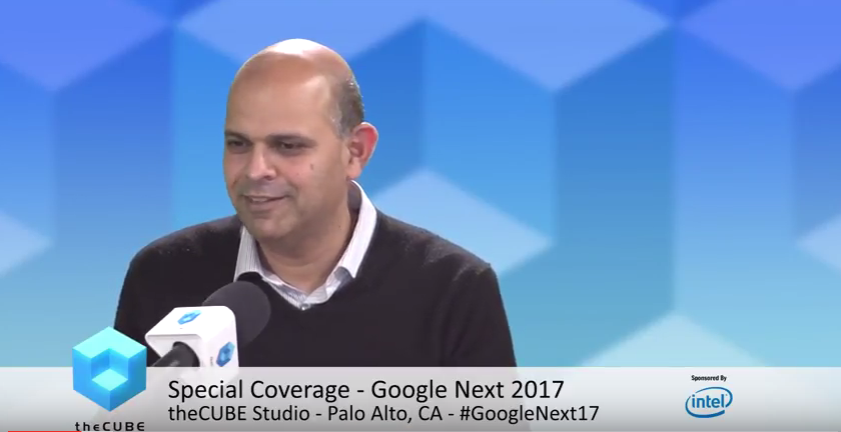
The network bottleneck is still causing headaches for the sensor-heavy Internet of Things and next-gen networking with 5G, having to manage big data applications and real-time data processing. Until this bottleneck is addressed, cloud computing can’t take off in the enterprise, according to Praveen Akkiraju, chief executive officer of Viptela Inc.
“It’s essentially the last leg of the stool, if you will, in terms of truly moving to the cloud era,” he said.
Akkiraju spoke to John Furrier (@furrier), host of theCUBE, SiliconANGLE Media’s mobile live streaming studio, at SiliconANGLE’s Palo Alto, CA, studio to discuss cloud, connectivity and news from the Google Cloud Next event.
Viptela is “redefining the network connectivity between users and applications for the cloud era,” Akkiraju said, adding that users are connecting to applications in new ways via the cloud, devices and branch offices.
However, the network that connects the users to the apps has been frozen in time. “The majority of enterprises today are still connected using that MPLS [multiprotocol label switching] VPN [virtual private network] technology, which was invented 20 years ago,” he said.
Akkiraju said the reason for this technology lag is that it is very difficult to understand what goes on underneath a Wide Area Network. He said that Viptela abstracts away that complexity with a software-defined WAN. This lets enterprises easily see and predict how users connect with applications, without any knowledge of the underlay, he explained.
Viptela’s solution makes better use of the internet, which has dramatic cost-saving potential, Akkiraju stated. “The per megabyte cost for MPLS VPN is about $200; the per megabyte cost for the internet is about $2,” he said.
Cloud providers like Google, AWS and Microsoft need a new connectivity solution to improve the on-boarding experience for their customers, he added.
“They just assume the customer shows up at the door, whether it’s a SaaS platform or Infrastructure-as-a-Service platform,” Akkiraju said.
Watch the complete video interview below, and be sure to check out more of SiliconANGLE’s and theCUBE’s coverage of Google Cloud Next 2017. (*Disclosure: Some segments on SiliconANGLE Media’s theCUBE are sponsored. Sponsors have no editorial control over content on theCUBE or SiliconANGLE.)
Support our mission to keep content open and free by engaging with theCUBE community. Join theCUBE’s Alumni Trust Network, where technology leaders connect, share intelligence and create opportunities.
Founded by tech visionaries John Furrier and Dave Vellante, SiliconANGLE Media has built a dynamic ecosystem of industry-leading digital media brands that reach 15+ million elite tech professionals. Our new proprietary theCUBE AI Video Cloud is breaking ground in audience interaction, leveraging theCUBEai.com neural network to help technology companies make data-driven decisions and stay at the forefront of industry conversations.





