 INFRA
INFRA
INFRA
INFRA







INFRA

Microservices are giving enterprises more options than the old all-in-one proprietary vendors ever did. This can only be a boon, right? Well, yes and no, according to two guests on a recent segment with theCUBE.
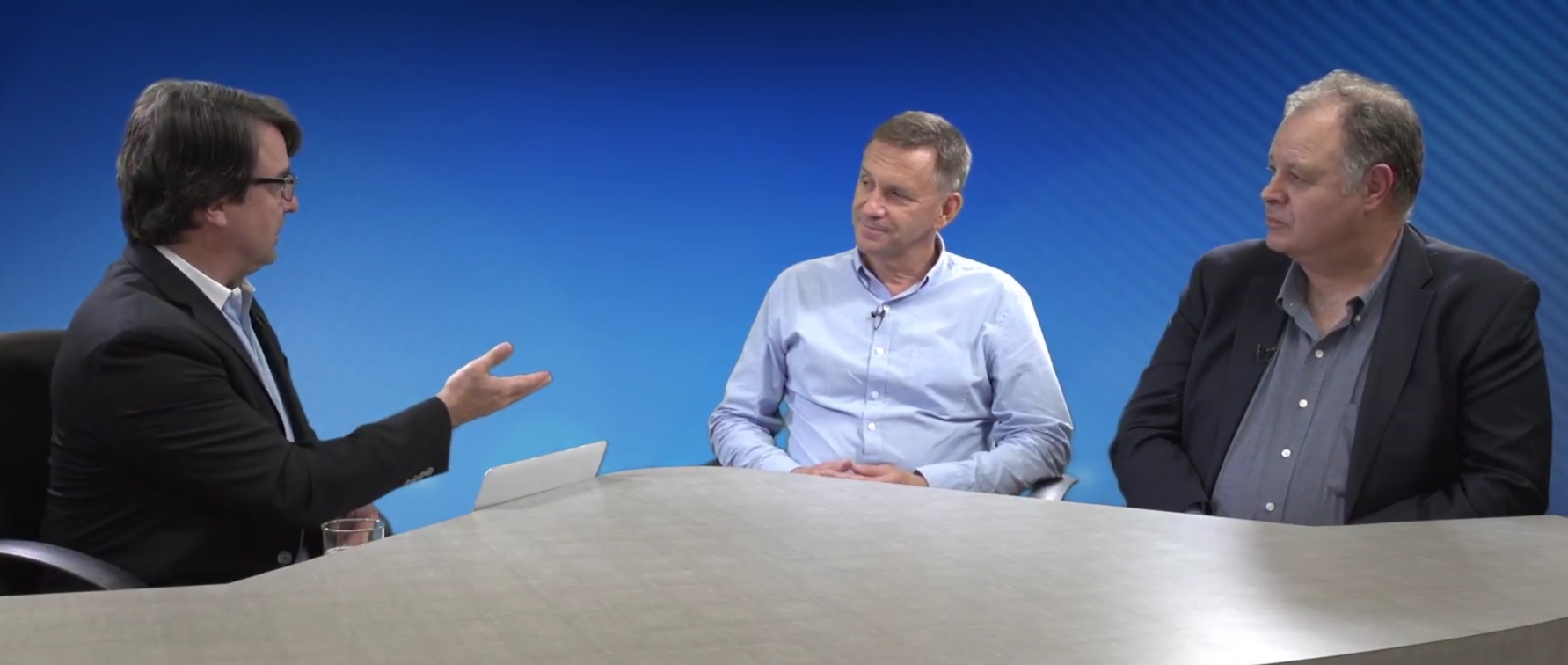
“It means that we’re giving them so much rope to hang themselves,” aid Nick McKeown (pictured, center), chief scientist, chairman and co-founder at Barefoot Networks Inc.
McKeown said that the flexibility of disaggregated information technology comes at a price, “because everything has got to be put together in a way that’s coming from different sources, written and authored by different intent or from places across the internet.”
John Furrier (pictured, left) (@furrier), host of theCUBE, SiliconANGLE Media’s mobile live streaming studio, spoke with McKeown and Niel Viljoen (pictured, right), chief executive officer at Netronome Systems Inc., at SiliconANGLE’s Palo Alto, CA, studio about the network challenge disaggregation presents, as well as their thoughts about Mobile World Congress.
McKeown said that in the past, users of broad proprietary services had to live with built-in constraints, but at least they could depend on the provider to monitor the network for them. With the shift to microservices, he said, “They’ve lost that proprietary measurement, so now they need to introduce the measurement [so] that they can get greater visibility.”
McKeown said this visibility comes from the P4 language that allows network visibility all the way down to the behavior of individual packets.
He explained that users can ask questions of the packet like, “Which path did you take; how long did you wait at each NIC, at each VM, at each switchport, as you went through? What are the rules that you followed that led you to be here? And if you encountered some congestion, whose fault was that?”
Viljoen said that the result is not only much faster debugging, but also the ability to program the network.
“The key point is the programmability versus configurability. In a configurable environment, you’re always trying to pre-guess what your customer is going to try to look at,” he said.
In the Digital Age, he said, customers want a greater role in defining what information they extract.
Watch the complete video interview below, and be sure to check out more of SiliconANGLE and theCUBE’s coverage of the Mobile World Congress 2017 Barcelona.
Support our mission to keep content open and free by engaging with theCUBE community. Join theCUBE’s Alumni Trust Network, where technology leaders connect, share intelligence and create opportunities.
Founded by tech visionaries John Furrier and Dave Vellante, SiliconANGLE Media has built a dynamic ecosystem of industry-leading digital media brands that reach 15+ million elite tech professionals. Our new proprietary theCUBE AI Video Cloud is breaking ground in audience interaction, leveraging theCUBEai.com neural network to help technology companies make data-driven decisions and stay at the forefront of industry conversations.





