 APPS
APPS
APPS
APPS







APPS

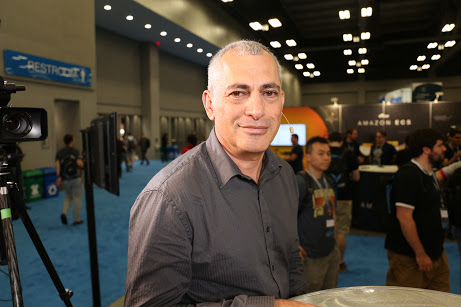
Docker Inc. wants to teach old applications new tricks with its Modernize Traditional Applications program for putting legacy software into containers. But users who believe their legacy applications will reincarnate into cloud-native ones may be disappointed, said Yaron Haviv (pictured), founder and chief technical officer at data analytics platform iguazio Systems Ltd.
There is widespread confusion about virtual machines versus containers, as well as what containers can realistically do for legacy applications, Haviv said.
Sentiment around containers often sounds like: “Oh, here’s my lightweight VM [virtual machine] that happens to be called Docker container, and I’m going to give it volume, and I’m going to create snapshots on that volume, and all that stuff,” Haviv stated.
He spoke with Stu Miniman (@stu) and James Kobielus (@jameskobielus), co-hosts of theCUBE, SiliconANGLE Media’s mobile live streaming studio, during this week’s DockerCon17 event in Austin, Texas. (* Disclosure below.)
A major benefit of containers is that they allow better use of microservices’ modular architecture. Applications deploying several microservices should err toward containers, while those light on microservices may not see as much benefit, Haviv said.
“Some applications which are more traditional legacy may still require VMs, because it’s quite a different philosophy to develop micoservices and develop VMs,” he stated. Microservices often go hand-in-hand with cloud-native applications, the type that will best fit containers, he added.
Those attempting to retrofit all apps into containers assuming they will act just like cloud-native ones will likely fall short of the mark, Haviv explained.
This “is not cloud-native and doesn’t allow you this sort of elasticity that you want if you’re building a Netflix or an eBay or a modern enterprise infrastructure,” he said. “You have new workloads; you need to think of data, data integration and microservices differently as something which is entirely stateless.”
Watch the complete video interview below, and be sure to check out more of SiliconANGLE’s and theCUBE’s independent editorial coverage of DockerCon US 2017 Austin. (* Disclosure: iguazio Systems Ltd. sponsors some DockerCon segments on SiliconANGLE Media’s theCUBE. Neither iguazio Systems Ltd. nor other sponsors have editorial control over content on theCUBE or SiliconANGLE.)
Support our mission to keep content open and free by engaging with theCUBE community. Join theCUBE’s Alumni Trust Network, where technology leaders connect, share intelligence and create opportunities.
Founded by tech visionaries John Furrier and Dave Vellante, SiliconANGLE Media has built a dynamic ecosystem of industry-leading digital media brands that reach 15+ million elite tech professionals. Our new proprietary theCUBE AI Video Cloud is breaking ground in audience interaction, leveraging theCUBEai.com neural network to help technology companies make data-driven decisions and stay at the forefront of industry conversations.





