



 INFRA
INFRA
INFRA
INFRA
INFRA

Perhaps one of the most interesting evolutions in the cloud industry is the recognition of developers within the enterprise for their ability to drive innovation and impact to the bottom line. Many companies today, including Oracle Corp., have started appealing straight to the developer community, providing workshops, portals and coding events.
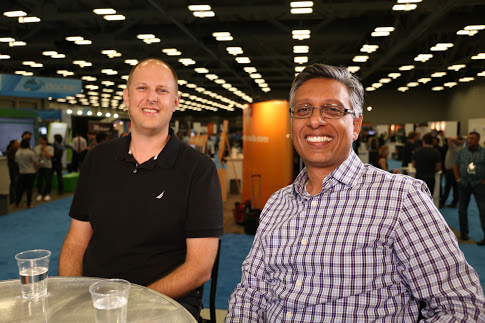
“Developers are surprised when they find out the capabilities we have to help them build microservices-[based] container applications,” said Siddhartha Agarwal (pictured), vice president of product management and strategy at Oracle. Those capabilities include having a runtime for microservices; having Application Program Interface management for all API services and microservices; having a monitoring management infrastructure from the cloud; and having a Continuous Integration and Delivery pipeline, all provided as a service in the cloud.
Agarwal and Mark Cavage (pictured), vice president of engineering at Oracle, recently joined Stu Miniman (@stu), co-host of theCUBE, SiliconANGLE Media’s mobile live streaming studio, during DockerCon in Austin, Texas. In addition to discussing how Oracle appeals to developers, they talked about providing the flexibility of public cloud, but on-prem, baked into new appliances.
Regarding the recently announced a new partnership with Docker, “We put out basically everything that’s important, the bedrock software that [developers] are using to build mission-critical applications, they’re now modernized; Oracle Database, Oracle WebLogic Server, Oracle Java, [they are] all now certified in Docker,” said Cavage.
In keeping with Oracle’s new stance on flexibility in IT infrastructure, “We want to make sure that people can consume the subscription-based format … by enabling this on-premises. So developers who work at financially sensitive companies with compliance … or data residency issues, and they’re unable to benefit from the rapid innovation that’s happening in the cloud, we’re actually providing that same subscription model in their data center,” said Agarwal.
Agarwal explained that Oracle ships an appliance, called Oracle Cloud Machine, and delivers all the public cloud services on that appliance. So it is possible for developers to do dev/test in the cloud but deploy to production on-prem, where they can meet compliance or data residency requirements. Oracle manages the upgrades to all the cloud services on the appliance, so the customer is not buying the appliance, but really buying cloud services in a subscription format in the same way they would in the public cloud, including an identical pricing structure.
Watch the complete video interview below, and be sure to check out more of SiliconANGLE’s and theCUBE’s independent editorial coverage of DockerCon US 2017 Austin.
… We’d like to tell you about our mission and how you can help us fulfill it. SiliconANGLE Media Inc.’s business model is based on the intrinsic value of the content, not advertising. Unlike many online publications, we don’t have a paywall or run banner advertising, because we want to keep our journalism open, without influence or the need to chase traffic.The journalism, reporting and commentary on SiliconANGLE — along with live, unscripted video from our Silicon Valley studio and globe-trotting video teams at theCUBE — take a lot of hard work, time and money. Keeping the quality high requires the support of sponsors who are aligned with our vision of ad-free journalism content.
If you like the reporting, video interviews and other ad-free content here, please take a moment to check out a sample of the video content supported by our sponsors, tweet your support, and keep coming back to SiliconANGLE.






