



 INFRA
INFRA
INFRA
INFRA
INFRA

After growing the user base of its online payment processing service to 400,000 merchants in 2016, Shopify Inc. is looking to move into physical stores.
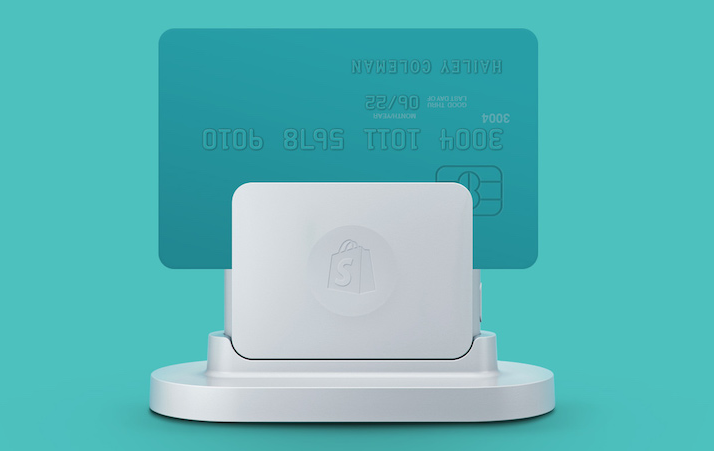
The e-commerce giant today introduced a homegrown card reader that will enable retailers to process in-person transactions at their brick-and-mortar locations. It comes in the form of a flat, white rectangle shorter than the length of a credit card that has a groove at the top where shoppers can insert their cards. At the bottom is a detachable base for keeping the device steady that doubles as a charging station.
Shopify made the reader modular to try and appeal to as broad a range of merchants as possible. Traditional retailers can keep the device docked at all times on the counter, while a merchant that runs a pop-up store or plans to sell its wares at a festival could carry it there. TechCrunch reported that the built-in battery can last for as long as a week when seeing active use.
Although it has clearly put a lot of resources into the design, Shopify is not relying on the reader’s specifications alone to take up the fight against Square Inc. and other established players. The company will make the device available for free to the 400,000 merchants who have signed up for its platform so far in a bid to quickly establish a customer base.
The card reader made its debut at Shopify’s Unity conference in San Francisco today along several other new tools. Among the most notable additions is Launchpad, an application that enables merchants to schedule product rollouts, catalog design tweaks and other changes ahead of big promotions. It’s joined by a set of programming interfaces designed to help partners integrate their services more closely with Shopify on several key fronts, including analytics.
… We’d like to tell you about our mission and how you can help us fulfill it. SiliconANGLE Media Inc.’s business model is based on the intrinsic value of the content, not advertising. Unlike many online publications, we don’t have a paywall or run banner advertising, because we want to keep our journalism open, without influence or the need to chase traffic.The journalism, reporting and commentary on SiliconANGLE — along with live, unscripted video from our Silicon Valley studio and globe-trotting video teams at theCUBE — take a lot of hard work, time and money. Keeping the quality high requires the support of sponsors who are aligned with our vision of ad-free journalism content.
If you like the reporting, video interviews and other ad-free content here, please take a moment to check out a sample of the video content supported by our sponsors, tweet your support, and keep coming back to SiliconANGLE.






