 CLOUD
CLOUD
CLOUD
CLOUD







CLOUD

With all of the open-source companies that would love to pocket Red Hat Inc.’s profits, none of them have matched its quarter-after-quarter growth nor its $15 billion market capitalization.
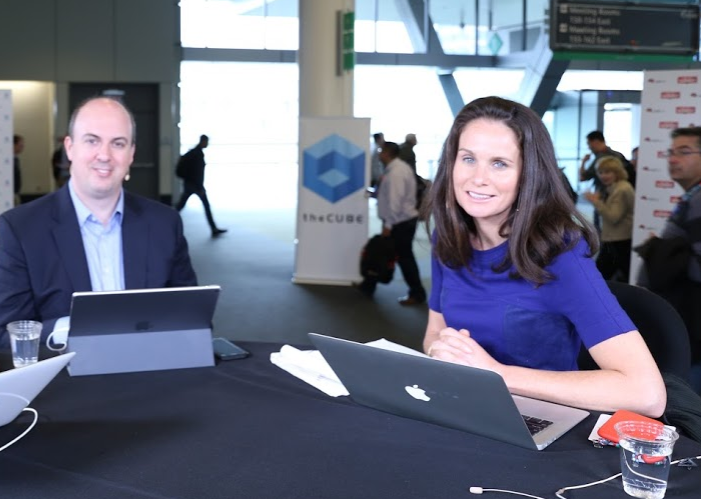
At Red Hat Summit in Boston, Massachusetts, Stu Miniman (@stu) (pictured, left) and Rebecca Knight (@knightrm) (pictured, right), co-hosts of theCUBE, SiliconANGLE Media’s mobile live streaming studio, asked, why not? (*Disclosure below.)
Red Hat Chief Executive Officer James Whitehurst’s answer is simple: “Selling free is hard,” he once said in an interview, according to Miniman.
Hard, but not impossible, as Red Hat’s numbers prove. Founded in 1993, the company has been at the fore of the open-source revolution for some time. With many enterprises beginning to prefer open-source technology, software providers feel pressure to meet demand, but the profitability question remains vexing.
“Software is eating the world, and open source is eating software,” said Miniman, adding that Red Hat is one company smack in the center of this. So what are the special moves that makes Red Hat unique, and why do other comers find them so hard to mimic?
Red Hat’s timing could be one factor; it got in early in open source and found room to expand, Miniman said. Another might be the way it lives the open-source philosophy down to its DNA, contrasted with others for whom open-source is a detail.
“They’re like, ‘Oh, we’re not an open-source company, we’re an enterprise software company or a software company first,'” Miniman said of some Red Hat competitors. “I’m sure if we asked Red Hat if they were a software company, they would say, ‘Well of course, everything we deliver is software, but at their DNA, they are open-source,'” he said.
Surely, Red Hat’s growth in the early days owed something to its nimbleness as a relatively small startup, a trait it tries to retain even today with almost 8,000 employees.
“We heard in the keynote, one of the things that Jim Whitehurst was trying to do is to cultivate a startup mindset — is that possible?” asked Knight.
The problem is that a company’s bulk tends to decelerate its pace of innovation. Miniman and Knight wondered if Cloudera Inc., Hortonworks Inc. and other smaller open-source or open-core competitors use Red Hat’s success against them by adapting faster to market changes?
Watch the complete video interview below, and be sure to check out more of SiliconANGLE’s and theCUBE’s independent editorial coverage of Red Hat Summit 2017. (* Disclosure: Red Hat Inc. sponsors some Red Hat Summit segments on SiliconANGLE Media’s theCUBE. Neither Red Hat nor other sponsors have editorial control over content on theCUBE or SiliconANGLE.)
Support our mission to keep content open and free by engaging with theCUBE community. Join theCUBE’s Alumni Trust Network, where technology leaders connect, share intelligence and create opportunities.
Founded by tech visionaries John Furrier and Dave Vellante, SiliconANGLE Media has built a dynamic ecosystem of industry-leading digital media brands that reach 15+ million elite tech professionals. Our new proprietary theCUBE AI Video Cloud is breaking ground in audience interaction, leveraging theCUBEai.com neural network to help technology companies make data-driven decisions and stay at the forefront of industry conversations.





