



 EMERGING TECH
EMERGING TECH
EMERGING TECH
EMERGING TECH

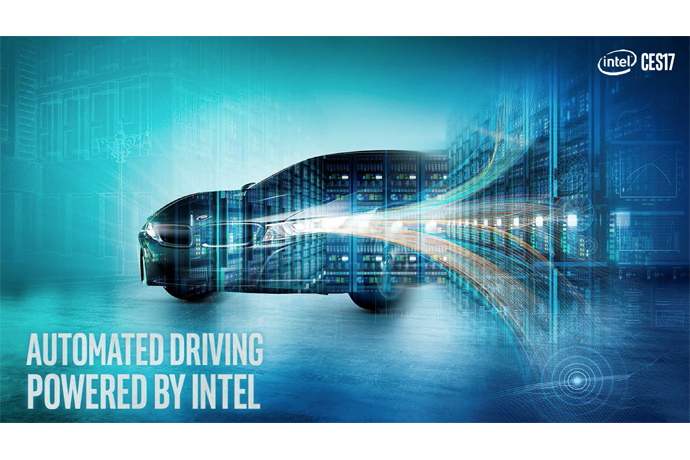
Intel Corp.’s efforts in developing self-driving cars has hit the road running as the chip maker Wednesday revealed its first autonomous vehicle and officially opened a dedicated autonomous vehicle lab.
The first vehicle, a BMW 7 Series sedan features sensors and cameras from Mobileye NV, the autonomous vehicle startup Intel acquired in March for a whopping $15.3 billion.
Along with the debut of its first road-ready autonomous vehicle, Intel also officially opened its Advanced Vehicle Lab in Silicon Valley, a facility described by the company as “providing insight into the company’s cutting-edge R&D efforts underway to push the boundaries of driverless cars and the future of transportation.”
Although the lab is owned by Intel, the giant chip maker won’t run it alone. BMW, along with Delphi, Ericsson and HERE, will also participate in the lab to develop new ways of addressing the data challenge inside an autonomous vehicle. Engineers at the lab will use a variety of tools to advance and test related technologies including vehicles equipped with Intel-based computing systems and different kinds of sensors that help gather data; autonomous test vehicles that practice real-world driving; partner vehicles and teams that are collaborating with Intel’s research efforts; and dedicated autonomous driving data centers.
Most people would think of sensosr and other functions when it comes to autonomous but the real challenge in delivering self-driving cars is one of data processing. According to Intel, information captured by cameras, radar and other sensors generate approximately 4 terabytes of data every 90 minutes, and while most of the data will be processed by the in-vehicle systems, the most valuable data will be synced with a data center.
“The single most important factor in autonomous driving is data – how best to process it, manage it, move it, store it, share it and learn from it,” Doug Davis, Intel’s senior vice president and general manager of its Automated Driving Group, said in an editorial. “From PCs to data centers and everywhere in between, no company’s silicon has analyzed, computed and moved more data than Intel’s. As we move down the road toward autonomous cars, the data challenge will become much more complex and require new ways to work with data inside the vehicle, throughout the network and across the cloud.”
Davis also mentioned the need to master artificial intelligence both inside the vehicle and in the data center, citing the field as essential to the autonomous driving data challenge. “Here it’s important to remember that autonomous driving isn’t a game,” David added. “When cars are thinking and acting without human intervention, they must be able to do so in a safe and trustworthy way.”
… We’d like to tell you about our mission and how you can help us fulfill it. SiliconANGLE Media Inc.’s business model is based on the intrinsic value of the content, not advertising. Unlike many online publications, we don’t have a paywall or run banner advertising, because we want to keep our journalism open, without influence or the need to chase traffic.The journalism, reporting and commentary on SiliconANGLE — along with live, unscripted video from our Silicon Valley studio and globe-trotting video teams at theCUBE — take a lot of hard work, time and money. Keeping the quality high requires the support of sponsors who are aligned with our vision of ad-free journalism content.
If you like the reporting, video interviews and other ad-free content here, please take a moment to check out a sample of the video content supported by our sponsors, tweet your support, and keep coming back to SiliconANGLE.






