



 APPS
APPS
APPS
APPS
APPS

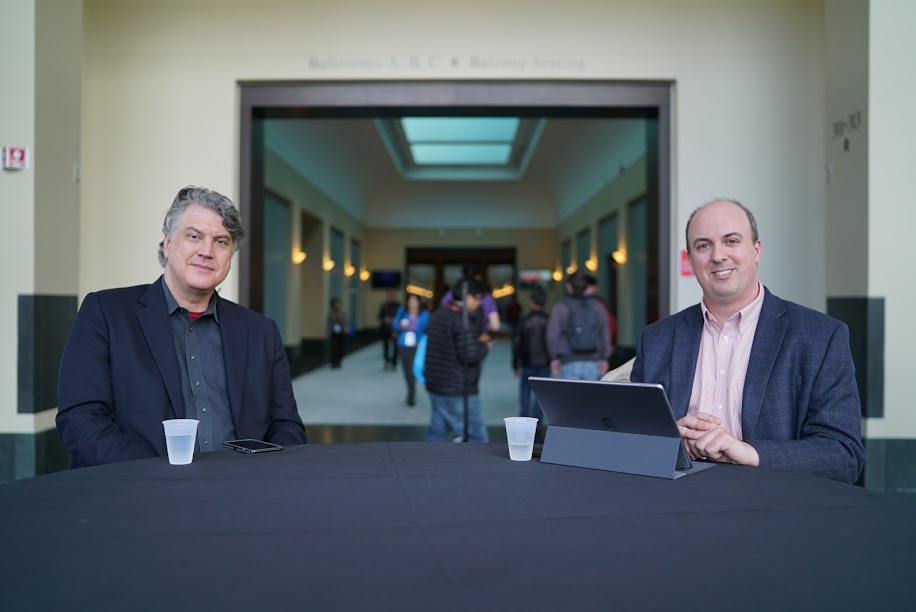
While OpenStack, an open-source software platform for cloud computing, is not a simple solution for enterprises, its much-acclaimed modularity can enhance any environment into which it is installed, according to Stu Miniman (@stu) (pictured, right), co-host of theCUBE, SiliconANGLE Media’s mobile live streaming studio. Its ease of use and flexibility give users the ability to build and tweak as they see fit.
Over time, OpenStack has been slowly moving up the stack, entering into environments that are more critical, enabling digital transformations within enterprises. “OpenStack is doing a good job as a community to be open, working with [users] and understanding that they don’t need to be all things to all people,” Miniman said.
During the final day of OpenStack Summit in Boston, Massachusetts, Miniman and guest host John Troyer (@jtroyer) (left) shared their thoughts regarding summit news, as well as where they see OpenStack and open source going in the near future.
Containers and Kubernetes — an open-source system for automating deployment, scaling and management of containerized applications — were notable discussion points throughout the summit, entailing how enterprises are using them today, as well as the ways they are transforming the building of applications.
Containers are going to be a big part of the future, and Miniman believes that OpenStack is ready for it. Troyer liked that it wasn’t a question of either/or: Enterprises can containerize the infrastructure, so that’s useful … or sometimes being bare-metal is useful.
“I didn’t see a lot of ideology one true way; it’s a modular system,” Troyer said.
In looking where OpenStack has a natural fit, Miniman and Troyer saw it as living in private clouds that have special needs, such as privacy, security, functionality or latency. There was much discussion around integration with other open-source tools, as well as other private and public clouds.
“The traditional demarcation between the vendor and the consumer in open-source tends to be blurring,” Miniman concluded.
Watch the complete video interview below, and be sure to check out more of SiliconANGLE’s and theCUBE’s independent editorial coverage of OpenStack Summit 2017 Boston.
… We’d like to tell you about our mission and how you can help us fulfill it. SiliconANGLE Media Inc.’s business model is based on the intrinsic value of the content, not advertising. Unlike many online publications, we don’t have a paywall or run banner advertising, because we want to keep our journalism open, without influence or the need to chase traffic.The journalism, reporting and commentary on SiliconANGLE — along with live, unscripted video from our Silicon Valley studio and globe-trotting video teams at theCUBE — take a lot of hard work, time and money. Keeping the quality high requires the support of sponsors who are aligned with our vision of ad-free journalism content.
If you like the reporting, video interviews and other ad-free content here, please take a moment to check out a sample of the video content supported by our sponsors, tweet your support, and keep coming back to SiliconANGLE.






