



 APPS
APPS
APPS
APPS
APPS

Networking was a hot topic at this week’s OpenStack Summit in Boston, Massachusetts. One of the most notable use cases discussed during the Summit was Verizon’s Software-Defined Networking-Network Function Virtualization OpenStack cloud deployment across five of its U.S. data centers. But while the network industry has been discussing SDN for the past five or so years and there have been some success stories like Verizon’s, the rate of change has been slow, according to Lee Doyle, principal analyst at Doyle Research.
Though hyperscale companies, such as Google Inc., Facebook Inc. and Amazon.com Inc., are already using SDN and reaping the benefits, other organizations are striving to follow their example. “We’re still early in the truly software-driven networking game,” Doyle stated.
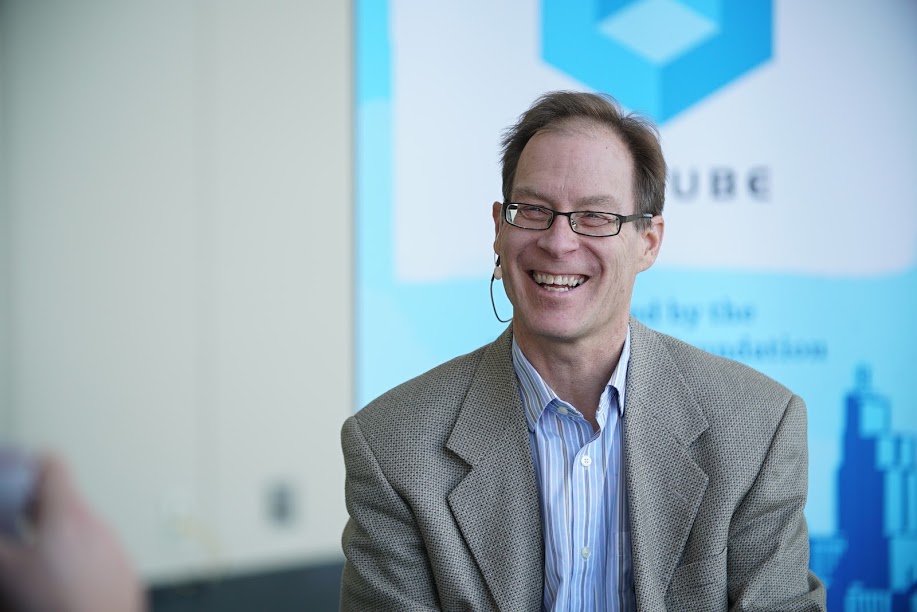
Doyle recently joined host Stu Miniman (@stu) and guest host John Troyer (@jtroyer), of theCUBE, SiliconANGLE Media’s mobile live streaming studio, during OpenStack Summit. Among other issues, Doyle explained how SDN is a big change from managing networking in the past.
One aspect of SDN is starting to take off. Called the Software-Defined Wide-Area Network it’s especially prevalent in the financial services and retail industries, but it is also extending to government and healthcare — anywhere, essentially, that requires a great deal of connectivity between distributed environments, according to Doyle.
The real change is that previously the setup would be a “hub-and-spoke” network, he added. Starting with Multiprotocol Label Switching, the information would move from the branch and into a data center or centers. Now, with the advent of cloud and Software as a Service, the information doesn’t need to go to the data center; in fact, by doing so, a lot of latency would be added, Doyle stated.
“SD-WAN is adding the intelligence, the traffic-steering, the ability to manage multiple networks, and [it is facilitating] a move away from MPLS and toward more cost-effective internet connectivity,” Doyle concluded.
Watch the complete video interview below, and be sure to check out more of SiliconANGLE’s and theCUBE’s independent editorial coverage of OpenStack Summit 2017 Boston.
… We’d like to tell you about our mission and how you can help us fulfill it. SiliconANGLE Media Inc.’s business model is based on the intrinsic value of the content, not advertising. Unlike many online publications, we don’t have a paywall or run banner advertising, because we want to keep our journalism open, without influence or the need to chase traffic.The journalism, reporting and commentary on SiliconANGLE — along with live, unscripted video from our Silicon Valley studio and globe-trotting video teams at theCUBE — take a lot of hard work, time and money. Keeping the quality high requires the support of sponsors who are aligned with our vision of ad-free journalism content.
If you like the reporting, video interviews and other ad-free content here, please take a moment to check out a sample of the video content supported by our sponsors, tweet your support, and keep coming back to SiliconANGLE.






