



 CLOUD
CLOUD
CLOUD
CLOUD
CLOUD

Since the first servers started coming online decades ago, managing hardware performance through software control has been at the forefront of internet infrastructure technologies. Only more recently has the term “software-defined storage” been used to describe software managed storage resources in the cloud computing ecosystem. Although cloud computing presents a new set of benefits and challenges, the same techniques for optimizing storage hardware performance can be applied.
These techniques are nothing new for Carlos Carrero, senior principal product manager at Veritas Technologies LLC. Veritas has been driving software management of hardware resources for more than 20 years.
“Back in 1994, 1995 we created the first file system and volume manager,” Carrero recalled.
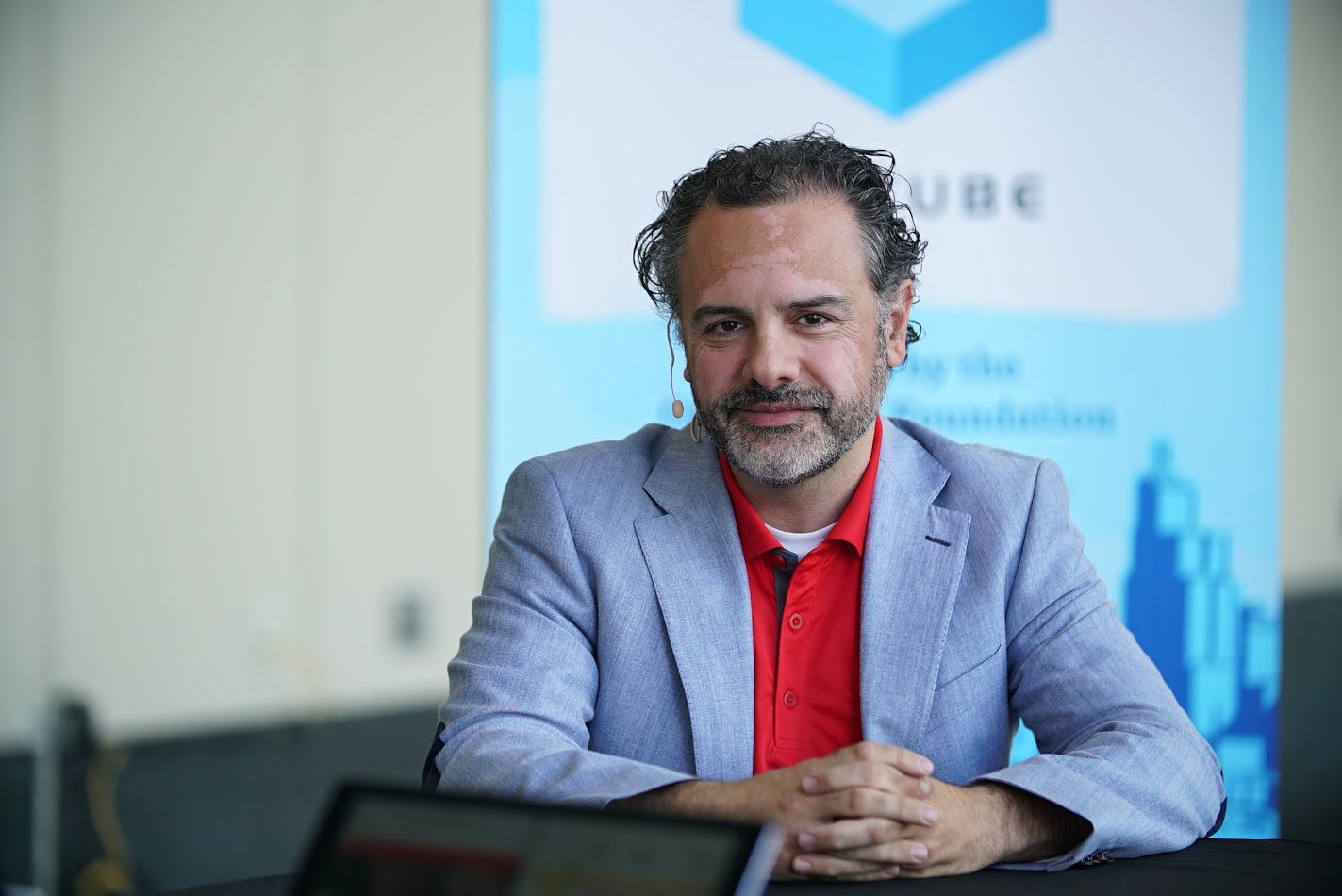
Host Stu Miniman (@stu) and guest host John Troyer (@jtroyer), of theCUBE, SiliconANGLE Media’s mobile live streaming studio, sat down with Carrero during OpenStack Summit in Boston, Massachusetts, to learn how his company is navigating the latest open-source developments.
Having been in the software managed resource industry for decades, Veritas has built a thorough understanding of the markets’ needs, Carrero explained. “We got all the visibility on the storage game. And using all the know-how that we have in history, as I say, we’re a very big startup. … But now, emerging with new products, we need new solutions that have been designed for OpenStack from scratch,” Carrero said.
After three years of development, Veritas just released HyperScale, a software-defined storage solution for OpenStack, an open-source software platform for cloud computing. HyperScale leverages a two-plane approach to splitting computing and data storage resources. This multi-layer approach reduces storage redundancy while improving computational performance.
“We said we cannot scale, we cannot provide the storage services that you need in a single layer of storage because that is what most of the software-defined storage solutions on the market are doing today. And then they’re having problems with things like noisy neighbor. They have problems with things like the scalability, like the quality of service, and of course, they’re having problems with protection,” Carrero stated.
In addition to the novel two-layer approach to storage management, Veritas is also providing more flexibility to OpenStack developers beyond the standard flavor scheme.
“We extend those flavors to say, ‘What do you need in terms of storage? What is the resiliency level that you need? What is the number of copies? What is the minimum performance that you need? What is the maximum performance?'” Carrero explained.
Watch the complete video interview below, and be sure to check out more of SiliconANGLE’s and theCUBE’s independent editorial coverage of OpenStack Summit 2017 Boston. (* Disclosure: The OpenStack Foundation sponsored this OpenStack Summit segment on SiliconANGLE Media’s theCUBE. Neither The OpenStack Foundation nor other sponsors have editorial control over content on theCUBE or SiliconANGLE.)
… We’d like to tell you about our mission and how you can help us fulfill it. SiliconANGLE Media Inc.’s business model is based on the intrinsic value of the content, not advertising. Unlike many online publications, we don’t have a paywall or run banner advertising, because we want to keep our journalism open, without influence or the need to chase traffic.The journalism, reporting and commentary on SiliconANGLE — along with live, unscripted video from our Silicon Valley studio and globe-trotting video teams at theCUBE — take a lot of hard work, time and money. Keeping the quality high requires the support of sponsors who are aligned with our vision of ad-free journalism content.
If you like the reporting, video interviews and other ad-free content here, please take a moment to check out a sample of the video content supported by our sponsors, tweet your support, and keep coming back to SiliconANGLE.






