 CLOUD
CLOUD
CLOUD
CLOUD







CLOUD

Seventy percent of chief information officers have a cloud-first strategy, according to the International Data Corp., but if they think the cloud is a silo-free Shangri-La, they are wrong, according to Peter Smails, vice president of marketing and business development at Datos IO Inc.
“We’ve pushed the silo problem from on-prem to the cloud. Clouds don’t talk to each other,” Smails said during Dell EMC World in Las Vegas, Nevada.
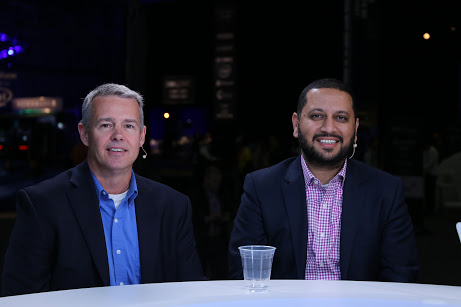
Datos IO’s mission is to mobilize data through and across these silos, Smails and Tarun Thakur, co-founder and chief executive officer of Datos IO, told John Furrier (@furrier), host of theCUBE, SiliconANGLE Media’s mobile live streaming studio, and co-host Keith Townsend (@CTOAdvisor). (* Disclosure below.)
Cisco and NetApp just made multi-million dollar investments into the Datos IO data management and protection platform, validating its claim that data protection is indispensable for cloud applications.
“You cannot have a cloud-first strategy if you don’t protect your data,” Smails said.
Datos IO’s selective protection strategy enables data to move across on-prem and cloud environments, said Thakur. “Why backup an entire database when you only care about a couple of tables? Remember, we are going from traditional monolithic architectures to micro-services in the cloud,” he stated.
Data backup and protection have been slow to catch up with decentralized cloud architecture, Thakur stated.
“There has been no innovation in this space of backup and recovery for the last 20 years,” he said. What worked in the four-wall data center with media server-based architectures and backup solutions written for tape is useless in the cloud, he explained.
“To do distributed, highly scalable applications, you need a fundamentally different approach to protecting those applications,” Thakur said. Breaking the metadata catalog from its silo and stretching it across all environments gives developers greater freedom to test and develop applications, he added.
In plain English, “I want to put my data where I want to put it when I want to put it there,” Smails said, adding that this can make the mulit-cloud “fantasy” a reality.
Watch the complete video interview below, and be sure to check out more of SiliconANGLE’s and theCUBE’s independent editorial coverage of Dell EMC World 2017. (* Disclosure: TheCUBE is a paid media partner for Dell EMC World. Neither Dell nor other sponsors have editorial influence on content on theCUBE or SiliconANGLE.)
Support our mission to keep content open and free by engaging with theCUBE community. Join theCUBE’s Alumni Trust Network, where technology leaders connect, share intelligence and create opportunities.
Founded by tech visionaries John Furrier and Dave Vellante, SiliconANGLE Media has built a dynamic ecosystem of industry-leading digital media brands that reach 15+ million elite tech professionals. Our new proprietary theCUBE AI Video Cloud is breaking ground in audience interaction, leveraging theCUBEai.com neural network to help technology companies make data-driven decisions and stay at the forefront of industry conversations.





