



 INFRA
INFRA
INFRA
INFRA
INFRA

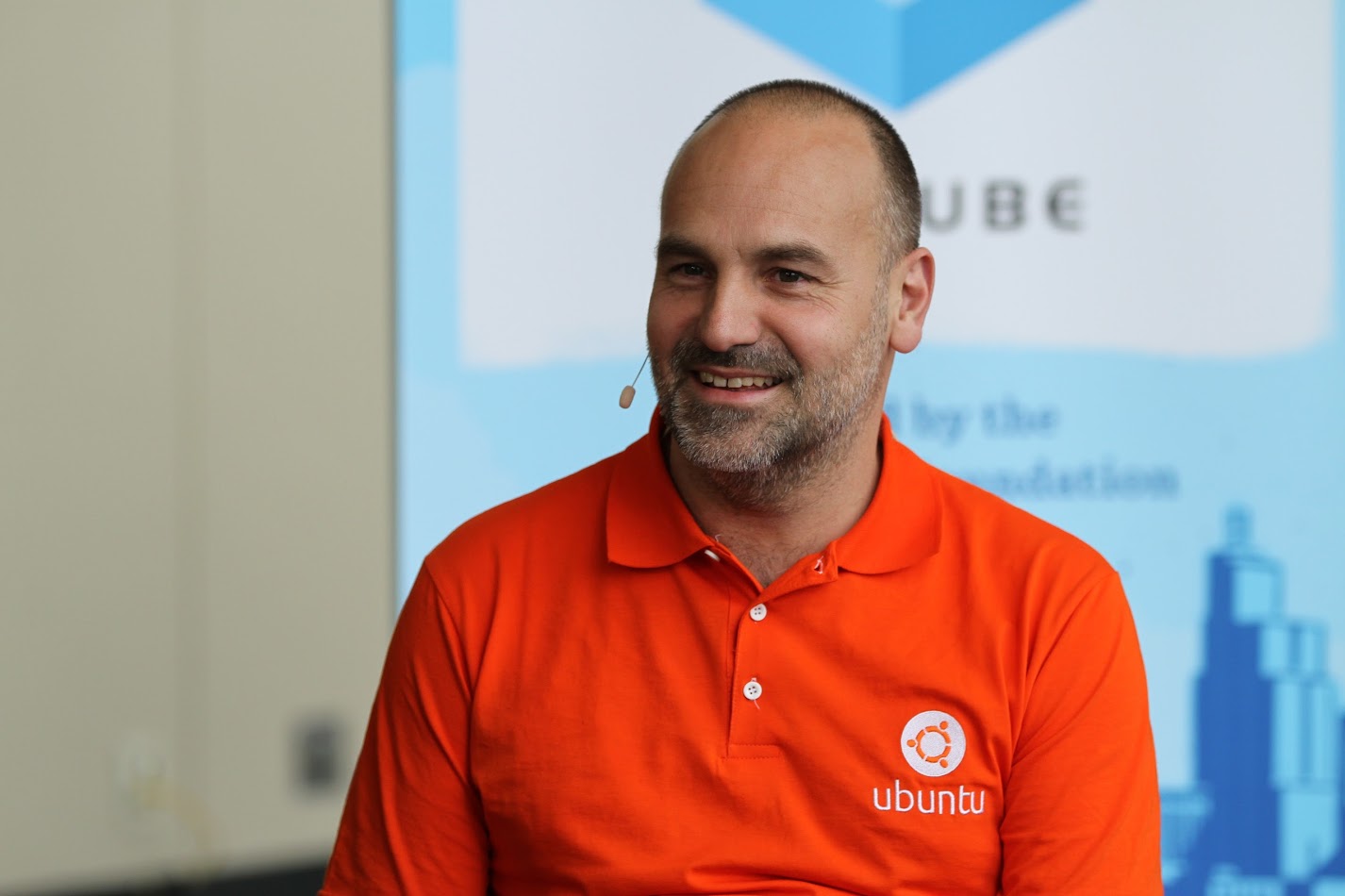
Back by popular demand, Canonical Ltd. Founder and Executive Chairman Mark Shuttleworth (pictured) returned to theCUBE, SiliconANGLE Media’s roving news desk, to answer community questions regarding the business and monetization of open-source technologies in the enterprise. In a live interview from last week’s OpenStack Summit, Shuttleworth also shared industry insight on OpenStack’s especially taxing journey to make a business of open-source computing services, highlighting Canonical’s role in the broader ecosystem.
A key area of growth for Canonical’s open-source operating system Ubuntu is media content delivery, where the digital transformation is changing the way film and television is stored, analyzed and consumed. Finance is another industry to watch, according to Shuttleworth, who sees growing interest from banks in machine learning capabilities.
“We see major financials looking at the intersection of machine learning and transaction systems as the driver for change,” Shuttleworth told theCUBE host Stu Miniman (@stu) and guest host John Troyer (@jtroyer). (* Disclosure below.)
Referring to the digital transformation, he observed, “Every industry has a different name for the same phenomenon … the response in every case is to empower developers. That’s why it’s such a fun time to be a software developer, because the established guys realize that if they’re not already competing with Silicon Valley, they’re going to be.”
Shuttleworth wants to boost the Valley’s startup mentality, noting a current trend for developing business applications for the Internet of Things. “IoT is such rich pickings,” Shuttleworth said. “It’s great to see the intersection of entrepreneurship and tinkering suddenly come alive again. You don’t have to be a giant institution to compete with the giant institutions that are driving giant clouds. You just have to be able to spot a business opportunity in real life around you and have the right piece of software in the right place with the right data, and you can suddenly make things better.”
Yet even with open source’s freely available resources for developers, challenges remain when it comes to supporting innovation, and sometimes moving those projects into production. This is where the business of open source comes into play, as support services are layered atop free development tools.
“When apps go into production, a whole new set of people get involved. For instance, security will ask if it’s compliant. That’s a commercial capability with Canonical,” Shuttleworth said, explaining that a business can get security certifications that enable them to produce apps inside defense industries or other high-security industries.
“If you look at the support lifecycle, our standard, public free support maintenance window is five years, which is a long time,” he said. “For certain apps, the app may need to be in production for 10 years, and that’s a driver for a different set of people — not developers, but compliance and systems administrators — to engage with Canonical commercially. Sometimes we’ll walk through a building and the developers love us because everything’s free, and the ops guys love us because we will support them for longer than we support the developers.”
With a fundamental commitment to open source, Canonical’s interest in OpenStack is to “make it economically meaningful to enterprises,” Shuttleworth said. “That’s a good transition for the community to be making,” he furthered, noting the rocky history of OpenStack’s rapid rise and plateau in enterprise interest.
Watch the complete video interview below, and be sure to check out more of SiliconANGLE’s and theCUBE’s independent editorial coverage of OpenStack Summit 2017 Boston. (* Disclosure: Canonical Ltd. sponsored this OpenStack Summit segment on SiliconANGLE Media’s theCUBE. Neither Canonical nor other sponsors have editorial control over content on theCUBE or SiliconANGLE.)
… We’d like to tell you about our mission and how you can help us fulfill it. SiliconANGLE Media Inc.’s business model is based on the intrinsic value of the content, not advertising. Unlike many online publications, we don’t have a paywall or run banner advertising, because we want to keep our journalism open, without influence or the need to chase traffic.The journalism, reporting and commentary on SiliconANGLE — along with live, unscripted video from our Silicon Valley studio and globe-trotting video teams at theCUBE — take a lot of hard work, time and money. Keeping the quality high requires the support of sponsors who are aligned with our vision of ad-free journalism content.
If you like the reporting, video interviews and other ad-free content here, please take a moment to check out a sample of the video content supported by our sponsors, tweet your support, and keep coming back to SiliconANGLE.






