



 APPS
APPS
APPS
APPS
APPS

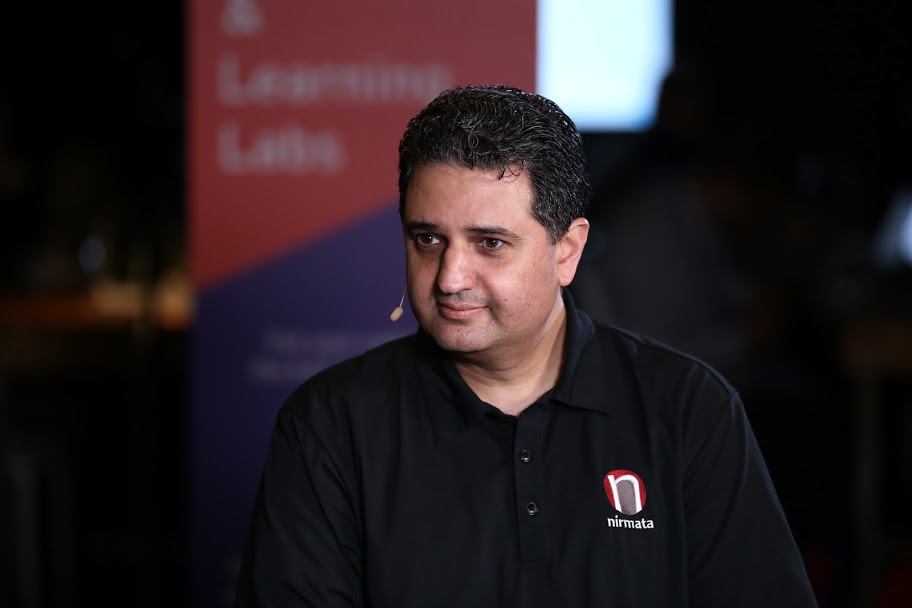
While a hybrid cloud approach uses two different types of clouds, public and private, a multi-cloud environment uses a mix of public, private or hybrid cloud solutions, but does not necessarily use different cloud types. Many experts view hybrid cloud as a stepping-stone to a multi-cloud future, and as its advantages are touted, multi-cloud is becoming the preference of more and more enterprises, according to Jim Bugwadia (pictured), founder and chief executive officer of Nirmata Inc.
“Having that choice of deployment is really what we’re seeing as multi-cloud today,” Bugwadia said. His company provides Software as a Service for cloud application delivery and management. It also provides a common set of application services for developers who are looking at multi-cloud use cases, as well as edge computing.
To talk about thoughts on cloud, as well as containers and DevOps, Bugwadia recently spoke to John Furrier (@furrier) and Peter Burris (@plburris), co-hosts of theCUBE, SiliconANGLE Media’s mobile live streaming studio, during the Cisco DevNet Create event in San Francisco, California. (* Disclosure below.)
In the developer space, Bugwadia explained that due to the adoption of big containers and the push toward containerizing applications, users have the ability to rapidly spin up services, as needed, on different cloud platforms.
A cloud becomes a place where organization’s can have a container host and an endpoint for deployment. So by combining those capabilities with application management services, such as those Nirmata provides, users have the choice of being able to set policies — based either on demand and scale or usage or based on recovery from faults in the infrastructure — to span different clouds for the same workload, he explained.
Regarding misconceptions that he has seen around DevOps, Bugwadia pointed out that there will be a “dev” side and an “ops” side. “And any product that tries to minimize one role or the other is not a good fit for enterprises,” Bugwadia said.
A transformation from a direct, hands-on ops role to one that expands into more of a governance, curation and architecture type of role is needed, according to Bugwadia. And that’s what he’s seeing. And with that change, the ops role is not diminished but actually heightened and highlighted, he added.
Watch the complete video interview below, and be sure to check out more of SiliconANGLE’s and theCUBE’s independent editorial coverage of Cisco DevNet Create 2017. (* Disclosure: TheCUBE is a paid media partner for Cisco DevNet Create. Neither Cisco DevNet nor other sponsors have editorial influence on theCUBE or SiliconANGLE.)
… We’d like to tell you about our mission and how you can help us fulfill it. SiliconANGLE Media Inc.’s business model is based on the intrinsic value of the content, not advertising. Unlike many online publications, we don’t have a paywall or run banner advertising, because we want to keep our journalism open, without influence or the need to chase traffic.The journalism, reporting and commentary on SiliconANGLE — along with live, unscripted video from our Silicon Valley studio and globe-trotting video teams at theCUBE — take a lot of hard work, time and money. Keeping the quality high requires the support of sponsors who are aligned with our vision of ad-free journalism content.
If you like the reporting, video interviews and other ad-free content here, please take a moment to check out a sample of the video content supported by our sponsors, tweet your support, and keep coming back to SiliconANGLE.






