



 EMERGING TECH
EMERGING TECH
EMERGING TECH
EMERGING TECH

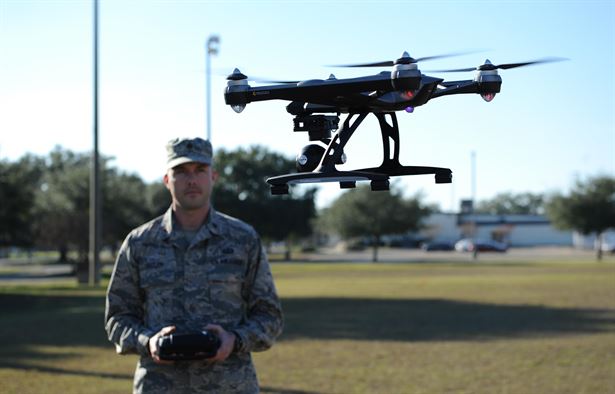
Hot on the heels of a court ruling that struck down the Federal Aviation Administration’s ability to force owners of noncommercial drones to register them, a newly proposed law would give state and local governments the ability to create their own drone regulations.
The Drone Federalism Act, which has the backing of Democratic and Republican members of Congress including Senators Dianne Feinstein (D-Calif.), Richard Blumenthal (D-Conn.), Mike Lee (R-Utah) and Tom Cotton (R-Ark.), would establish a process for federal, state, local and tribal governments to work together to manage the use of recreational and commercial drones.
“State, local, and tribal governments have a legitimate interest in protecting public safety and privacy from the misuse of drones,” Sen. Feinstein said in a statement. “This bill allows communities to create low-altitude speed limits, local no-drone zones or rules that are appropriate to their own circumstances. We need prudent regulations that respond to the variety of new risks that drones present. Our bill provides an affirmative, bipartisan solution.”
Interestingly, the proposed law is being pitched on the basis of decentralized decision-making, with Sen. Lee adding that disputes about drone use “need to be decided at the local level, not with top-down proclamations from Washington. This bill allows for those solutions to be discovered while still protecting interstate air travel.”
According to someone close to the situation, “The DFA is one of the biggest developments in drone legislation over the past five years and represents an important compromise between federal, state and local interests and the industry’s need to grow and innovate. It would also settle the current debate on federal preemption of drone rules by empowering state and local governments to make drone rules under 200 feet as they relate to the time, manner and place of drone operations.”
State and local governments have previously argued that the FAA rules for noncommercial drone operators fail to account for issues relating to privacy and trespassing, as Forbes notes, such as in the case of someone flying a drone over another person’s house and taking photos.
The bill is only a proposal at this stage, but it is also being supported by groups including the U.S. Conference of Mayors, the National League of Cities and the National Association of Counties, the National Governors Association, the National Conference of State Legislatures and the National Association of State Aviation Officials.
… We’d like to tell you about our mission and how you can help us fulfill it. SiliconANGLE Media Inc.’s business model is based on the intrinsic value of the content, not advertising. Unlike many online publications, we don’t have a paywall or run banner advertising, because we want to keep our journalism open, without influence or the need to chase traffic.The journalism, reporting and commentary on SiliconANGLE — along with live, unscripted video from our Silicon Valley studio and globe-trotting video teams at theCUBE — take a lot of hard work, time and money. Keeping the quality high requires the support of sponsors who are aligned with our vision of ad-free journalism content.
If you like the reporting, video interviews and other ad-free content here, please take a moment to check out a sample of the video content supported by our sponsors, tweet your support, and keep coming back to SiliconANGLE.






