 BIG DATA
BIG DATA
BIG DATA







BIG DATA

There are a lot of moving parts right now with Hewlett Packard Enterprise Co. as the company that was formed near the end of 2015, after HP split in two, seeks to establish itself as a key player in hybrid information technology. For HPE’s executives, this means shaping industry trends in storage, data protection and cloud computing into a message that their company can deliver what enterprise clients want.
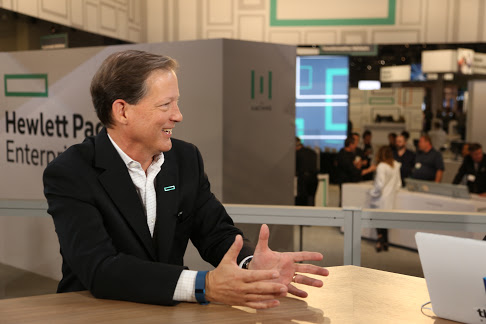
“It’s all about choice,” said Bill Philbin (pictured), senior vice president and general manager of storage and big data solutions at Hewlett Packard Enterprise Co. “HPE is uniquely focused on serving enterprise customers.”
Philbin visited theCUBE, SiliconANGLE’s mobile live-streaming studio, to answer questions from hosts John Furrier (@furrier) and Dave Vellante (@dvellante), during HPE Discover US 2017 in Las Vegas, Nevada. They discussed trends in storage technology, the impact of recent HPE acquisitions and changing rules for data protection. (*Disclosure below.)
The rise of cloud computing has forced storage to be both programmable and invisible at the same time, Philbin pointed out. “With Amazon or Azure, you swipe your credit card and that’s the last time you have to think about it,” Philbin said.
HPE’s acquisition of Nimble Storage Inc. earlier this year is part of the company’s research and development strategy. In addition to Nimble’s all-flash array technology, the company also brings predictive cloud-based analytics to HPE’s storage lineup.
Nimble fits with today’s reality where access to data and communications channels must be always-on, Philbin explained. He also described a personal cruise experience to emphasize the point. “I was in the middle of the Indian Ocean using Google Voice over satellite IP on the boat, talking to San Jose, and it worked,” he said.
The HPE executive mentioned that he recently worked with a financial services company that had petabytes of unsecured data stored on its Hadoop-based servers. “The rules of data protection are also changing,” Philbin said. “Conventional backup does not protect data.”
Philbin pointed to HPE’s recent acquisition of SimpliVity Inc. as an example of a strategy to focus on a programmable infrastructure that can be supported by storage offerings. The acquisition is designed to give HPE a stronger competitive advantage in the hyper-converged IT space.
Watch the complete interview below and be sure to check out more of SiliconANGLE’s and theCUBE’s independent editorial coverage of HPE Discover US 2017. (* Disclosure: TheCUBE is a paid media partner for HPE Discover US 2017. Neither Hewlett Packard Enterprise Co. nor other sponsors have editorial control on theCUBE or SiliconANGLE.)
Support our mission to keep content open and free by engaging with theCUBE community. Join theCUBE’s Alumni Trust Network, where technology leaders connect, share intelligence and create opportunities.
Founded by tech visionaries John Furrier and Dave Vellante, SiliconANGLE Media has built a dynamic ecosystem of industry-leading digital media brands that reach 15+ million elite tech professionals. Our new proprietary theCUBE AI Video Cloud is breaking ground in audience interaction, leveraging theCUBEai.com neural network to help technology companies make data-driven decisions and stay at the forefront of industry conversations.





