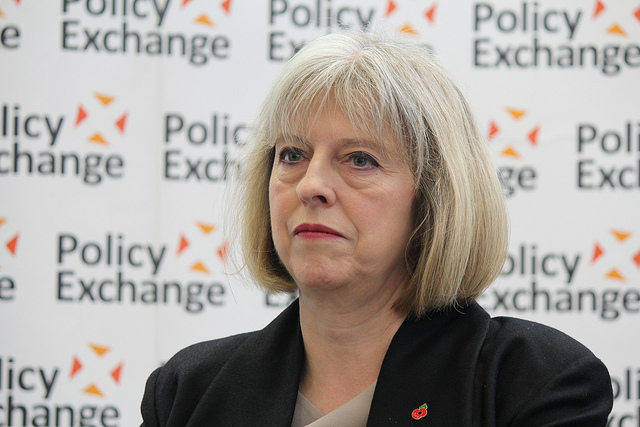







Some of the leading technology firms have raised concerns regarding British Prime Minister Theresa May’s comments that the Internet has provided a safe place for terrorists, following the recent attacks in London.
“We cannot allow this ideology the safe space it needs to breed,” May said. “Yet that is precisely what the Internet, and the big companies that provide Internet-based services, provide.” She called for governments to enforce stricter regulations to prevent “extremism online.”
Both Google Inc. and Facebook Inc. were quick to respond, with Google stating it was investing heavily to “accelerate and strengthen our existing work in this area.”
Simon Milner, director of policy at Facebook, wrote in a statement that Facebook wants to be a “hostile environment for terrorists.” He added, “Using a combination of technology and human review, we work aggressively to remove terrorist content from our platform as soon as we become aware of it — and if we become aware of an emergency involving imminent harm to someone’s safety, we notify law enforcement.”
Twitter Inc. responded by saying it had suspended almost 400,000 accounts in the second half of 2016, adding that terrorist content has no place on Twitter and the platform is expanding its technology to ensure this type of content won’t appear.
The Open Rights Group, a free speech advocate, said May’s approach was shortsighted, stating that more regulation would only push extremist content to “darker corners of the web.” Meanwhile, in a lengthy post, BoingBoing’s Cory Doctorow criticized May for not understanding technology, saying her reaction to the attacks and subsequent blame ascribed to Internet companies not doing enough was a “classic piece of foolish political grandstanding.” His overall assertion was that there is no top-down way to create an Internet that only allows the “good guys” in.
In an article in The Guardian, Charles Arthur wrote that putting the blame on the Internet is foolish, and attempting to enforce stringent government regulations on online content is a dangerous precedent. He cited a British MP, John Mann, who has called for tech companies to be held legally liable for content published by terrorists on their platform.
“The authoritarian sweep of Mann’s idea is chilling,” writes Arthur, “since legal liability is meant to deter, the companies would need people to monitor every word you wrote, every video you watched, and compare it against some manual of dissent.” He likened this to an Orwellian dystopia.
Support our mission to keep content open and free by engaging with theCUBE community. Join theCUBE’s Alumni Trust Network, where technology leaders connect, share intelligence and create opportunities.
Founded by tech visionaries John Furrier and Dave Vellante, SiliconANGLE Media has built a dynamic ecosystem of industry-leading digital media brands that reach 15+ million elite tech professionals. Our new proprietary theCUBE AI Video Cloud is breaking ground in audience interaction, leveraging theCUBEai.com neural network to help technology companies make data-driven decisions and stay at the forefront of industry conversations.





