



 CLOUD
CLOUD
CLOUD
CLOUD
CLOUD

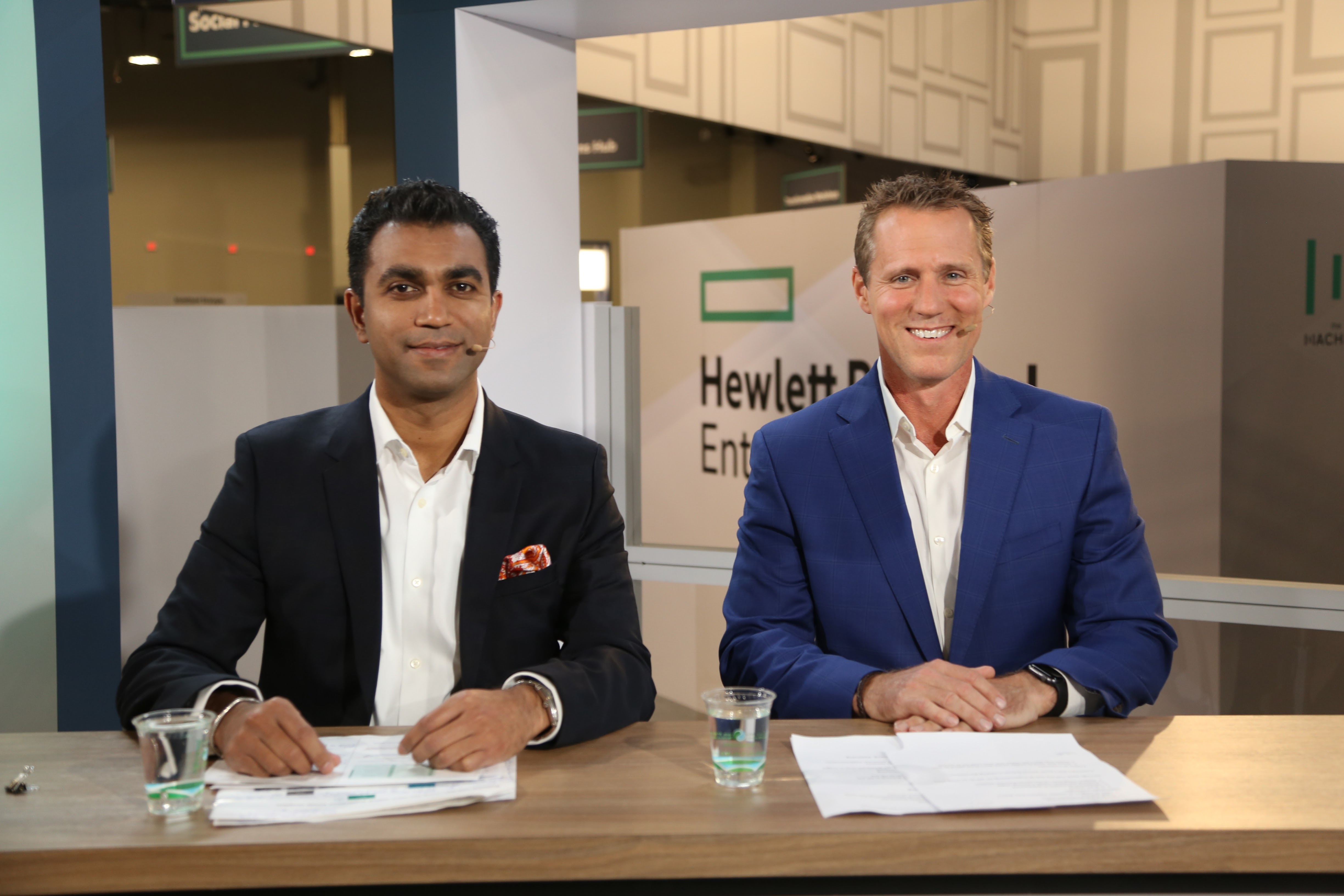
The promise of an Internet of Things-enabled enterprise has attracted companies large and small across a wide range of industries, with varying degrees of maturity in development. Most organizations see the benefits of the digital transformation, but when it comes down to actually making a meaningful change, it’s all about people, according to Tushar Halgali (pictured, left), IoT senior manager at Deloitte Consulting LLP.
“In terms of the business challenges that we have, a lot of them center around leadership and sponsorship. Do you have a tech-focused culture in the company? Is there collaboration between business and IT? Do you have the expertise for IoT within the enterprise and outside? It’s people, people people all the time,” Halgali said.
Halgali and Jeff Carlat (pictured, right), senior director of technology enablement and strategic alliances at Hewlett Packard Enterprise Co., are in an excellent position to comment on the challenges of IoT deployments across the industry. Both spoke with John Furrier (@furrier) and Dave Vellante (@dvellante), co-hosts of theCUBE, SiliconANGLE Media’s mobile live streaming studio, during HPE Discover in Las Vegas, Nevada, about these challenges. (*Disclosure below.)
Halgali and Carlat also discussed business transformation, saying the thought of transforming an entire industry, let alone an individual business unit, can be overwhelming for most business leaders, which prevents some organizations from ever taking any action. Halgali explained Deloitte’s approach to this complex challenge.
“We’ll take the value chain of an industry, break it down into processes and then break that down into use cases. Well look at a use case, look at the value drivers of the use case and see what economic impact or the business outcomes that are derived from those use cases. Then when you aggregate all of them, it starts creating a shareholder value impact,” he explained.
Even with a clear business objective, however, the sheer complexity of the organizational and technological challenges can be preventative, especially for large enterprises. The key is to make incremental changes that get the ball rolling. “Start small, think big, scale fast,” Carlat said.
Deloitte embodies this idea by adopting agile methodologies in its delivery of services and products, Halgali pointed out.
“If you take the principles of agile in software development [the Agile Manifesto], that’s what we have taken into our offerings. Instead of spending three, four, six months trying to figure out what the universe is going to look like and how things will change … let’s show some quick wins in eight-week increments,” Halgali explained.
Watch the complete video interview below, and be sure to check out more of SiliconANGLE’s and theCUBE’s independent editorial coverage of HPE Discover US 2017. (* Disclosure: TheCUBE is a paid media partner for HPE Discover US 2017. Neither Hewlett Packard Enterprise Co. nor other sponsors have editorial control on theCUBE or SiliconANGLE.)
… We’d like to tell you about our mission and how you can help us fulfill it. SiliconANGLE Media Inc.’s business model is based on the intrinsic value of the content, not advertising. Unlike many online publications, we don’t have a paywall or run banner advertising, because we want to keep our journalism open, without influence or the need to chase traffic.The journalism, reporting and commentary on SiliconANGLE — along with live, unscripted video from our Silicon Valley studio and globe-trotting video teams at theCUBE — take a lot of hard work, time and money. Keeping the quality high requires the support of sponsors who are aligned with our vision of ad-free journalism content.
If you like the reporting, video interviews and other ad-free content here, please take a moment to check out a sample of the video content supported by our sponsors, tweet your support, and keep coming back to SiliconANGLE.






