



 CLOUD
CLOUD
CLOUD
CLOUD
CLOUD

Five years into what Hewlett Packard Enterprise Co. Chief Executive Officer Meg Whitman has termed the largest corporate transformation in history, the company has retooled its technology services organization to accelerate transformation for others. Launched in March, Pointnext is HPE’s answer to questions about its services business, with a focus on helping customers with intelligent edge computing and hybrid information technology.
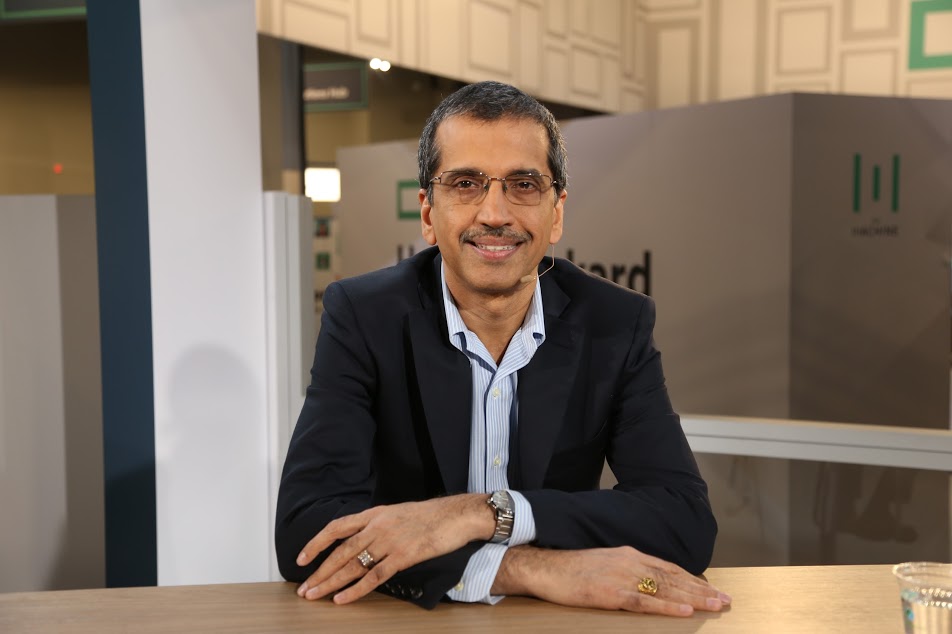
The re-branding is designed to position HPE as a key technology resource for clients. “It’s really working with clients to make the journey much simpler,” said Parvesh Sethi (pictured), senior vice president, Pointnext Consulting at HPE. “Our core strength is around technology consulting.”
Sethi visited theCUBE, SiliconANGLE’s mobile live-streaming studio, and answered questions from hosts John Furrier (@furrier) and Dave Vellante (@dvellante), during HPE Discover in Las Vegas, Nevada. They discussed where Pointnext will focus its consulting efforts and the issues HPE’s customers face. (*Disclosure below.)
As the pace of the IT world accelerates at hyper-speed, companies are becoming increasing challenged by issues surrounding time to value, according to Sethi. This is a common refrain he hears routinely from clients, and Pointnext is focused on helping to create processes that will move business requests into faster delivery.
“One of things I constantly hear is whether we can help with time to value and drive the acceleration, because initiatives are stalling,” Sethi said. “Customers want our help on that journey, so there’s tremendous opportunity on both sides.”
HPE has developed a proprietary tool called the Unified Transformation Framework, which uses qualitative and quantitative information to provide a comprehensive view of current capabilities. This assessment is designed to “assess the gaps” inside a client’s organization and apply more focus to achieving business outcomes, Sethi explained.
Many business projects fail because there is no end-to-end alignment, and Pointnext is designed to address this problem as well, he added.
“It’s not just what the technology will do. It’s really about what that will enable, what the business outcome will be,” Sethi concluded.
Watch the complete video interview below, and be sure to check out more of SiliconANGLE’s and theCUBE’s independent editorial coverage of HPE Discover US 2017. (* Disclosure: TheCUBE is a paid media partner for HPE Discover US 2017. Neither Hewlett Packard Enterprise Co. nor other sponsors have editorial control on theCUBE or SiliconANGLE.)
… We’d like to tell you about our mission and how you can help us fulfill it. SiliconANGLE Media Inc.’s business model is based on the intrinsic value of the content, not advertising. Unlike many online publications, we don’t have a paywall or run banner advertising, because we want to keep our journalism open, without influence or the need to chase traffic.The journalism, reporting and commentary on SiliconANGLE — along with live, unscripted video from our Silicon Valley studio and globe-trotting video teams at theCUBE — take a lot of hard work, time and money. Keeping the quality high requires the support of sponsors who are aligned with our vision of ad-free journalism content.
If you like the reporting, video interviews and other ad-free content here, please take a moment to check out a sample of the video content supported by our sponsors, tweet your support, and keep coming back to SiliconANGLE.






