 CLOUD
CLOUD
CLOUD
CLOUD







CLOUD

Traditional enterprises trying to serve better software before some fresh-from-college coders Uberize — aka disrupt — them are turning out to be cash cows for Pivotal Software Inc.’s Cloud Foundry Foundation, its cloud-native platform for deploying and operating modern applications.
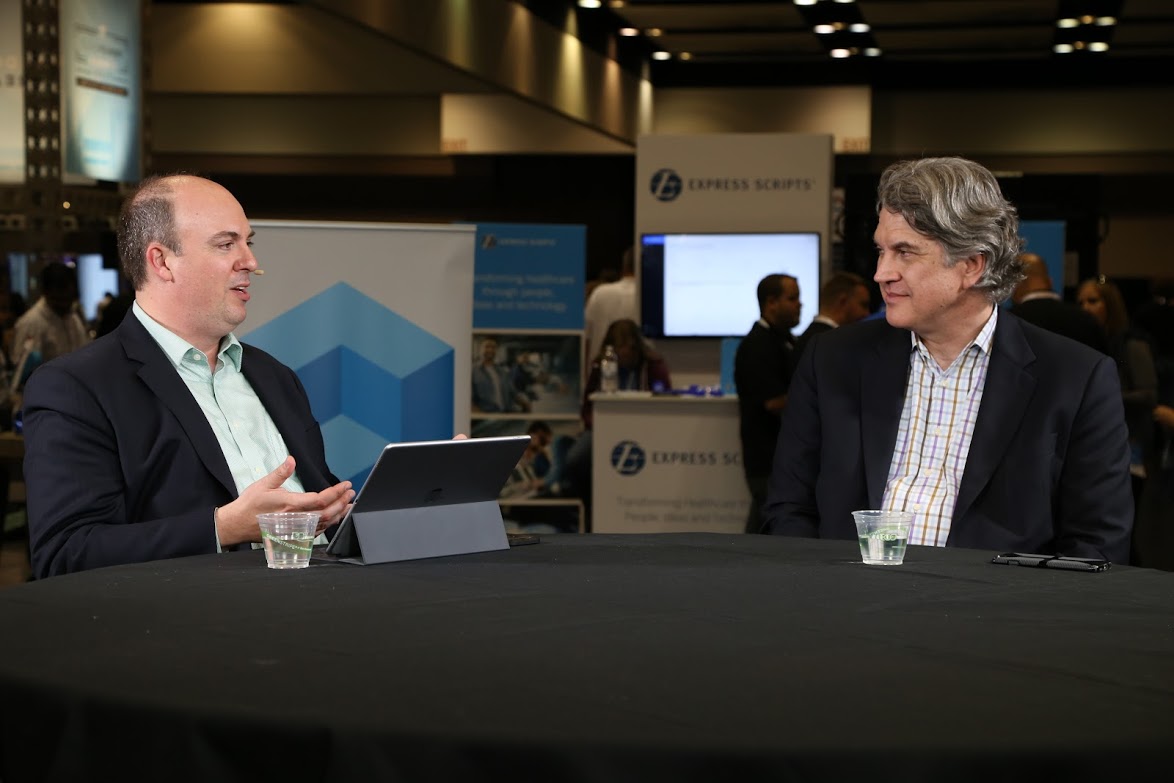
This is evident in stories from some of the users at this week’s Cloud Foundry Summit in Santa Clara, California, according to John Troyer (@jtroyer) (pictured, right) and Stu Miniman (@stu) (pictured, left), co-hosts of theCUBE, SiliconANGLE Media’s mobile live streaming studio. Troyer and Miniman gauged the mood at the conference during their final analysis of the event. (* Disclosure below.)
“They’re not building one or two apps; they’re building thousands of apps on Cloud Foundry and moving their whole enterprise over,” Troyer said.
Cloud Foundry’s ecosystem might be too busy for some customers’ needs but affords its enterprise-readiness attractive to companies en route from on-prem to cloud. These enterprises want to develop new cloud-native apps while lugging their legacy ones into a cloud environment, Miniman explained, noting that Cloud Foundry’s platform can appear a means to do both.
However, younger, cloud-native companies not dependent on cloud-legacy compatibility might find it easy to take a pass on Cloud Foundry, Miniman added.
“I haven’t seen these companies that are already just software companies using it; it’s the industry older companies that are trying to get more into software, and, therefore, this helps with their digital transformation,” Miniman said, adding that the latter is not necessarily a bad market in which to deal.
In fact, Cloud Foundry earned Pivotal Software about $270 million last year — enough to trigger reports of a possible IPO in 2018, according to Miniman.
“I’m sure Michael Dell [of Dell Technologies Inc., which acquired Pivotal] would love to have another influx of cash that he could help fund all the things he’s doing,” Miniman said.
In the meantime, Cloud Foundry — surprise — must somehow keep big public clouds from eating its customers, Troyer and Miniman stated.
“It’s one thing to say, ‘I’m a layer on top of another cloud’; but Amazon really wants you to use its databases, and Google Cloud really wants you to use its services,” Troyer said, noting possible tensions with open-source software platforms like Cloud Foundry.
Interestingly, Cloud Foundry has recently joined forces with Microsoft Azure and Google Cloud.
“If Cloud Foundry has enough value, people will use it as their deployment platform on multi-cloud,” Troyer stated, noting that multi-cloud’s practicality is, however, still up for debate.
Watch complete video interview below, and be sure to check out more of SiliconANGLE’s and theCUBE’s independent editorial coverage of Cloud Foundry Summit.
Support our mission to keep content open and free by engaging with theCUBE community. Join theCUBE’s Alumni Trust Network, where technology leaders connect, share intelligence and create opportunities.
Founded by tech visionaries John Furrier and Dave Vellante, SiliconANGLE Media has built a dynamic ecosystem of industry-leading digital media brands that reach 15+ million elite tech professionals. Our new proprietary theCUBE AI Video Cloud is breaking ground in audience interaction, leveraging theCUBEai.com neural network to help technology companies make data-driven decisions and stay at the forefront of industry conversations.





