 INFRA
INFRA
INFRA
INFRA







INFRA

Nobody likes system updates, mostly because the downtime interrupts business. This rings especially true in healthcare, where patients can’t schedule a break from being sick.
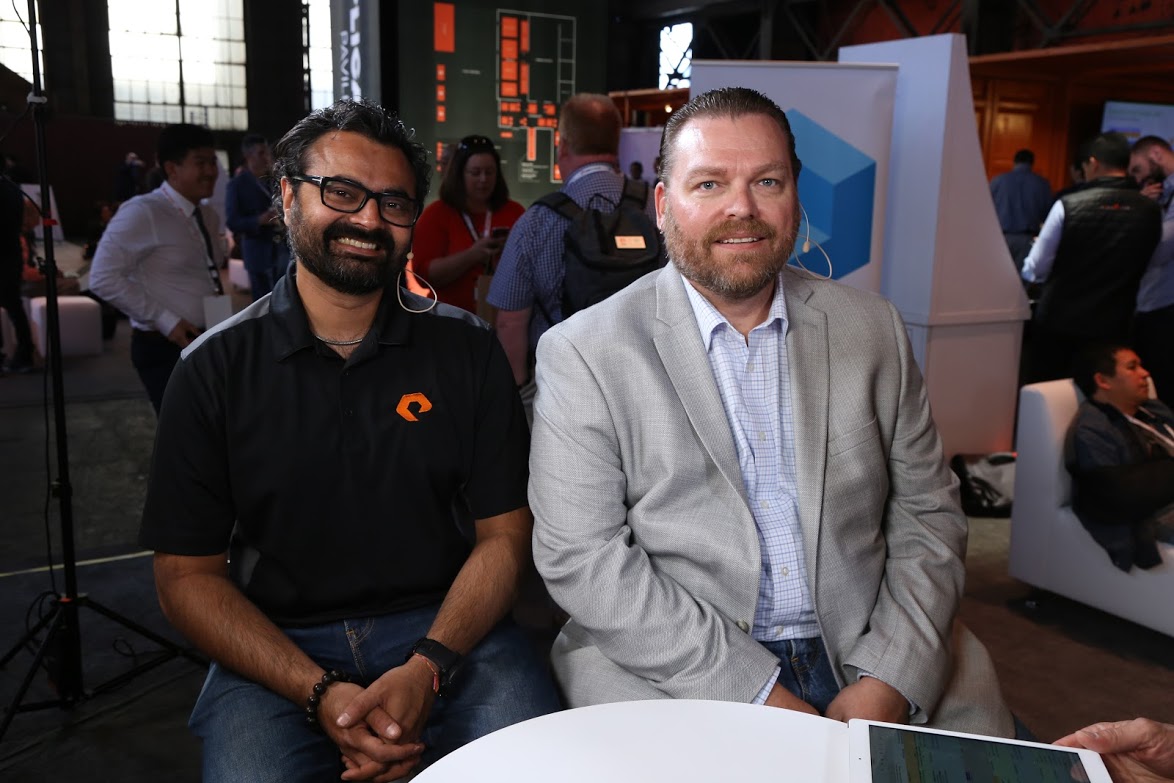
“Because we deal with people’s lives, we have to be careful about when we do updates. We’ve got to be cognizant of, you know, is the emergency room full, things like that,” said Kent Petzold (pictured, right), enterprise storage manager at Intermountain Healthcare Inc.
Petzold joined Vik Nagjee (pictured, left), vice president and chief technology officer of healthcare and life sciences at Pure Storage Inc., in an interview during the Pure//Accelerate event in San Francisco, California.
As the largest healthcare provider in Utah, with 22 hospitals and 185 clinics, Intermountain used to face a lot of timing conflicts when trying to schedule storage updates. This is an all too common scenario for healthcare information technology teams, Nagjee told Stu Miniman (@stu) and John Walls (@JohnWalls21), co-hosts of theCUBE, SiliconANGLE Media’s mobile livestreaming studio. (* Disclosure below.)
“Typically, we have these updates all teed up and lined up for three 0’clock in the morning on some obscure weekend day where, if something goes sideways, the number of experts you can reach is very, very low,” Nagjee said.
Healthcare companies switching to all-flash storage arrays like Pure’s now have unprecedented freedom, thanks to zero-downtime upgrades, he added.
In the three years that Intermountain has used Pure arrays, overall speed has shot up, and updates are no longer the headache they once were, Petzold explained.
“To do the head-swap and get the new controller was weeks and weeks of planning,” he said, referring to storage systems the company used in the past. “With systems like Pure, we don’t have to do as much planning. We still do a little bit so that we know what we’re getting ourselves into and what’s going to be at risk, but it’s a lot less,” Petzold concluded.
Watch the complete video interview below, and be sure to check out more of SiliconANGLE’s and theCUBE’s independent editorial coverage of Pure//Accelerate 2017. (* Disclosure: TheCUBE is a paid media partner for Pure//Accelerate 2017. Neither Pure Storage Inc. nor other sponsors have editorial control over content on theCUBE or SiliconANGLE.)
Support our mission to keep content open and free by engaging with theCUBE community. Join theCUBE’s Alumni Trust Network, where technology leaders connect, share intelligence and create opportunities.
Founded by tech visionaries John Furrier and Dave Vellante, SiliconANGLE Media has built a dynamic ecosystem of industry-leading digital media brands that reach 15+ million elite tech professionals. Our new proprietary theCUBE AI Video Cloud is breaking ground in audience interaction, leveraging theCUBEai.com neural network to help technology companies make data-driven decisions and stay at the forefront of industry conversations.





