



 EMERGING TECH
EMERGING TECH
EMERGING TECH
EMERGING TECH

Facebook Inc. is dropping the price of the Oculus Rift virtual reality headset for the second time this year, bringing the price tag of the Rift bundle down to $399 for a limited time.
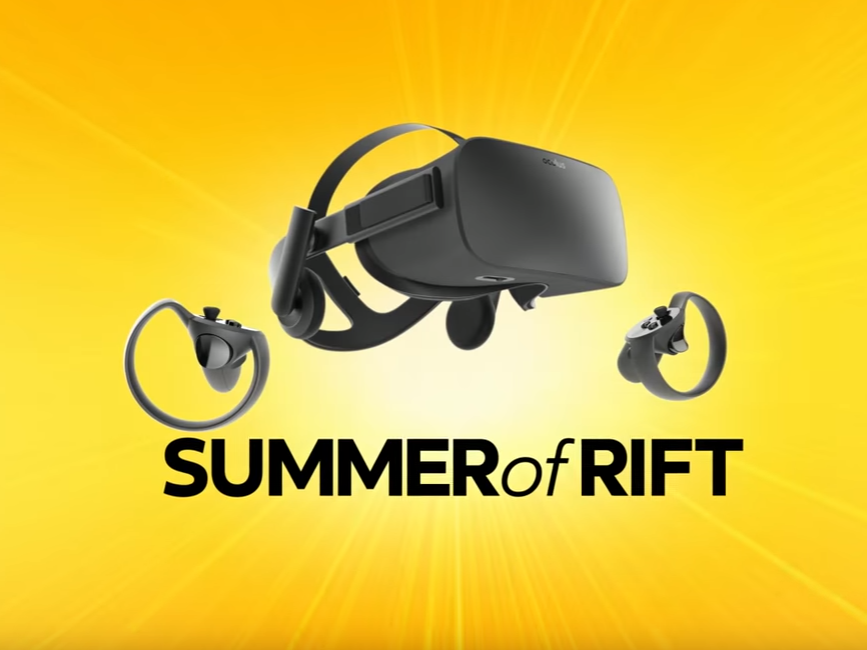
The price drop for the Oculus Rift comes during a promotion the company calls the “Summer of Rift” covering a broad amount of VR software for entertainment and education. The sale period is expected to last six weeks.
Earlier this year, in March, the price tag of the Rift bundle – a package deal including the Oculus Rift headset and a pair of Touch 3D controllers — was dropped from $798 to $598. This price drop places the Rift at the same price tag as its gaming console-based competitor Sony Corp.’s PlayStation VR, which is about $400, and makes it half the price of its primary rival HTC Corp.’s Vive at $800.
Jason Rubin, head of content at Oculus, told Fox Business News that the average number of Rift headsets sold each week went up after the first price cut. This price cut, he said, follows a dramatic increase in the number of games and apps for the Rift.
The initial price cut to the Rift in March followed what analysts cited as a sag in VR headset sales at the end of 2016 and beginning of 2017. Although the market is predicted to reach nearly $60 billion worldwide sales in 2021, according to Allied Business Intelligence Research Inc., much of what is stalling the market currently is a lack of content and expensive equipment.
As the producer of the Oculus Rift, Facebook hopes that having 700 games and apps for VR, up from 400, will attract more attention to the platform. Following that, the price drop for the headset and controllers themselves will make equipment costs significantly more palatable to potential buyers.
Recent releases for the VR platform include high-profile games and entertainment such as Batman: Arkham VR, Star Trek: Bridge Crew, Robo Recall and Wilson’s Heart. Facebook has also been pushing toward delivering the social side of VR with the beta of Facebook Spaces.
Outside of Facebook, news outlets and entertainment have been looking for a peek through the virtual window such as CNN’s VR journalism unit and Getty Image’s 360-degree videos and images.
Headsets such as the Oculus Rift also have competition coming from mobile VR platforms such as Google Cardboard and the Samsung Gear VR that use high-end smartphones as displays. Further, the market has further expanded with the release of Google Daydream at the end of 2016.
The Rift and Vive require expensive PCs to run properly, whereas Gear and Daydream cost under $100 and run on smartphones that many consumers of media, including the VR kind, probably already have on hand.
Analysts at SuperData Research estimated that Oculus Rift shipped 24,000 devices in 2016. Compared to 42,000 shipped by HTC and 75,000 PlayStation VR. All of these stats were dwarfed by far less expensive Samsung Gear VR at approximately 4.5 million.
… We’d like to tell you about our mission and how you can help us fulfill it. SiliconANGLE Media Inc.’s business model is based on the intrinsic value of the content, not advertising. Unlike many online publications, we don’t have a paywall or run banner advertising, because we want to keep our journalism open, without influence or the need to chase traffic.The journalism, reporting and commentary on SiliconANGLE — along with live, unscripted video from our Silicon Valley studio and globe-trotting video teams at theCUBE — take a lot of hard work, time and money. Keeping the quality high requires the support of sponsors who are aligned with our vision of ad-free journalism content.
If you like the reporting, video interviews and other ad-free content here, please take a moment to check out a sample of the video content supported by our sponsors, tweet your support, and keep coming back to SiliconANGLE.






