



 APPS
APPS
APPS
APPS
APPS

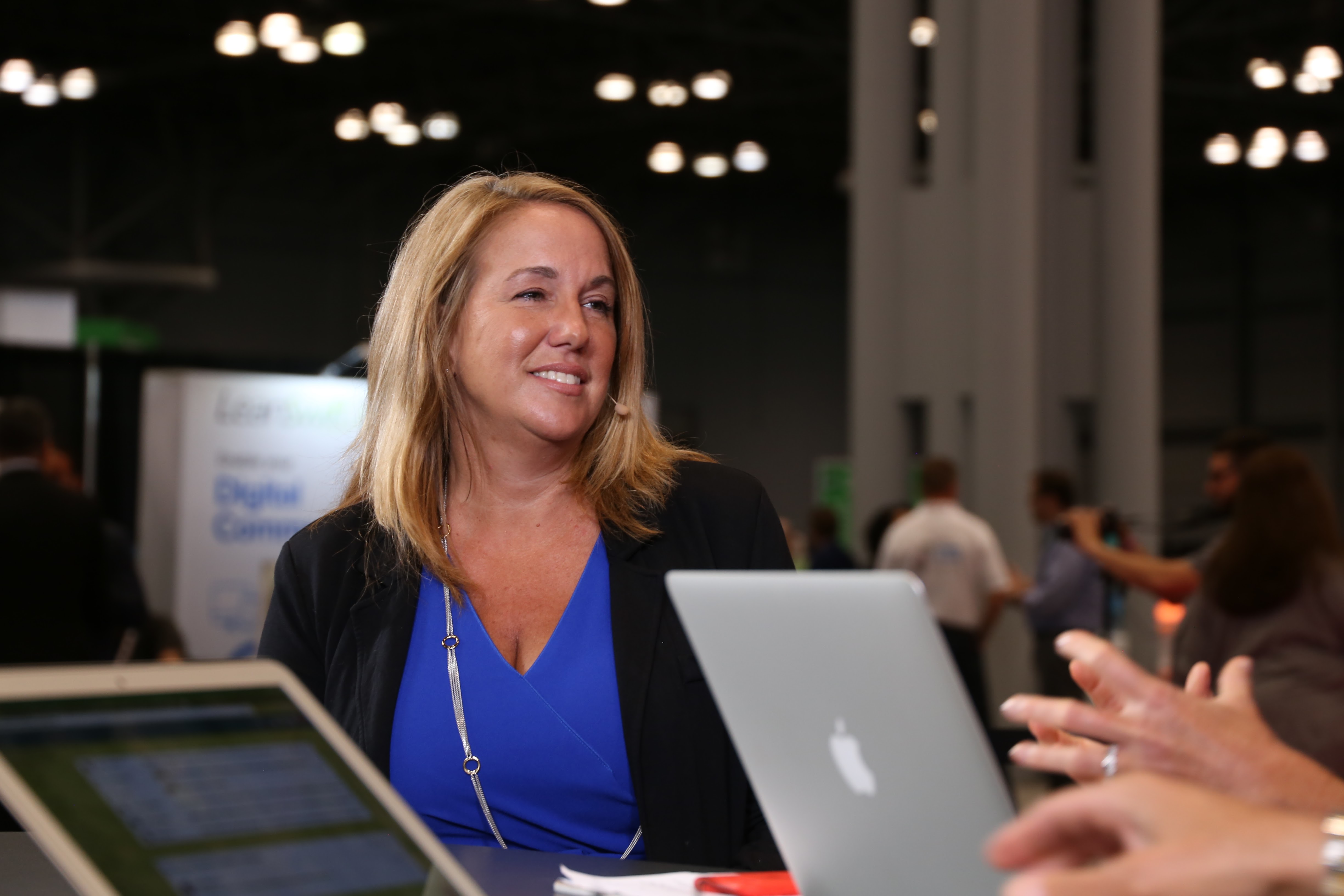
Bringing legacy manufacturing plants into the digital world involves careful deconstruction of existing processes, with the ultimate goal of extracting value from the data being generated at each step, according to Debbie Krupitzer, vice president and Internet of Things practice lead at Capgemini (Cap Gemini S.A.).
“What we’re finding is that the CFOs [chief financial officer], the people who are spending the money, have already seen the value in terms of cloud, cost saving, enterprise, infrastructure. They’re asking how to get those to the plant to get the savings and replicate across multiple plants,” Krupitzer said.
Krupitzer spoke with Dave Vellante (@dvellante) and Rebecca Knight (@knightrm), co-hosts of theCUBE, SiliconANGLE Media’s mobile live streaming studio, during the Inforum event in New York, where she shared her insights into modernizing digital manufacturing and industrial IoT applications. (* Disclosure below.)
Krupitzer has the challenge of working with organizations directly to break down their manufacturing workflows in order to determine where to extract value. This is particularly exciting in relatively low-tech manufacturing operations where she has free reign in implementing new data analytics from scratch. She starts by pulling historical data and deconstructing the value chain, she explained.
“You look at the data and ask what is the value map of where customers make money, and that’s different for every company. Literally, what we do is plot, say, 15 processes that are going on and the data outcomes of the process and ask what the value is and where customers make the most money,” she said.
An interesting trend in her client base, though, is how protective the companies are over their newly acquired digital currency: data.
“You’ll find a lot of vendors that are out there dealing with AI and data are having to set clauses that say, ‘You will not use this data to feed into any of your algorithms or your IP,’ and that’s very specific in contracts,” Krupitzer said. “Companies are hiring their own data scientists and not letting it go to external parties. … They’re hiring people that understand the data structure so they can keep track of what’s valuable and what’s not.”
Watch the complete video interview below, and be sure to check out more of SiliconANGLE’s and theCUBE’s coverage of the Inforum 2017 event. (* Disclosure: TheCUBE is a paid media partner for Inforum 2017. Neither Infor Inc. nor other sponsors have editorial control over content on theCUBE or SiliconANGLE.)
… We’d like to tell you about our mission and how you can help us fulfill it. SiliconANGLE Media Inc.’s business model is based on the intrinsic value of the content, not advertising. Unlike many online publications, we don’t have a paywall or run banner advertising, because we want to keep our journalism open, without influence or the need to chase traffic.The journalism, reporting and commentary on SiliconANGLE — along with live, unscripted video from our Silicon Valley studio and globe-trotting video teams at theCUBE — take a lot of hard work, time and money. Keeping the quality high requires the support of sponsors who are aligned with our vision of ad-free journalism content.
If you like the reporting, video interviews and other ad-free content here, please take a moment to check out a sample of the video content supported by our sponsors, tweet your support, and keep coming back to SiliconANGLE.






