



 APPS
APPS
APPS
APPS
APPS

In the not-too-distant past, telecommunication companies were comfortable in a stodgy, hardware-driven world where they had the luxury of time to test services and introduce them to the public. The past 20 years, however, completely changed the world of telecom, with the amount of services and apps that are handled on the ubiquitous “smart” phones, an amount that is increasing hourly. The much-anticipated 5G network requires even more flexibility, agility and speed, as the next generation of services needs an agile infrastructure fabric and software capability to deliver applications over those networks.
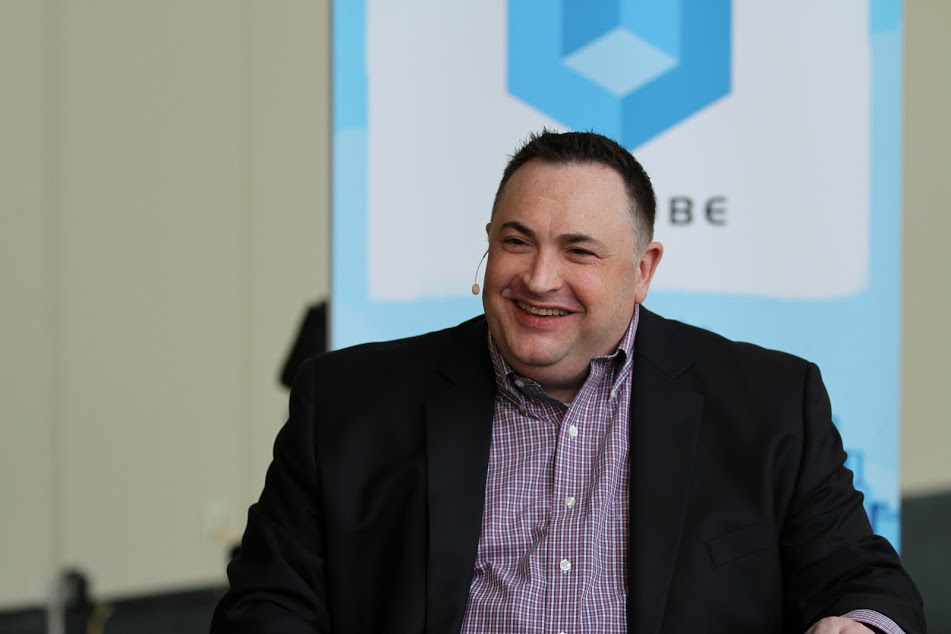
“Telcos are looking for an open source for innovation, [as] they need to change the way they deliver services today and modernize their network infrastructure to become more agile,” said Darrell Jordan-Smith (pictured), vice president of worldwide telecom service provider sales at Red Hat Inc.
Jordan-Smith recently joined host Stu Miniman (@stu) and guest host John Troyer (@jtroyer) of theCUBE, SiliconANGLE Media’s mobile livestreaming studio, during the OpenStack Summit in Boston, Massachusetts. In addition to discussing the upcoming changes that telcom must meet to keep up with 5G, they also explored how regulations affect service delivery. (* Disclosure below.)
The world of telco has been moving from hardware-based to software-based, where there is no need to buy a fixed appliance with its own silicone. Instead, telcos can buy a commercial, off-the-shelf, x86-based technology, deploy that in next-generation (software-defined) data centers around the Open Compute platform, and use open-source technology to deploy storage, compute and networking at a massive scale, according to Jordan-Smith.
This is a completely different model; in the past, a telco would buy an application through an appliance, and they would take nine months to deploy in all their centers, he explained. Three to six months later, they might switch it off. In the software agile world, they’ve got to condense that 12-to-18-month period down to three or four weeks, Jordan-Smith added.
Additionally, telcos are highly regulated, so they have to maintain a certain quality of service in order to be able to bill customers and meet the regulations that they have to adhere to in the markets where they operate their network infrastructure, according to Jordan-Smith. They must have a level of discipline that they need to achieve in terms of availability of their network infrastructure, the availability of their services and the availability of their applications — and that links into a whole quality of service experience for their customers.
“That’s not a trivial thing,” Jordan-Smith concluded.
Watch the complete video interview below, and be sure to check out more of SiliconANGLE’s and theCUBE’s coverage of OpenStack Summit 2017 Boston. (* Disclosure: The OpenStack Foundation sponsors some OpenStack Summit segments on SiliconANGLE Media’s theCUBE. Neither the OpenStack Foundation nor other sponsors have editorial control over content on theCUBE or SiliconANGLE.)
… We’d like to tell you about our mission and how you can help us fulfill it. SiliconANGLE Media Inc.’s business model is based on the intrinsic value of the content, not advertising. Unlike many online publications, we don’t have a paywall or run banner advertising, because we want to keep our journalism open, without influence or the need to chase traffic.The journalism, reporting and commentary on SiliconANGLE — along with live, unscripted video from our Silicon Valley studio and globe-trotting video teams at theCUBE — take a lot of hard work, time and money. Keeping the quality high requires the support of sponsors who are aligned with our vision of ad-free journalism content.
If you like the reporting, video interviews and other ad-free content here, please take a moment to check out a sample of the video content supported by our sponsors, tweet your support, and keep coming back to SiliconANGLE.






