



 BIG DATA
BIG DATA
BIG DATA
BIG DATA
As cloud computing configurations become ever more complex and expansive, seemingly simple tasks, such as configuring storage infrastructure, become more challenging. The number of technology options available for storage solutions adds another variable to the already complicated problem.
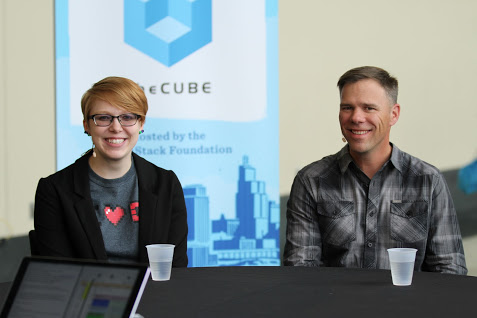
To get a better sense of the latest trends in storage solutions, Stu Miniman (@stu) and guest host John Troyer (@jtroyer), co-hosts of theCUBE, SiliconANGLE Media’s mobile livestreaming studio, spoke with John Griffith (pictured, right), principal software engineer at NetApp Inc., and Kendall Nelson (pictured, left), upstream developer advocate, during the OpenStack Foundation, during this year’s OpenStack Summit in Boston, Massachusetts. (* Disclosure below.)
“The fact is storage is kind of boring, but it’s hard. … Everybody thinks, ‘Oh, I’ll just do my own.’
It’s actually a hard thing to get right,” Griffith said. “What everybody wants to see, basically, is commoditized, automated and generic infrastructure.”
A lot of focus recently has been enabling containers with OpenStack, open-source cloud computing software.
“We had a lot of talks submitted that were focused on containers. I was just standing outside the room trying to get into a Women of OpenStack event, and the number of people that came pouring out that were interested in the container stack was amazing,” Nelson said. “I definitely think people are getting more into that and using it with OpenStack is a growing direction in the community.”
The data storage challenge exists not only in centralized applications, but also in Internet of Things use cases at the edge of large cloud deployments. When Troyer asked Griffith about these use cases, Griffith was quick to recall a particularly interesting deployment.
“I do have some experience with some folks that are deploying that model now, and … they’re doing a mini OpenStack deployment on the edge and using Cinder [block storage service] and an instance and everything else, and then pushing it. As soon as they push that out to the public, they destroy what they had, and they start over. … It’s actually really interesting,” Griffith stated.
Watch the complete video interview below, and be sure to check out more of SiliconANGLE’s and theCUBE’s coverage of OpenStack Summit 2017 Boston. (* Disclosure: The OpenStack Foundation sponsors some OpenStack Summit segments on SiliconANGLE Media’s theCUBE. Neither the OpenStack Foundation nor other sponsors have editorial control over content on theCUBE or SiliconANGLE.)
… We’d like to tell you about our mission and how you can help us fulfill it. SiliconANGLE Media Inc.’s business model is based on the intrinsic value of the content, not advertising. Unlike many online publications, we don’t have a paywall or run banner advertising, because we want to keep our journalism open, without influence or the need to chase traffic.The journalism, reporting and commentary on SiliconANGLE — along with live, unscripted video from our Silicon Valley studio and globe-trotting video teams at theCUBE — take a lot of hard work, time and money. Keeping the quality high requires the support of sponsors who are aligned with our vision of ad-free journalism content.
If you like the reporting, video interviews and other ad-free content here, please take a moment to check out a sample of the video content supported by our sponsors, tweet your support, and keep coming back to SiliconANGLE.






