



 BIG DATA
BIG DATA
BIG DATA
BIG DATA

When the first Internet-connected refrigerator was introduced, it cost $20,000 and consumers greeted the new product more as an oddity than a practical device for the home. But now that price points have come down and home technologies are becoming standard, consumers are warming up quickly to what the digitized kitchen can provide.
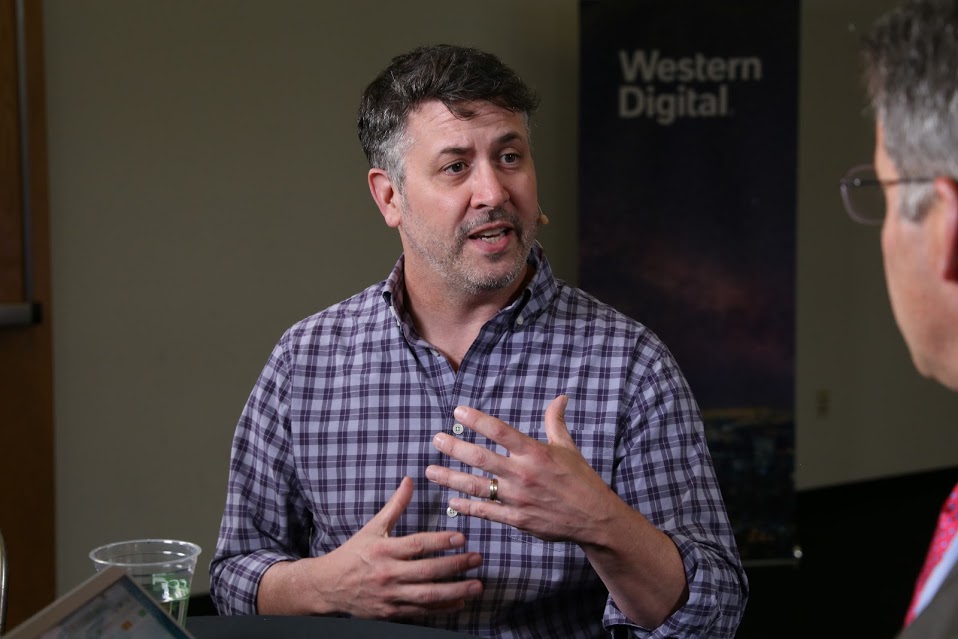
“Our research shows that almost everyone is using more digital technology in the kitchen,” said Mike Wolf (pictured), publisher of The Spoon and creator and curator of the Smart Kitchen Summit. “Technology will reshape how we get food, how we bring it into our home, how we cook it and how we eat it.”
Wolf stopped by theCUBE, SiliconANGLE Media’s mobile livestreaming studio, and answered questions from host Jeff Frick (@JeffFrick) during this year’s FOOD IT: Fork to Farm event in Mountain View, California. They discussed how various technologies are transforming consumer cooking habits and the potential impact of Amazon.com Inc.’s recent Whole Foods Market Inc. acquisition. (* Disclosure below.)
New devices coming into the market are allowing home chefs to apply cooking technologies in different ways. Wolf cited the air fryer (uses only a small amount of oil and superheated circulated air), the June Oven (sensors, camera and artificial intelligence help cook food), and the sous vide circulator (heats and circulates water) as examples.
“These types of technologies could make things easier, a lot faster, and give you cooking superpowers that you might otherwise not have,” Wolf said.
The smart kitchen expert also pointed to the impact of digital content as a key driver in the cooking revolution. This includes Tasty on BuzzFeed, short cooking videos and recipes that are now drawing over 1 billion views monthly.
“Millennials are grabbing on to these how-to-cook videos,” Wolf said.
Food home delivery is being transformed as well, with the growth of online suppliers who will drop-off everything from pre-selected ingredients to fully-cooked meals. Wolf saw Amazon’s acquisition of Whole Foods as an important move and pointed out that Amazon Fresh, the 10-year old grocery delivery service, still had not “reached massive scale.”
Wolf was “excited” that Amazon’s acquisition could result in bringing fresher food to the home at a lower cost. “This validates the idea that you need physical storefronts,” Wolf said.
Watch the complete video interview below, and be sure to check out more of SiliconANGLE’s and theCUBE’s coverage of the FOOD IT: Fork to Farm event. (* Disclosure: TheCUBE is a paid media partner for FOOD IT: Fork to Farm. Neither Western Digital Corp., the event sponsor, nor other sponsors have editorial influence on theCUBE or SiliconANGLE.)
… We’d like to tell you about our mission and how you can help us fulfill it. SiliconANGLE Media Inc.’s business model is based on the intrinsic value of the content, not advertising. Unlike many online publications, we don’t have a paywall or run banner advertising, because we want to keep our journalism open, without influence or the need to chase traffic.The journalism, reporting and commentary on SiliconANGLE — along with live, unscripted video from our Silicon Valley studio and globe-trotting video teams at theCUBE — take a lot of hard work, time and money. Keeping the quality high requires the support of sponsors who are aligned with our vision of ad-free journalism content.
If you like the reporting, video interviews and other ad-free content here, please take a moment to check out a sample of the video content supported by our sponsors, tweet your support, and keep coming back to SiliconANGLE.






