



 APPS
APPS
APPS
APPS
APPS

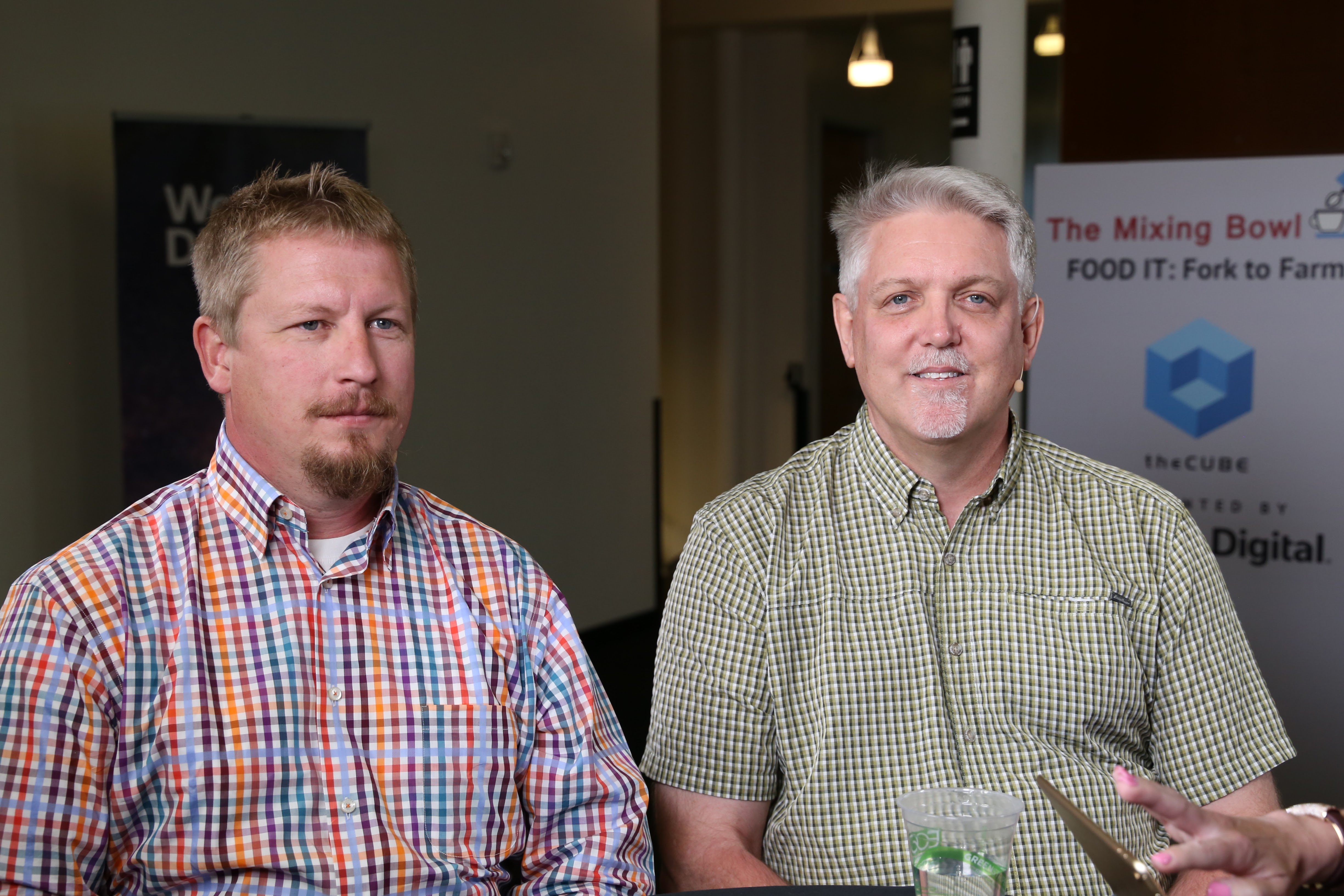
Applying new technology to the farming industry is a highly complex process because of the multi-faceted nature of the challenges facing farms. The key is making sense of the data once the new technology is implemented, according to Nathan Dorn (pictured, left), founder and chief executive officer of farming analytics startup Food Origins (F6S Network Ltd.), which provides precision harvest data to high-value hand crops.
“A farmer has a … multi-disciplinary skillset, and whatever innovations we bring have to fit into the entire skillset of a farmer. Whether it’s human resources manager, chemist, biological expert, soil scientist, mechanic, economist … they have to be able to match all of those things,” Dorn said.
Dorn and George Kellerman (pictured, right), chief operations officer and general partner at Yamaha Motor Ventures and Laboratory Silicon Valley Inc., talked about technology challenges in the farming industry with Lisa Martin (@Luccazara), co-host of theCUBE, SiliconANGLE Media’s mobile livestreaming studio, during this year’s FOOD IT: Fork to Farm event in Mountain View, California. (* Disclosure below.)
Even with a complete new suite of available technology, farming applications require careful planning and an in-depth analysis before implementing anything new, according to Kellerman.
“It’s not enough to say, ‘Here’s a robot; we’ll put it in the field.’ What is the data that it’s basing its decisions on? How is it collecting data, and when is it collecting data? We need to build that historical data that we can apply machine learning to start somewhere,” Kellerman said. “It might just be from putting sensors on the vehicles that are in the field now collecting different kinds of data … there’s a lot of opportunity.”
The industry must look at AgTech not as a five-year solution, but as a multi-generational solution, he added.
Once the correct strategy for implementing the data collection technology has been determined, the next challenge is making sense of the data and providing accurate insights into the farming process, according to Dorn.
“The gap is in connecting that data. Going from pretty pictures to determining a cause and multiple attributes as an effect. If I can make that connection, we’ve closed the learning cycle that can happen automatically within a farm and take the art of farming, take pieces of it, and make it a science,” Dorn said. “It will allow people to connect what soil moisture does to a product that was sold a week later and determine how it affected the root and then the plant and then the fruit.”
Watch the complete video interview below, and be sure to check out more of SiliconANGLE’s and theCUBE’s coverage of the FOOD IT: Fork to Farm event. (* Disclosure: TheCUBE is a paid media partner for FOOD IT: Fork to Farm. Neither Western Digital Corp., the event sponsor, nor other sponsors have editorial influence on theCUBE or SiliconANGLE.)
… We’d like to tell you about our mission and how you can help us fulfill it. SiliconANGLE Media Inc.’s business model is based on the intrinsic value of the content, not advertising. Unlike many online publications, we don’t have a paywall or run banner advertising, because we want to keep our journalism open, without influence or the need to chase traffic.The journalism, reporting and commentary on SiliconANGLE — along with live, unscripted video from our Silicon Valley studio and globe-trotting video teams at theCUBE — take a lot of hard work, time and money. Keeping the quality high requires the support of sponsors who are aligned with our vision of ad-free journalism content.
If you like the reporting, video interviews and other ad-free content here, please take a moment to check out a sample of the video content supported by our sponsors, tweet your support, and keep coming back to SiliconANGLE.






