



 APPS
APPS
APPS
APPS
APPS

Earlier this year, the Mozilla Foundation shut down its connected devices group as part of a move to shift resources from building commercial products to research and development. The latest fruits of the initiative are three experimental features for Firefox that became available on Tuesday.
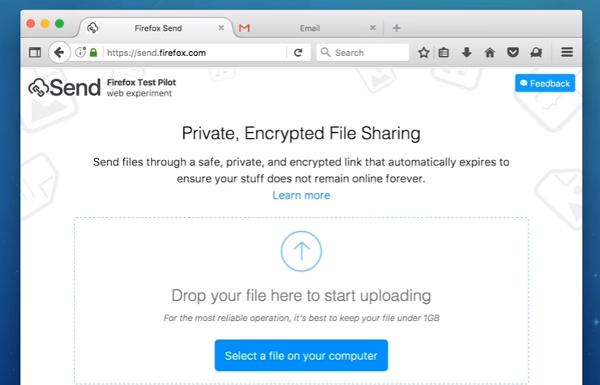
The first is a cloud-connected file sharing service called Send. Mozilla usually makes feature previews available only through the Test Pilot extension for Firefox, but the new tool is accessible from Google Inc.’s Chrome browser as well. ZDNet reported that support for Microsoft Corp.’s Edge browser is set to be added further down the line, but Apple Inc.’s Safari isn’t on roadmap because it lacks an implementation of the Web Crypto API which Send uses to perform encryption.
The service scrambles files locally before they’re sent to Mozilla’s servers so to avoid potential privacy issues. Once the process is complete, users can easily share the upload with a contact via a onetime download link that automatically expires after 24 hours. The maximum file size is 1 gigabyte.
Send is joined by two other features that only work with the Test Pilot extension. The first is Notes, a straightforward scribble pad taking the form of a sidebar that can be toggled, with several basic formatting options. If it’s eventually made into a standard part of Firefox, the feature could prove a valuable addition for security-conscious users who aren’t keen on installing third-party note-taking tools.
Completing the trio is a voice search feature called Voice Fill. It currently works on Google, Yahoo and DuckDuckGo search services, with Mozilla planning to add support for more services in the future. Adding integration with a bigger lineup of websites could be a way for the browser maker to one-up Chrome in the accessibility department.
The three new features are rolling out hot on the heels of another major development milestone for Mozilla. The foundation recently launched an Android version of its privacy-centric Firefox Focus browser, which packs a built-in ad blocker and several other capabilities designed to prevent data collection.
Mozilla will need to keep investing in engineering if it is to recover some of the market share that Firefox has lost to Chrome over recent years. But features represent only part of the picture. Former Mozilla Chief Technology Officer Andreas Gal argued in a recent blog post that the key to Google’s browser lead is its aggressive promotion of Chrome, which reaches far more users than any smaller competitor.
… We’d like to tell you about our mission and how you can help us fulfill it. SiliconANGLE Media Inc.’s business model is based on the intrinsic value of the content, not advertising. Unlike many online publications, we don’t have a paywall or run banner advertising, because we want to keep our journalism open, without influence or the need to chase traffic.The journalism, reporting and commentary on SiliconANGLE — along with live, unscripted video from our Silicon Valley studio and globe-trotting video teams at theCUBE — take a lot of hard work, time and money. Keeping the quality high requires the support of sponsors who are aligned with our vision of ad-free journalism content.
If you like the reporting, video interviews and other ad-free content here, please take a moment to check out a sample of the video content supported by our sponsors, tweet your support, and keep coming back to SiliconANGLE.






