 CLOUD
CLOUD
CLOUD
CLOUD







CLOUD

What is a small cloud provider to do in the face of Amazon Web Services Inc.’s chomping jaws? Two such companies told us how they’ll stay fed as public cloud whales like AWS gobble market share.
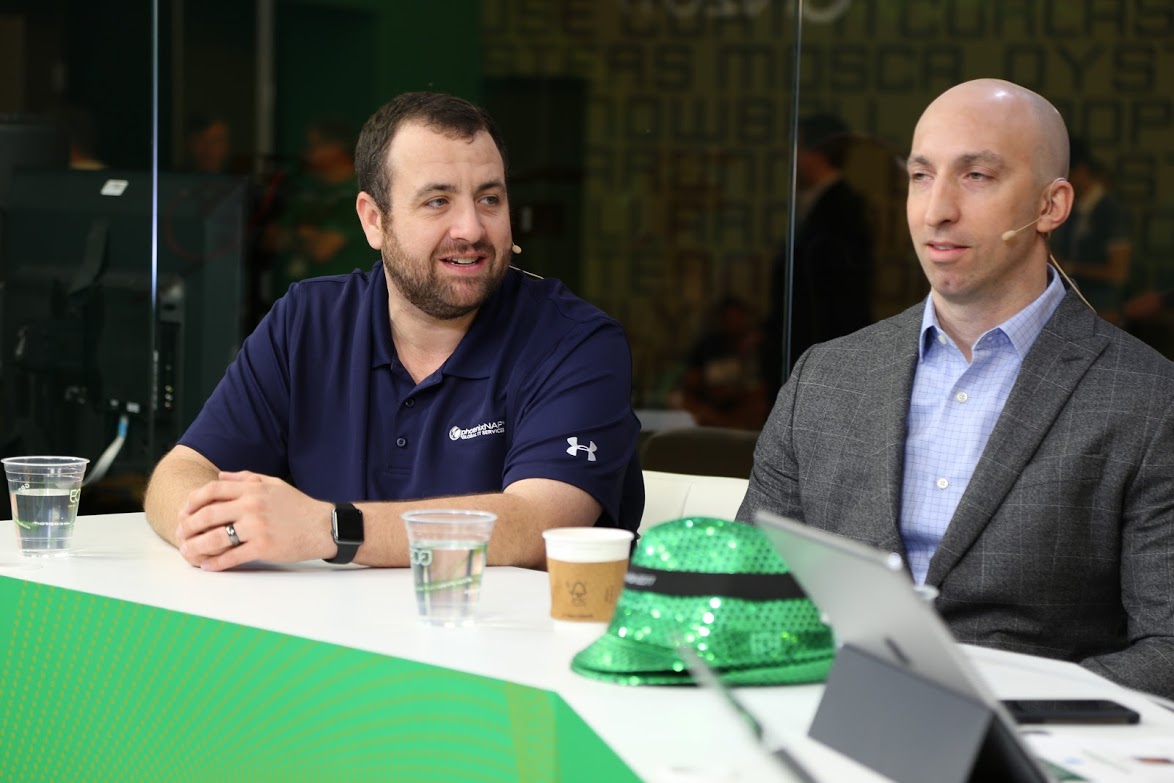
“We’ve taken the approach with the public clouds of kind of going with the tide,” said Matthew Chesterton (pictured, right), chief executive officer of OffsiteDataSync Inc. Chesterton joined William Bell (pictured, left), vice president of products at PheonixNAP LLC, in an interview at this year’s VeeamOn event in New Orleans, Louisiana. Both companies provide Infrastructure-as-a-Service and partner with backup and recovery vendor Veeam Software Inc. Chesterton and Bell spoke about how Veeam’s public cloud partners like AWS might affect them for better or worse.
Smaller clouds can piggyback on public clouds like AWS, Google Cloud Platform and Microsoft Corp.’s Azure through layering and building services on top of them, according to Chesterton. Veeam Availability Suite v10 features support for AWS S3, Glacier and Microsoft Azure Blob storage.
“We’re kind of taking that and going in the direction of: How else can we use it; how else can we benefit from it?” Chesterton told Stu Miniman (@stu) and Dave Vellante (@dvellante), co-hosts of theCUBE, SiliconANGLE Media’s mobile livestreaming studio. (* Disclosure below.)
Bell is more bullish about directly competing with major public clouds. In Infrastructure as a Service — as in other industries — boutique providers are often able to service customers more intimately, he said.
“We can actually help you achieve an outcome that you’re looking for with your business. That’s not something that you’re going to get from a hyperscaler. Period,” Bell stated.
In addition to cloud, PheonixNAP also runs physical co-location centers. Once businesses have gone deep in cloud seeking an outcome, Bell believes they will boomerang back to some amount of on-premise infrastructure. “They will be like, ‘OK, we have the outcome. How can we optimize this outcome?'” They’ll see that a balance of capital and operational expenditures (correlating to physical and as-a-service, respectively) is best, Bell predicted. “All Opex is not the answer,” he added.
Veeam will continue to empower all of its many partners, regardless of its public cloud relationships, according to both Bell and Chesterton. “They don’t just develop a product that can be used in and around service providers, but that we can take and capitalize from as well,” Chesterton concluded.
Watch the complete video interview below, and be sure to check out more of SiliconANGLE’s and theCUBE’s coverage of VeeamOn 2017. (* Disclosure: TheCUBE is a paid media partner for VeeamOn 2017. Neither Veeam Software Inc. nor other sponsors have editorial influence on theCUBE or SiliconANGLE.)
Support our mission to keep content open and free by engaging with theCUBE community. Join theCUBE’s Alumni Trust Network, where technology leaders connect, share intelligence and create opportunities.
Founded by tech visionaries John Furrier and Dave Vellante, SiliconANGLE Media has built a dynamic ecosystem of industry-leading digital media brands that reach 15+ million elite tech professionals. Our new proprietary theCUBE AI Video Cloud is breaking ground in audience interaction, leveraging theCUBEai.com neural network to help technology companies make data-driven decisions and stay at the forefront of industry conversations.





