



 CLOUD
CLOUD
CLOUD
CLOUD
CLOUD

The data explosion hit the University of British Columbia hard a few years ago, because provincial law required that personal information in the custody of a public institution had to be stored and accessed only in Canada. So the school’s information technology department developed its own private cloud to handle the load. While that may sound typical, what’s unusual is that UBC also provides cloud services for 26 other universities across the Canadian province.
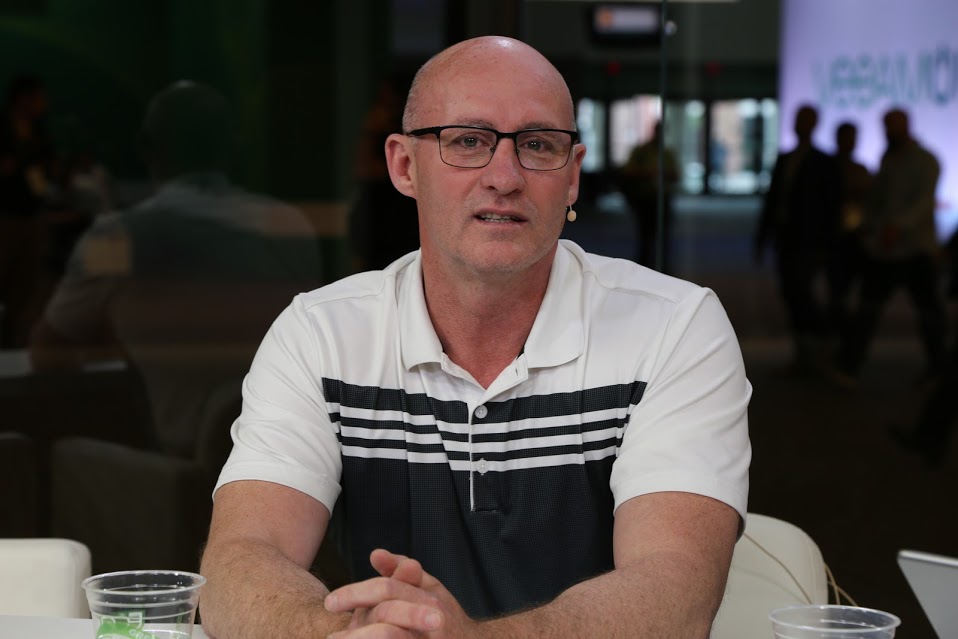
“We didn’t have any of the large service providers,” said Mario Angers (pictured), senior manager of systems at the University of British Columbia. “If we wanted to provide or consume cloud, we had to basically build it.”
Angers told his story during a visit to theCUBE, SiliconANGLE Media’s mobile livestreaming studio, and answered questions from co-hosts Dave Vellante (@dvellante) and Stu Miniman (@stu), during this year’s VeeamOn event in New Orleans, Louisiana. They discussed UBC’s self-service cloud model for higher education, its partnership with Veeam and frustrations with the vendor market. (* Disclosure below.)
After building a large cloud infrastructure inside the province a few years ago, UBC was approached by BCNET, a service provider for other schools in Canada, to provide the same support for the rest of higher education inside British Columbia. UBC provisions a virtual data center for the end user, basically offering infrastructure as a service and data recovery to the other universities.
“It’s self-service from end-to-end,” Angers said.
His university has been a Veeam Software Inc. customer for nearly six years, and he only has one person on staff to manage backup. “We can provide peace of mind now, knowing that if we lose something we can bring it back very quickly as it’s actually being restored to the production environment,” Angers stated.
Asked about pursuit by different vendors as he was building the cloud operation, Angers said he was approached by Dell EMC but chose Veeam “because of the complexity of those (Dell EMC) solutions.”
Angers also expressed frustration over the current sales environment and indicated that pricing out licensing deals has gotten too complicated. “I don’t want a Ph.D. in math to be able to calculate how much I’m going to spend on licensing,” he concluded.
Watch the complete video interview below, and be sure to check out more of SiliconANGLE’s and theCUBE’s coverage of VeeamOn 2017. (* Disclosure: TheCUBE is a paid media partner for VeeamOn 2017. Neither Veeam Software Inc. nor other sponsors have editorial influence on theCUBE or SiliconANGLE.)
… We’d like to tell you about our mission and how you can help us fulfill it. SiliconANGLE Media Inc.’s business model is based on the intrinsic value of the content, not advertising. Unlike many online publications, we don’t have a paywall or run banner advertising, because we want to keep our journalism open, without influence or the need to chase traffic.The journalism, reporting and commentary on SiliconANGLE — along with live, unscripted video from our Silicon Valley studio and globe-trotting video teams at theCUBE — take a lot of hard work, time and money. Keeping the quality high requires the support of sponsors who are aligned with our vision of ad-free journalism content.
If you like the reporting, video interviews and other ad-free content here, please take a moment to check out a sample of the video content supported by our sponsors, tweet your support, and keep coming back to SiliconANGLE.






